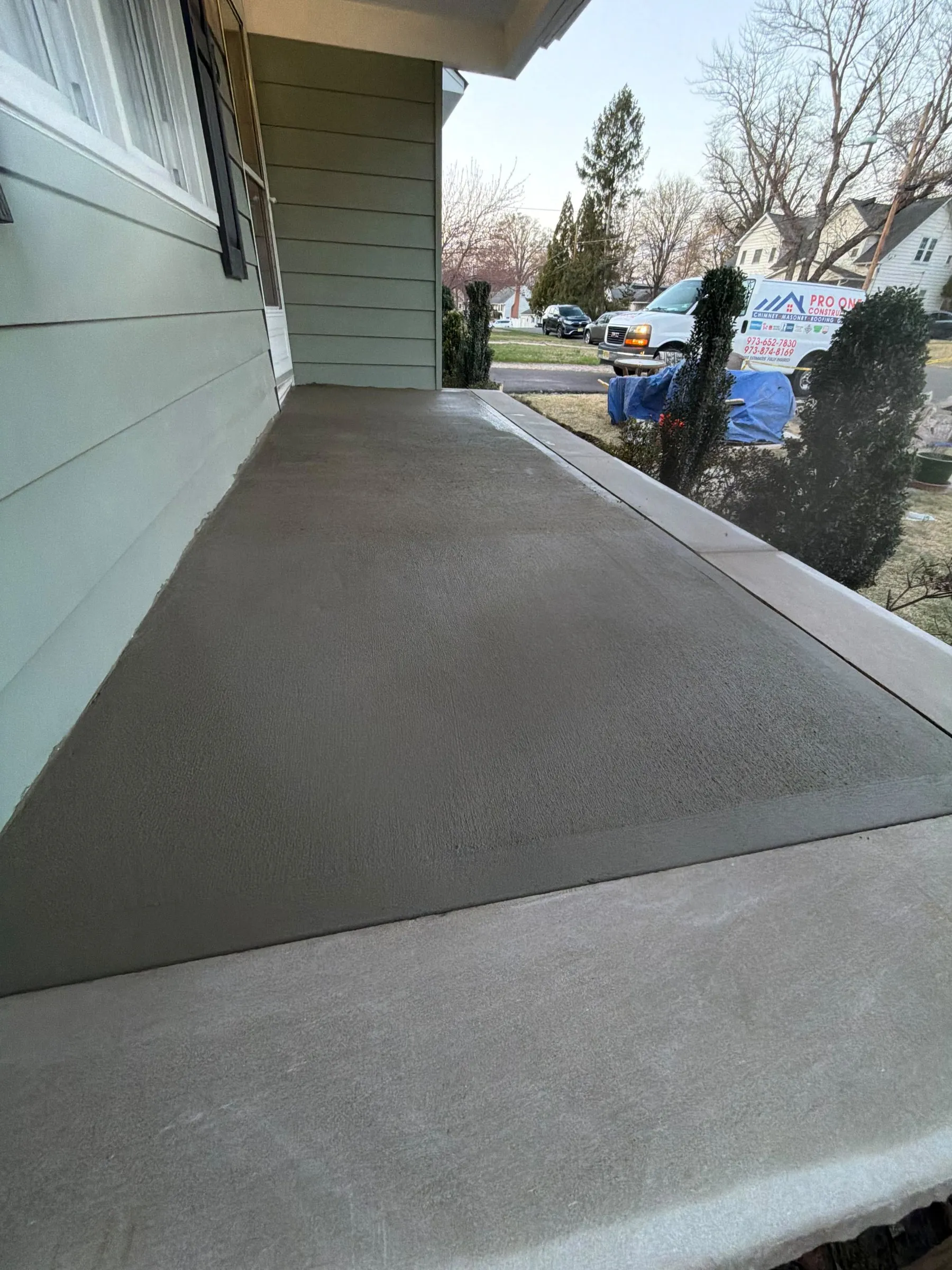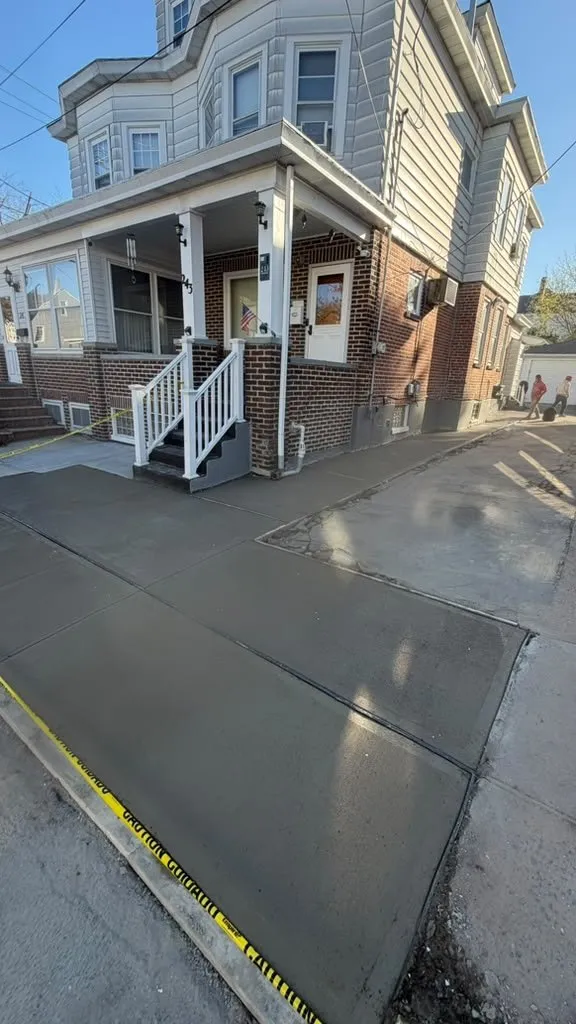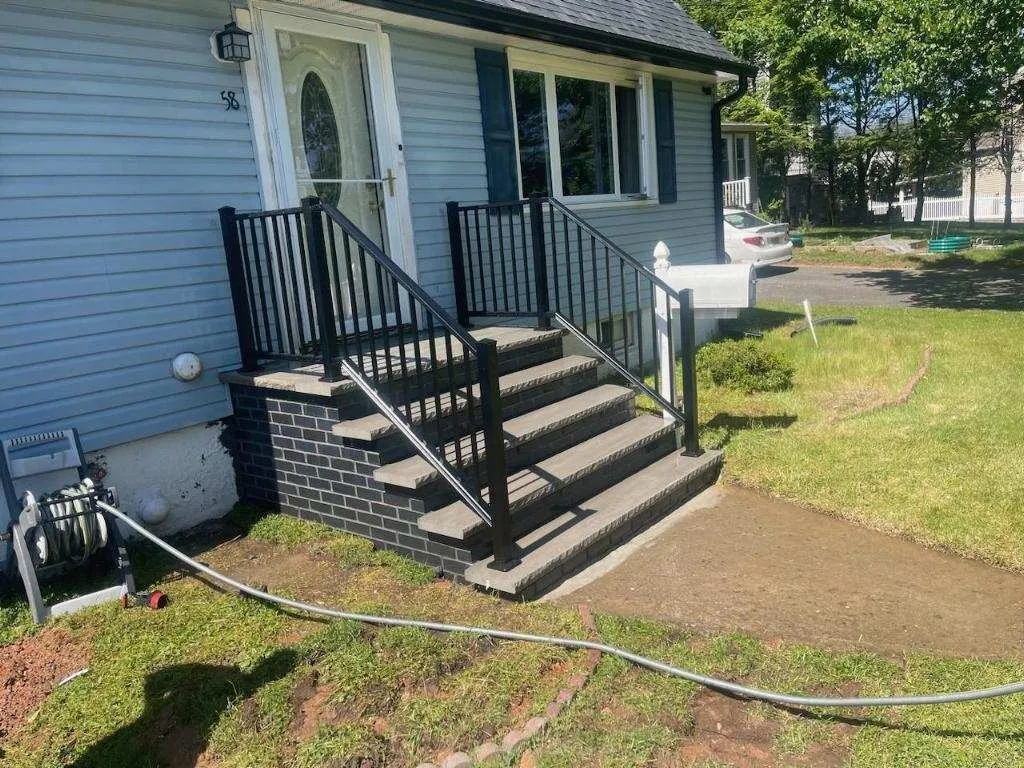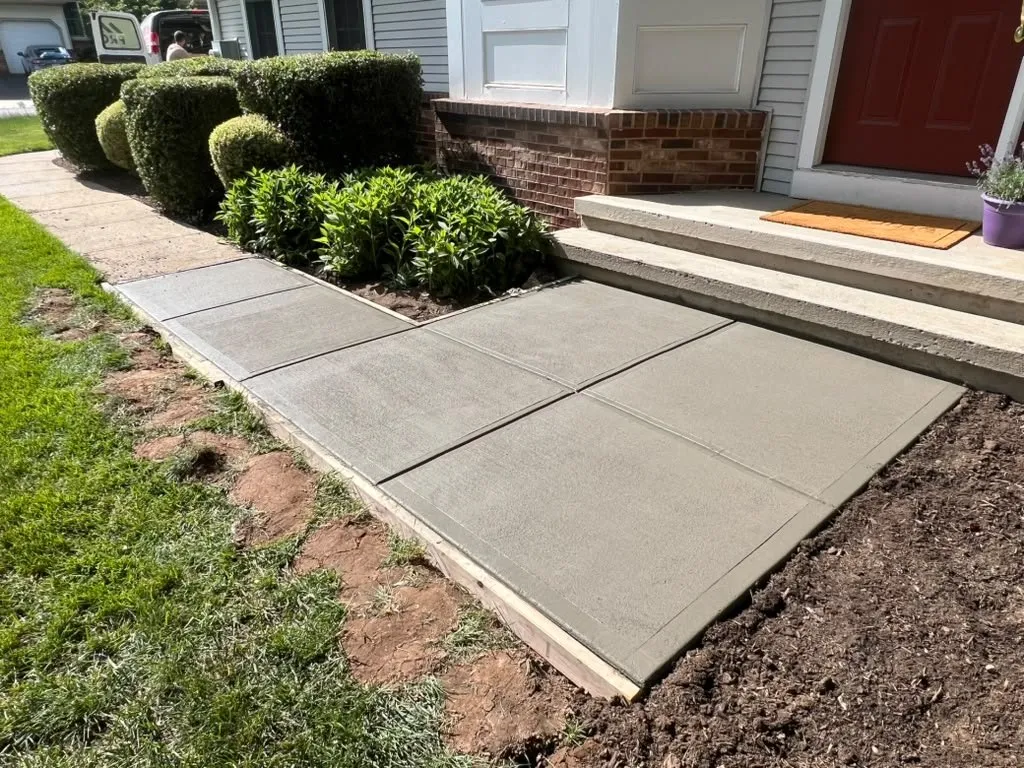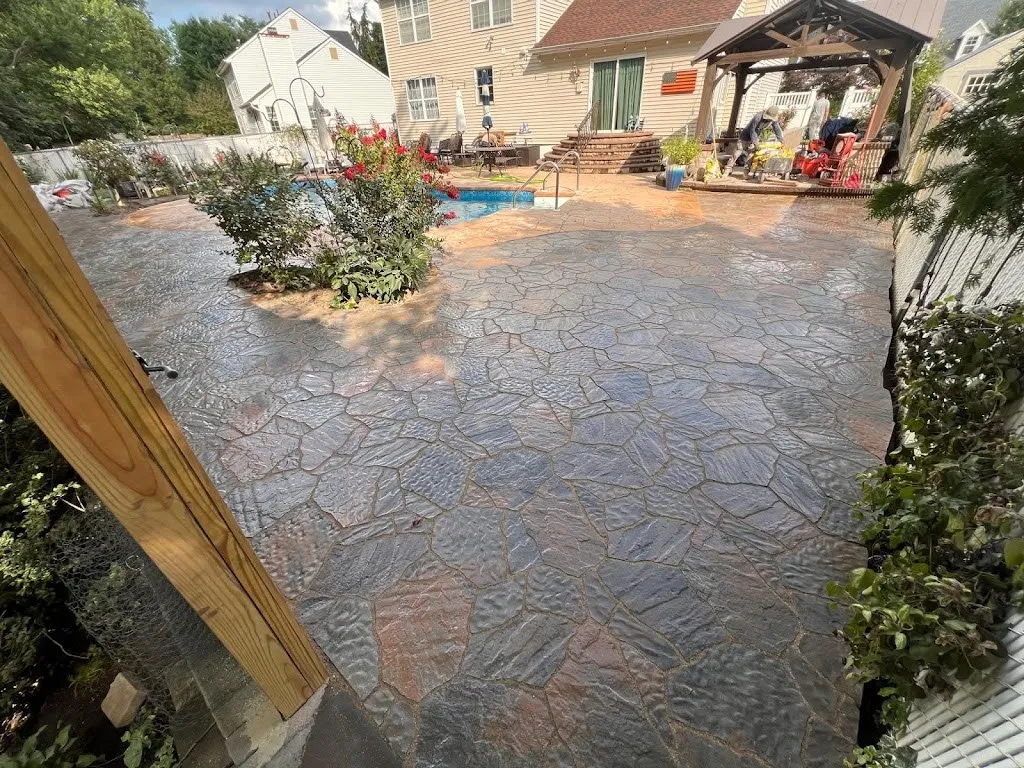
Concrete is one of the most practical materials you can put around a home or business. It is strong, it handles traffic well, and it can be shaped into nearly anything, from a straight front walk to a curved pool deck with a stone texture. But concrete is also unforgiving. A weak base, the wrong mix or a rushed cure will show up as cracks, flaking and sunken sections within a few winters. Our concrete services in New Jersey are built around getting those fundamentals right every time.
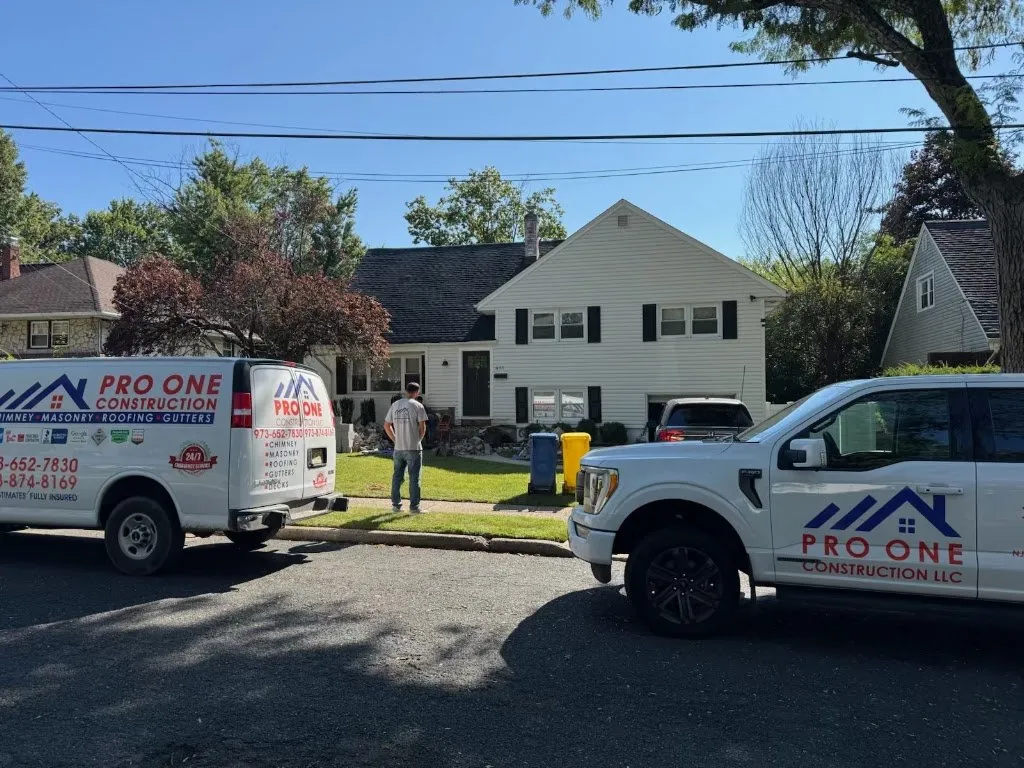
Pro One Construction is a family-owned contractor based in Garfield with 25+ years of experience. We pour and repair concrete for homeowners and commercial properties across 13 counties in North and Central New Jersey.
What we build with concrete
Most of our concrete work falls into a few groups:
- Sidewalks and walkways. Front walks, side paths, and the public sidewalk in front of your property.
- Patios and slabs. Backyard patios, shed and equipment pads, and slabs for garages and additions.
- Stamped and decorative concrete. Patterned and colored concrete that imitates flagstone, slate, brick or wood plank.
- Pool decks. Textured, sealed concrete surrounds that stay comfortable underfoot.
- Driveways and aprons. Full driveway replacements and the apron where the driveway meets the street.
- Steps and landings. Front stoops, rear steps and the landings that connect them to the house.
Each of these has its own requirements for thickness, reinforcement and finish, and we cover the bigger categories in detail on their own pages, linked below.
Why New Jersey concrete fails, and how we prevent it
Our climate is hard on exterior concrete. Water soaks into the surface, freezes overnight, expands and thaws again, sometimes dozens of times in one winter. Add rock salt and other de-icers and the top layer of a poorly made slab starts to scale and pop off. Here is what we do about it:
- Excavate and build a real base. We dig out soft soil and organic material, then install and compact a layer of crushed stone. Most settling and heaving problems start with a skipped or thin base.
- Slope for drainage. Every slab is pitched so water runs away from the house and off the surface instead of pooling and freezing.
- Reinforce where it counts. Driveways, slabs that carry weight and sections over disturbed soil get wire mesh or rebar as the job requires.
- Use air-entrained concrete. Tiny air bubbles in the mix give freezing water room to expand, which is the single biggest defense against winter scaling.
- Place control joints. Joints are tooled or saw-cut at planned intervals so the natural shrinkage cracks form in straight lines where you want them.
- Cure it properly. Concrete that dries too fast is weaker at the surface. We protect fresh work from hot sun, wind and early frost while it gains strength.
Stamped concrete and pool decks
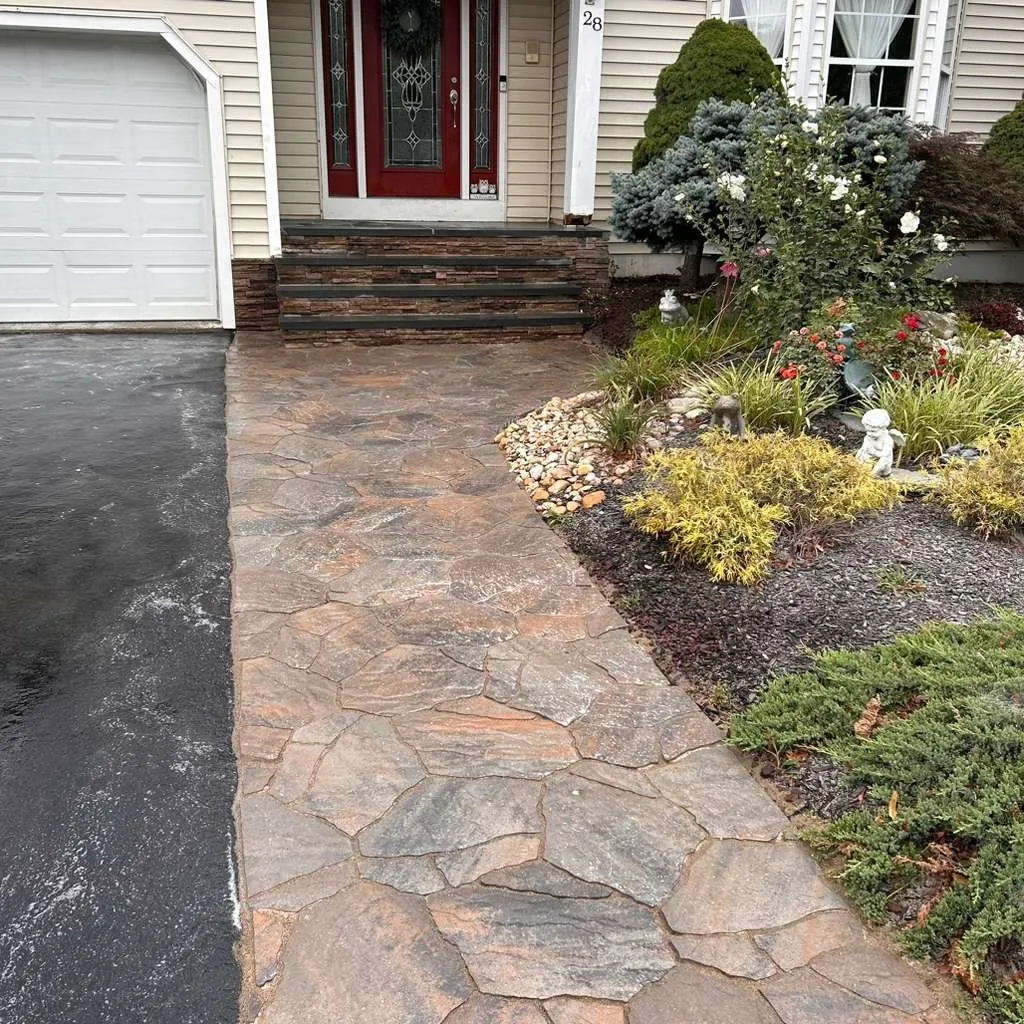
Stamped concrete gives you the look of natural stone or brick with the speed and cost profile of a poured slab. We place the concrete, color it with an integral color or a surface hardener, press in the pattern with stamping mats, and add a release agent that creates depth and shading. After curing, the surface is cleaned and sealed.
Pool decks are one of the most popular uses. A stamped deck in a flagstone or slate pattern looks finished, holds up to pool chemicals when sealed, and can include a slip-resistant additive in the sealer. If you prefer the look of real stone coping or a paver surround, our pool masonry team handles that work too.
The trade-off with stamped concrete is maintenance. Sealer wears over time, and resealing every few years keeps the color rich and the surface protected from salt and water.
Sidewalks and municipal requirements
In many New Jersey towns, the property owner is responsible for keeping the public sidewalk in front of their home or business in safe condition. Tree roots lifting a slab, a trip hazard at a joint or a cracked section near the curb can lead to a notice from the town or a liability concern. Customers often call us after a tree has pushed a run of sidewalk out of level.
Sidewalk replacement often requires a permit, and towns set their own rules for slab thickness, width and curb work. We check the requirements for your municipality before we start and build to them.
Our concrete specialties
Each type of concrete project has its own page with more detail:
- Concrete repair and resurfacing for scaling, spalling and worn slabs that can be saved.
- Concrete and asphalt driveways for full replacements, with an honest comparison of the two materials.
- Concrete steps for new front and rear steps, stoops and railings.
- Crack repair for cracks in slabs, walls and foundations.
Concrete, pavers or stone?
Concrete is not always the right answer, and we install all three, so we have no reason to push one. Poured concrete is usually the most economical choice for large areas and gives a clean, continuous surface. Pavers cost more up front but individual units can be lifted and replaced, which makes repairs nearly invisible. Natural stone such as bluestone has a character that neither can fully match. If you are leaning toward pavers, see our hardscape, walls and pavers services.
Getting started
Every concrete project starts with a visit. We measure, check the existing base and drainage, talk through finishes, and give you a written estimate that explains what is included. Our NJ Home Improvement Contractor registration number is #13VH09797900.
Ready to talk about your project? Request a free on-site estimate and we will schedule a time to come out.