Patios and walkways are the parts of your property you use most. The walkway is the first thing guests step on, and the patio is where summer actually happens. Our patio and walkway services in New Jersey focus on getting the basics right: a firm base, the correct pitch, comfortable sizing and a finish that suits your home.
We work in two main materials, concrete pavers and natural bluestone, for homes and commercial properties across North and Central New Jersey.
Pavers or bluestone for your patio and walkway?
Both materials make beautiful patios and walkways. The choice usually comes down to style, budget and maintenance preferences.
Concrete pavers
- Wide selection of colors, sizes and textures
- Uniform thickness, which makes for an even surface
- Easy to lift and reset individual units if needed
- Generally more budget friendly than natural stone
Natural bluestone
- Classic blue-gray to lilac and rust tones that look at home on older houses
- Available in patterns of square and rectangular pieces or irregular flagstone
- Natural variation, so no two patios look the same
- Can be dry-laid or set in mortar over a concrete slab
Many of our projects mix the two, for example a paver patio with a bluestone landing at the back door, or a paver walkway with bluestone steps. For larger projects with pavers in driveways and pool decks, see our paver construction page.
Planning a patio you will actually use
The most common regret we hear about older patios is that they are too small. Before we finalize a design, we think about:
- Furniture and activities. Dining sets, lounge chairs, a grill and walkways around them all take space.
- Connection to the house. A patio that sits right off the kitchen or family room door gets used far more than one at the back of the yard.
- Sun and shade. We look at where the shade falls in the afternoon and evening.
- Grade. A patio that needs to step down from a raised door may need a landing, steps or a low wall.
If your yard slopes, a raised patio supported by a retaining wall can create a level space that feels like an extension of the house.
Walkways that are safe and welcoming
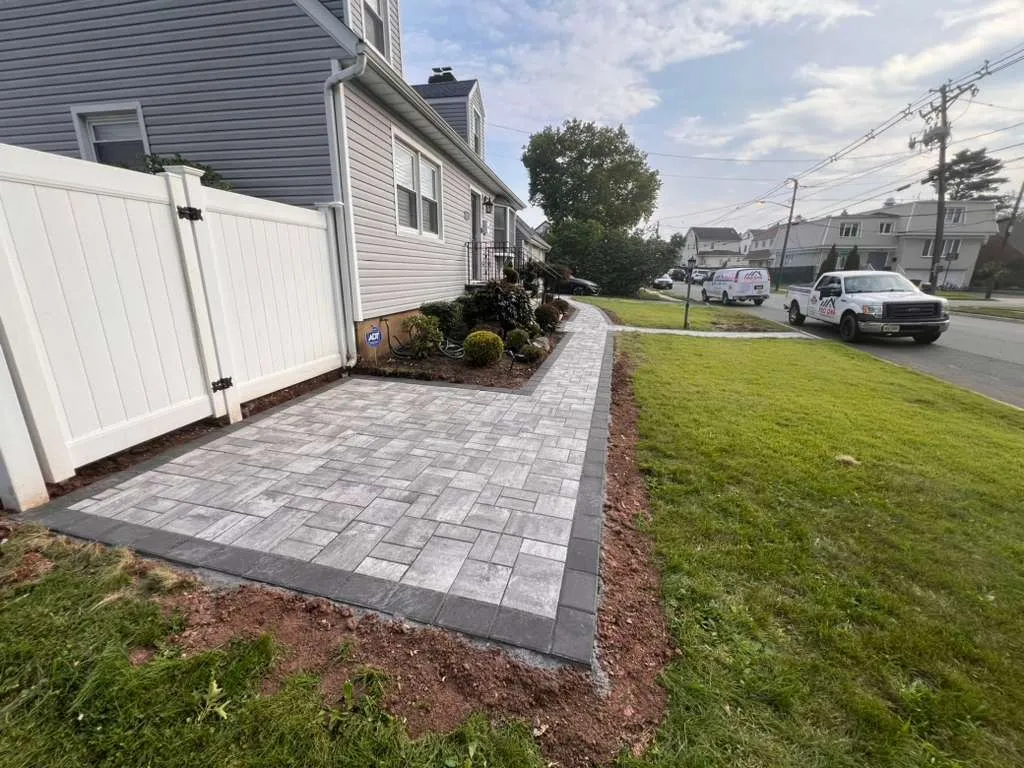
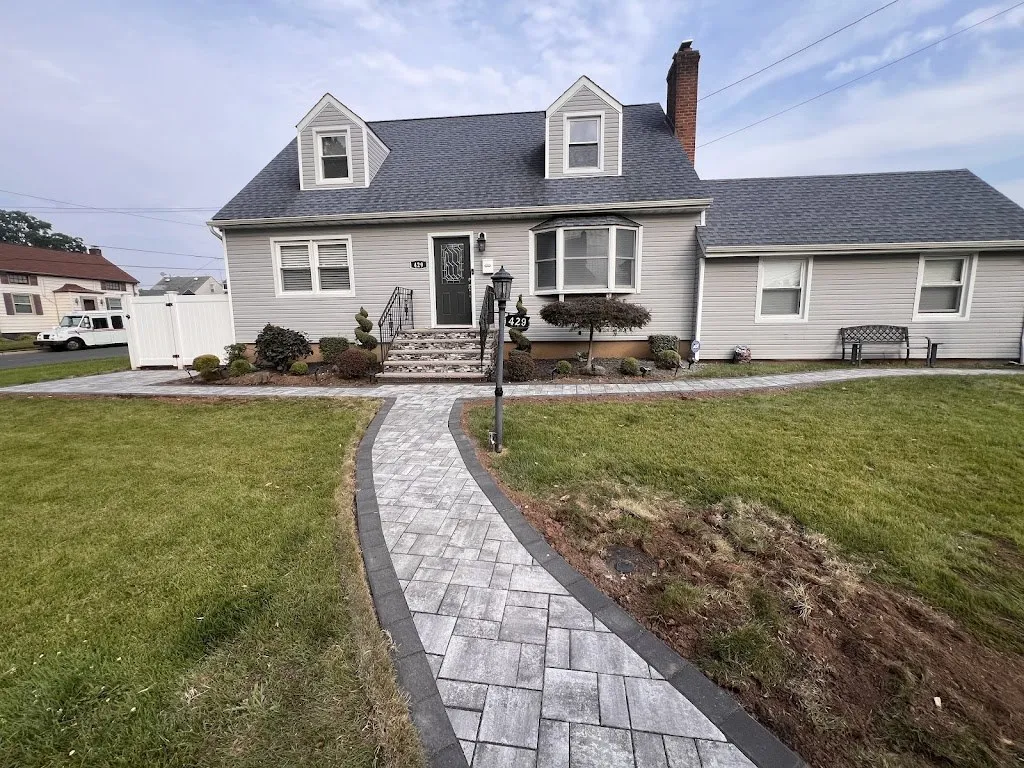
A good walkway leads people naturally from the driveway or sidewalk to the door. It should be wide enough to feel comfortable, have no trip edges, and drain so it does not ice over in winter. Curved walkways soften the look of a front yard, while straight walks suit formal and colonial-style homes. Borders in a contrasting color give the edges a clean, finished line.
Where a walkway meets the front entry, we often build or rebuild the steps at the same time so the materials match. Our concrete steps service covers poured steps when that is the better fit.
How we install patios and walkways
- Mark and excavate. We outline the shape and dig out sod, soil and any old concrete.
- Build the base. Compacted dense-graded aggregate creates a firm foundation that resists frost movement.
- Set the slope. The surface is pitched gently away from the house and toward a safe drainage area.
- Lay the surface. Pavers or bluestone go down over a level bedding layer, with clean cuts at edges and curves.
- Secure the edges and joints. Edge restraint holds everything in place, and joints are filled with polymeric sand or mortar, depending on the method.
Cost factors and long-term care
The price of a patio or walkway depends on its size, the material, whether old concrete must be removed, the complexity of the shape and pattern, and how much grading is needed. Bluestone typically costs more than standard pavers, and mortar-set stone takes more labor than dry-laid.
Care is simple. Sweep regularly, rinse off dirt and pollen, and top up joint sand if needed. On bluestone, avoid rock salt; use sand or a gentler ice melt. With a good base, a patio or walkway can serve your family for decades.
Ready for a new patio or front walk? Request your free estimate and we will bring samples of both pavers and bluestone.