Foundation and waterproofing problems tend to show up together. A wall that cracks lets water in, and water that sits against a wall for years puts pressure on it until it cracks. That is why we treat foundation and waterproofing services in New Jersey as one job: find out what is actually happening below grade, fix the cause, and make sure the repair lasts.
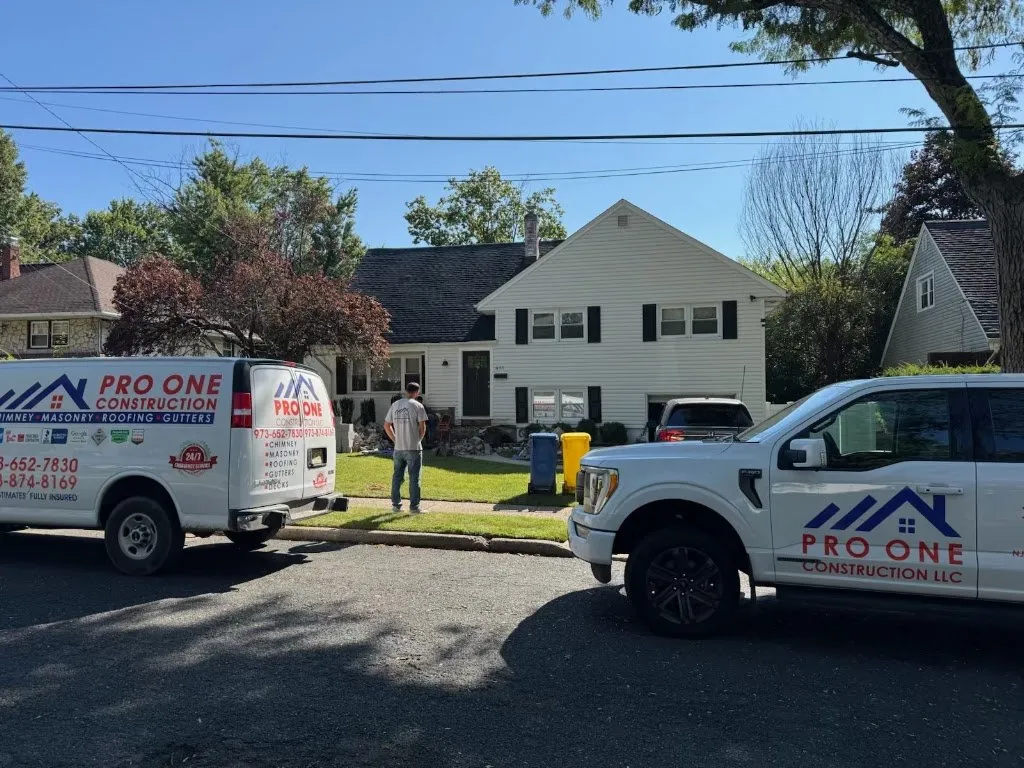
Pro One Construction is a family-owned contractor based in Garfield with 25+ years of experience in concrete and masonry. We build new foundations, repair existing ones and keep basements dry for homeowners and property owners across North and Central New Jersey.
Warning signs below grade
Most people notice a foundation or water issue in the basement first. Pay attention to:
- Water on the floor after heavy rain or snowmelt, especially along the joint where the wall meets the slab.
- Cracks in poured walls or block joints, and whether they are getting longer or wider over time.
- White, chalky deposits (efflorescence) on the walls. These are salts left behind when water passes through masonry and evaporates.
- A musty smell, peeling paint or mold on walls, stored boxes or the bottom of drywall.
- Doors and windows upstairs that start to stick, or floors that slope more than they used to.
- Gaps between the foundation and the sill plate or between the house and the front steps.
One sign on its own does not mean the house is in trouble. A combination of them, or a sign that is getting worse, is worth a professional look.
Why New Jersey foundations crack and leak
Much of North Jersey sits on dense clay and glacial soil that holds water. After a storm, that saturated soil presses against basement walls. This force is called hydrostatic pressure, and it pushes water through any crack, tie hole or porous block it can find. In winter, wet soil freezes and expands, adding more pressure.
Older homes add their own challenges. Many were built with block or stone foundations and little or no exterior drainage. Original gutters may be undersized, downspouts often dump right at the corner of the house, and decades of landscaping can leave the ground sloping toward the walls instead of away from them.
Our foundation and waterproofing services
New foundations and foundation repair
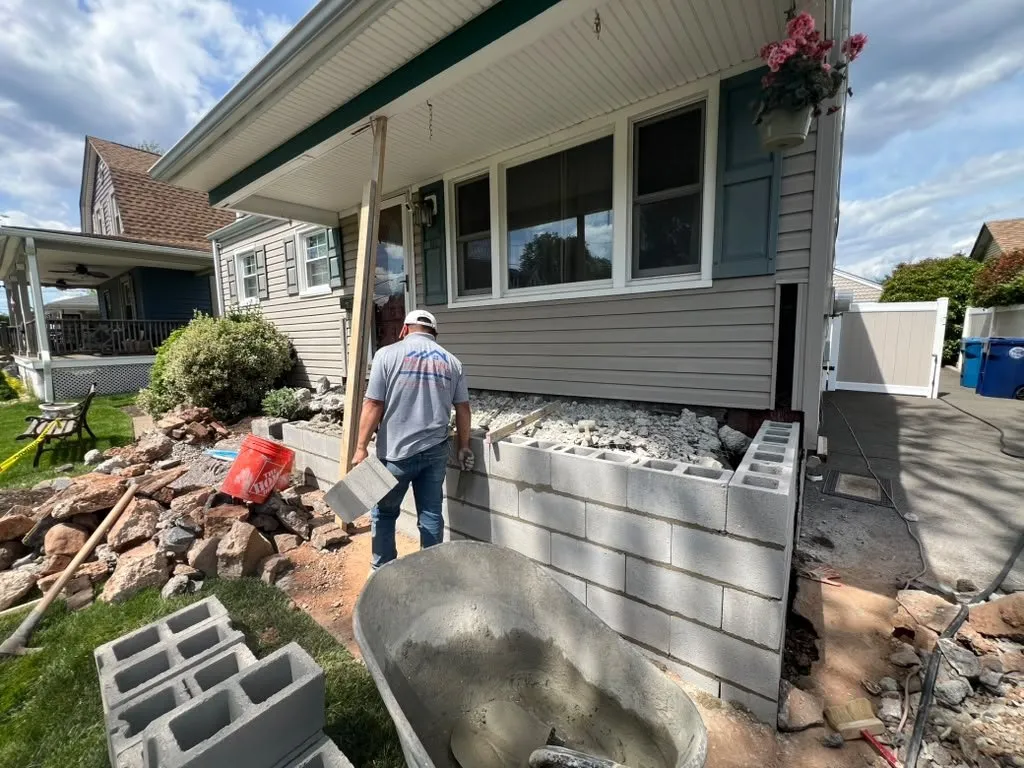
For additions, garages, porches and new homes, we excavate, set footings and pour or build foundation walls to the approved plans. On existing homes we repair cracked and deteriorated walls, replace failing sections, underpin footings that have settled and seal cracks so they stop leaking. Learn more on our new foundations and repair page.
Basement waterproofing
When the structure is sound but water keeps getting in, we look at the full path of the water. Depending on the house, that can mean exterior excavation and membrane, an interior drain tile and sump system, crack injection, or simpler fixes to grading and downspouts. See our basement waterproofing page for the details.
For isolated cracks in walls, slabs and steps outside the basement, our crack repair service may be all you need.
How we approach every job
- Look inside and out. We inspect the basement walls and floor, then walk the outside of the house to check grading, gutters, downspouts, window wells and the condition of any concrete next to the foundation.
- Identify the cause. A leak at one corner usually has a specific reason. We want to know whether it is surface water, groundwater, a failed crack, or movement in the wall.
- Recommend the right scope. We explain your options, from the least invasive to the most complete, and what each one will and will not fix.
- Bring in an engineer when needed. Significant movement, bowing walls or structural changes call for a licensed structural engineer. We do not do engineering ourselves; when a design is required, we work from the engineer’s plans.
- Do the work cleanly. We protect landscaping and finished spaces as much as possible and restore the work area when we are done.
What affects the cost
We do not quote prices without seeing the house, because foundation and waterproofing jobs vary widely. The main factors are:
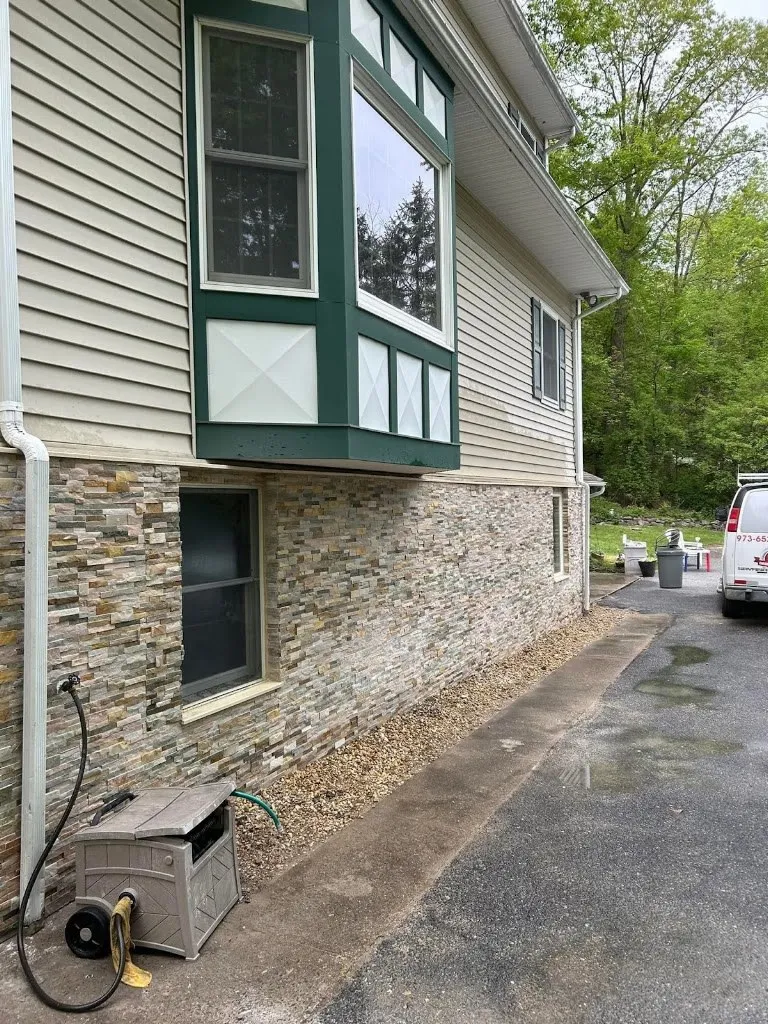
- Access. Tight side yards, decks, patios and driveways along the wall make exterior excavation harder.
- Depth and length. Full-depth excavation along an entire wall is a very different job from sealing two cracks.
- Wall type and condition. Poured concrete, concrete block and old fieldstone each need different repair methods.
- Finished basements. Interior systems may require removing and replacing drywall, flooring or framing.
- Permits and engineering. Structural work may need plans, permits and inspections, which affect both cost and schedule.
Repair now or wait?
Small, stable cracks and minor dampness can often be handled with targeted repairs, and there is no need to panic. What you should not do is ignore a problem that is getting worse. Water damage spreads into framing, finishes and stored belongings, and a wall that is actively moving only gets more expensive to stabilize.
If you are not sure what you are looking at, take photos, note when the water shows up, and book a free estimate. We will tell you honestly whether you need a repair, a full waterproofing system, or simply a longer downspout.