Concrete rarely fails all at once. It starts with a little flaking near the garage, a corner that breaks off the walk, or a sidewalk slab that rises a bit higher every spring. Left alone, that damage lets in more water, and more water means faster deterioration every winter. Timely concrete repair and resurfacing can stop the cycle and give you years more use from the slab you already have.
Common concrete problems we repair
These are the issues homeowners and property managers call us about most:
- Scaling. The top layer peels away in thin flakes, leaving a rough surface. Very common on driveways and walks that see a lot of salt.
- Spalling. Deeper chunks break out, sometimes exposing stone or reinforcing steel. Rusting steel expands and pushes off even more concrete.
- Pop-outs. Small cone-shaped pits where a piece of aggregate near the surface absorbed water and burst.
- Broken edges and corners. Usually where a car tire, snow plow or shovel hits the slab repeatedly, or where the base underneath washed out.
- Settled or heaved sections. A slab that has dropped or lifted creates a trip hazard and often directs water back toward the house.
Concrete repair and resurfacing options
There is no single fix for damaged concrete. The right approach depends on how deep the damage goes and whether the slab is still stable.
Patching
Localized damage such as a broken corner, a few pop-outs or a spalled area on a step can be patched. We cut back to sound concrete, clean the area, apply a bonding agent where needed, and fill with a repair mortar suited to exterior use. Patches are practical and affordable, though they are usually visible up close.
Resurfacing with an overlay
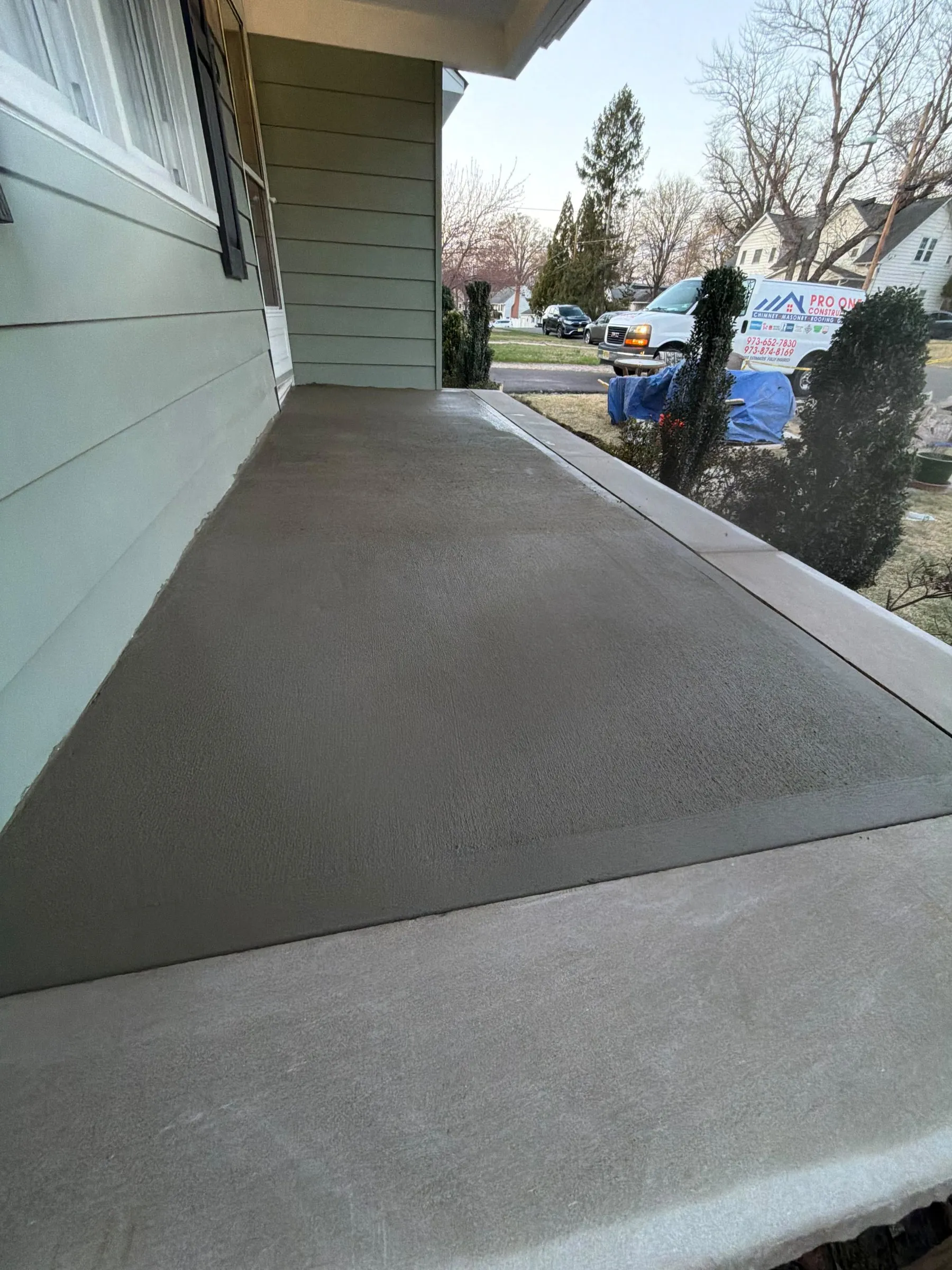
When the slab is solid but the surface is worn, scaled or stained, a resurfacing overlay can make it look new again. Preparation is everything. We pressure-wash and mechanically clean the old surface, repair cracks and holes, then apply a thin, polymer-modified cement overlay with a broom or textured finish. The existing control joints are carried through the new surface so the slab can still move without cracking the overlay.
Section replacement
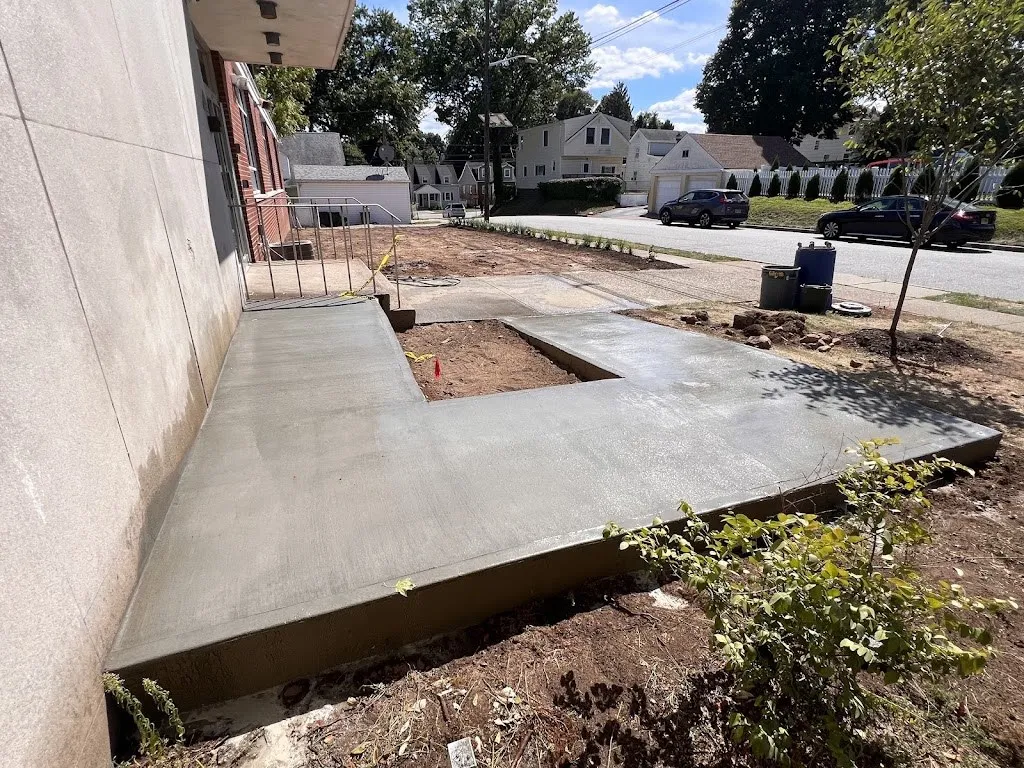
Some damage cannot be patched or covered. If a section has sunk, heaved or broken into pieces, we saw-cut it out at the joints, correct the base underneath, and pour new concrete. This is the standard fix for sidewalks lifted by tree roots and for walkways where the soil below has washed away.
When to repair and when to replace
As a general rule, repair makes sense when the problem is at the surface and the base is still doing its job. Replacement makes sense when the problem is under the surface. Some questions we ask on every visit:
- Is the slab level and stable, or has it moved?
- How much of the area is affected: a few spots, or most of the surface?
- Is water draining away, or is it pooling and feeding the damage?
- How old is the concrete, and has it been patched before?
If most of a slab is failing, or patches have already failed once, a full replacement is often the more economical long-term choice. For driveways in that condition, see our concrete and asphalt driveways page.
Sidewalk repair in New Jersey towns
Public sidewalks deserve special mention. Many New Jersey municipalities place the responsibility for sidewalk upkeep on the adjacent property owner, and towns may issue notices when a slab becomes a hazard. Customers frequently contact us after a street tree has pushed several slabs out of line.
For this kind of work we remove the damaged slabs, deal with the immediate root and base problems in a way your town allows, and pour new sections to match the width and finish of the neighboring sidewalk. We confirm permit and specification requirements with the municipality first.
What affects the cost
Without seeing the job, it is hard to put a number on it, but these factors drive the price of concrete repair and resurfacing:
- Total square footage and how much of it is damaged
- Whether old concrete must be broken out and hauled away
- Base repair or drainage corrections underneath
- Patch or overlay versus full-depth replacement
- Access for equipment and any permit requirements
Protecting repaired concrete
Once the work is done, a few habits will help it last. Avoid de-icers containing ammonium nitrate or ammonium sulfate, which attack concrete chemically. Shovel snow promptly rather than relying on heavy salt, and consider a penetrating sealer on surfaces that take a lot of winter abuse. Keep downspouts pointed away from slabs so water does not collect at the edges.
If your concrete has cracks rather than surface wear, our crack repair service covers that in more depth. You can also see everything we pour on our main concrete services page.
Not sure if your slab can be saved? Schedule a free estimate and we will give you a straight answer.