Foundation & Waterproofing

Basement Waterproofing Services in New Jersey

A wet basement is almost always a water management problem with a clear cause. We find where the water is coming from and fix it with the simplest system that will actually keep it out.

  • 4.9 from 145 Google reviews
  • Family-owned, 25+ years
  • NJ HIC #13VH09797900
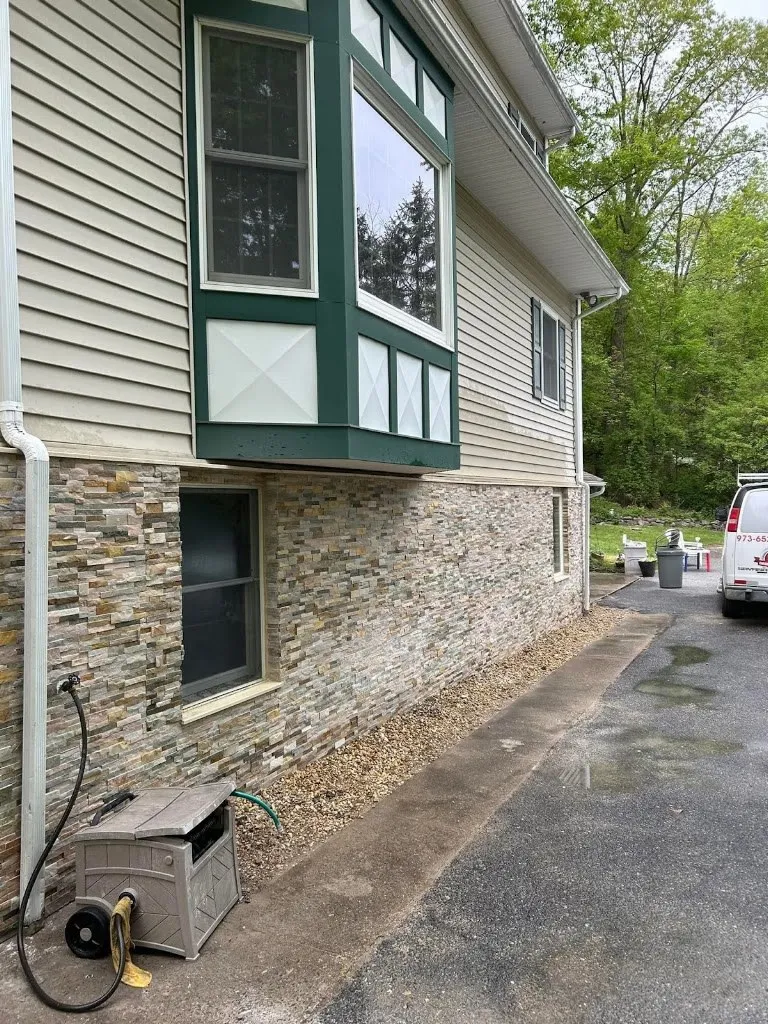
Stacked stone veneer covering a home foundation wall

Why choose Pro One for basement waterproofing

  • Source before system

    We trace the water before selling a solution. Many leaks start with a clogged gutter, a short downspout or soil sloping toward the house.

  • Interior and exterior options

    Exterior excavation with membrane and footing drains, or an interior drain tile and sump system. We explain the tradeoffs of each for your home.

  • Crack injection

    Single leaking cracks in poured walls can often be sealed from the inside without digging up the yard.

  • Grading and surface drainage

    Regrading, sloped concrete and properly placed downspouts keep rain away from the foundation in the first place.

Water in the basement is not bad luck. It follows a path, and once you know that path you can block it or redirect it. Our basement waterproofing services in New Jersey start with finding out exactly how water is getting in, then fixing it with the least invasive method that will hold up through spring storms and snowmelt.

Where basement water comes from

Most leaks fall into one of a few categories:

  • Surface runoff. Rain from the roof and yard collects against the foundation and soaks down along the wall. This is the most common cause, and the cheapest to fix.
  • Groundwater. In clay soils and low-lying areas, the water table rises after heavy rain. Saturated soil creates hydrostatic pressure that forces water through cracks, the cove joint and even porous block.
  • Cracks and penetrations. Shrinkage cracks, form tie holes and gaps around pipes and utility lines all give water an easy way in.
  • Condensation. Sometimes the “leak” is humid summer air condensing on cool basement walls. A dehumidifier, not excavation, fixes that.

A simple test can tell condensation from seepage: tape a square of plastic to the wall for a couple of days. Moisture on the room side points to condensation; moisture behind it means water is coming through.

Start outside: the first line of defense
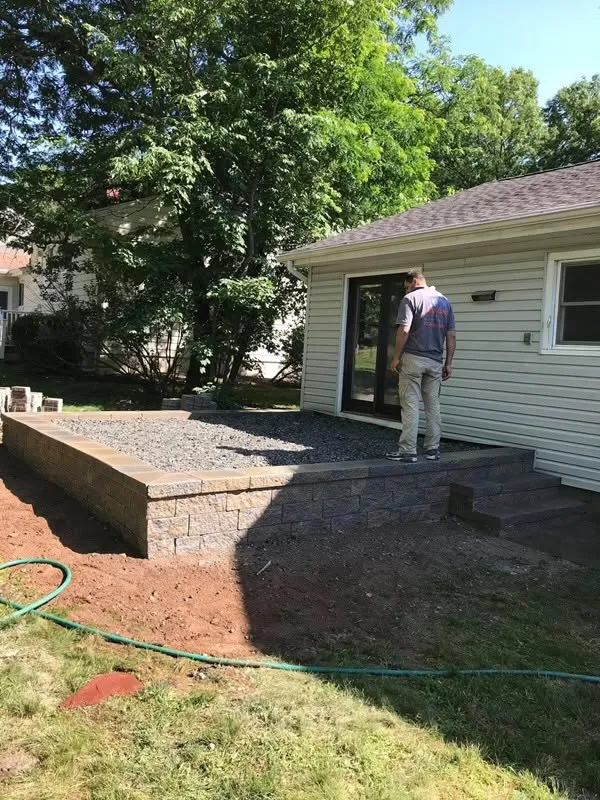
Block retaining wall holding a new gravel terrace behind a ranch home

Before you invest in any waterproofing system, make sure the outside of the house is not sending water toward the basement. We check:

  • Gutters that are clogged, sagging or too small for the roof area.
  • Downspouts that empty right at the foundation. Extending them several feet away, or tying them into a proper drain, can make a dramatic difference.
  • Grading. Soil should slope away from the house. Settled backfill and raised garden beds often create a low spot against the wall.
  • Concrete and pavers next to the house that have sunk and now pitch water toward it.
  • Window wells without drains or covers that fill up like buckets.

If your gutters need work, our roofing, siding and gutters team installs seamless gutters and downspouts sized for the roof.

Basement waterproofing options

Crack injection

When water enters through a few cracks in a poured concrete wall, injecting them from the inside is often the most practical fix. The material fills the crack through the wall so water cannot pass. Block walls do not respond to injection the same way, because water moves through the hollow cores.

Interior drain tile and sump

An interior system is installed along the inside perimeter of the basement. We cut out a strip of the slab, dig down beside the footing, lay perforated pipe in clean stone, and slope it to a sump pit. A sump pump then discharges the water outside, away from the house. A dimpled membrane or channel along the wall base directs any water that comes through the wall down into the drain. This approach does not stop water from reaching the wall, but it controls it before it reaches your floor.

Exterior waterproofing

Exterior work means excavating along the foundation down to the footing. The wall is cleaned, cracks are repaired, a waterproofing membrane is applied, and a footing drain is installed and connected to daylight or a sump where the site allows. The trench is backfilled with drainage material and the surface is regraded. It is the most thorough approach, and the most disruptive, especially near driveways, patios and decks.

Combination approaches

Many homes get the best result from a mix: grading and gutter fixes outside, plus injection of a problem crack or an interior system along one wet wall.

Waterproofing and the structure

If a wall is cracking horizontally, bowing or settling, waterproofing alone will not last. Those walls need to be stabilized first, which we cover under new foundations and repair. You can see how both services fit together on our main foundation and waterproofing page.

What drives the cost of waterproofing

Price depends on how much wall is involved, whether we work inside or outside, how deep the foundation is, what sits next to it, and whether the basement is finished. Discharge location for a sump, electrical access and local permit requirements also play a part. Requirements vary by town, and we check them before work starts.

Have a damp corner or water every spring? Request a free estimate and we will trace the problem to its source.
Our work

Recent basement waterproofing projects

Real Pro One jobs, no stock photos. Click any photo to see it larger.

110+ real project photos in our gallerySee all our work →

How it works

From first call to finished project in 3 simple steps

  1. Step 1

    Tell us about your project

    Call us or search for the service you need above. It takes under a minute.

  2. Step 2

    Get a free on-site estimate

    We visit, measure, talk through materials and options, and give you a clear written quote. No pressure.

  3. Step 3

    We build it right

    Our crew shows up when we say, works clean, keeps you updated and finishes on schedule and on budget.

Pro One Construction van and pickup truck parked at a client's home in New Jersey

Real reviews from real neighbors

Every review here was written on Google by a Pro One customer.

Get a free estimate
  • Masonry

    “Fantastic experience from start to finish. The crew was knowledgeable, hardworking, and respectful of our property. The masonry work looks amazing and has completely transformed our space. Would absolutely hire again”

    Olainy Soto

  • Sidewalk repair

    “I got a quote from Pro One construction to repair a large portion of sidewalk on my property that a tree was pushing up and heaving the sidewalks to a dangerous level. There estimate was the best out of 3 and they did a professional job. Would recommend them to anyone needing sidewalks repaired!”

    A Everett

  • Google review

    “Matt and his team were excellent! If I could give 10 stars they would’ve received 11. Very neat; cleaned everything up. Fantastic group of guys.”

    Damian Jata

  • Driveway

    “Great experience with Matt,he came and give us a quote about or driveway.We liked the way how Matt handled the project and how it came out in the end. Definitely suggest them!”

    Gloris Bulica

  • Steps & retaining wall

    “Pro one construction repaired my steps and retaining wall amazing work very professional and great quality.highly recommend”

    Olha Vinnichenko

  • Roof replacement

    “Matt and his crew can by my mechanic shop in Union and did a full roof replacement. Very happy with them, I haven’t had a leak since.”

    Ardit Lita

  • Patio

    “Very happy with our new patio 10/10”

    raj Gupta

FAQ

Basement Waterproofing FAQs

Can’t find your answer? Call us at (973) 874-8169.

Is interior or exterior waterproofing better?

Exterior waterproofing stops water before it reaches the wall, but requires digging down to the footing. Interior drain tile and sump systems manage water that gets through and are less disruptive outside. The right choice depends on access, wall condition and how the basement is used.

Will waterproofing paint fix my wet basement?

Waterproofing paints and coatings can help with minor dampness, but they cannot hold back water under pressure. If water is actively coming through cracks or at the floor joint, the coating will usually blister and peel.

Why does water come in where the wall meets the floor?

That joint, called the cove joint, is where the slab was poured against the footing and wall. It is not sealed, so when groundwater rises under hydrostatic pressure, it pushes through there first. Interior drain tile is designed to collect water at this spot.

Do I need a sump pump?

If groundwater regularly rises under or around your basement, a sump pump is usually part of the solution. If the water is from surface runoff, fixing grading and gutters may be enough. We will tell you which applies to your house.

Can you waterproof a finished basement?

Yes, but it takes more work. Interior systems run along the base of the walls, so drywall and flooring near the perimeter may need to come out. Exterior waterproofing can sometimes avoid disturbing the finished space.

What causes the white powder on my basement walls?

That powder is efflorescence: mineral salts carried by water through the concrete or block and left behind when it evaporates. It is a sign of moisture moving through the wall, even if you never see standing water.

Ready to talk about your basement waterproofing project?

Get a free, no-obligation estimate from a local crew that does it right the first time.

Call nowFree estimate