Your chimney is the most exposed masonry on your house. It sits above the roofline with no overhang to protect it, taking wind-driven rain, snow and every freeze-thaw cycle New Jersey can produce. On top of that, heat from the flue causes the masonry to expand and contract. It is no surprise that chimney and fireplace masonry is one of the most common repair calls we get.
The good news is that most chimney problems start small and are straightforward to fix if you catch them early.
Warning signs your chimney masonry needs attention
From the ground, with binoculars, or from a safe spot on a ladder, look for:
- Cracked or crumbling crown at the top of the chimney
- Missing or sandy mortar between bricks, especially on the upper courses
- Spalling brick, where the face of the brick has flaked or popped off
- White staining (efflorescence) on the outside of the stack, a sign water is moving through it
- Rusted, loose or caulked-over flashing where the chimney meets the roof
- A visible lean or gaps between the chimney and the house
- Water stains on ceilings or walls next to the chimney, or dampness in the firebox
Inside, a musty smell from the fireplace or flakes of brick in the firebox can also point to water getting into the chimney.
Chimney masonry repairs we handle
Chimney crown repair and replacement
Many chimney crowns are little more than a thin layer of mortar troweled over the top course, and they crack within a few winters. We build crowns that are properly thick, slope away from the flue, overhang the brick and include a drip edge so water falls clear of the stack. Small hairline cracks in an otherwise sound crown can sometimes be sealed instead.
Repointing chimney stacks
When the bricks are sound but the joints have worn out, repointing restores the stack. The same mortar compatibility rules described on our tuckpointing and repointing page apply here, and they matter even more on a chimney.
Partial and full chimney rebuilds
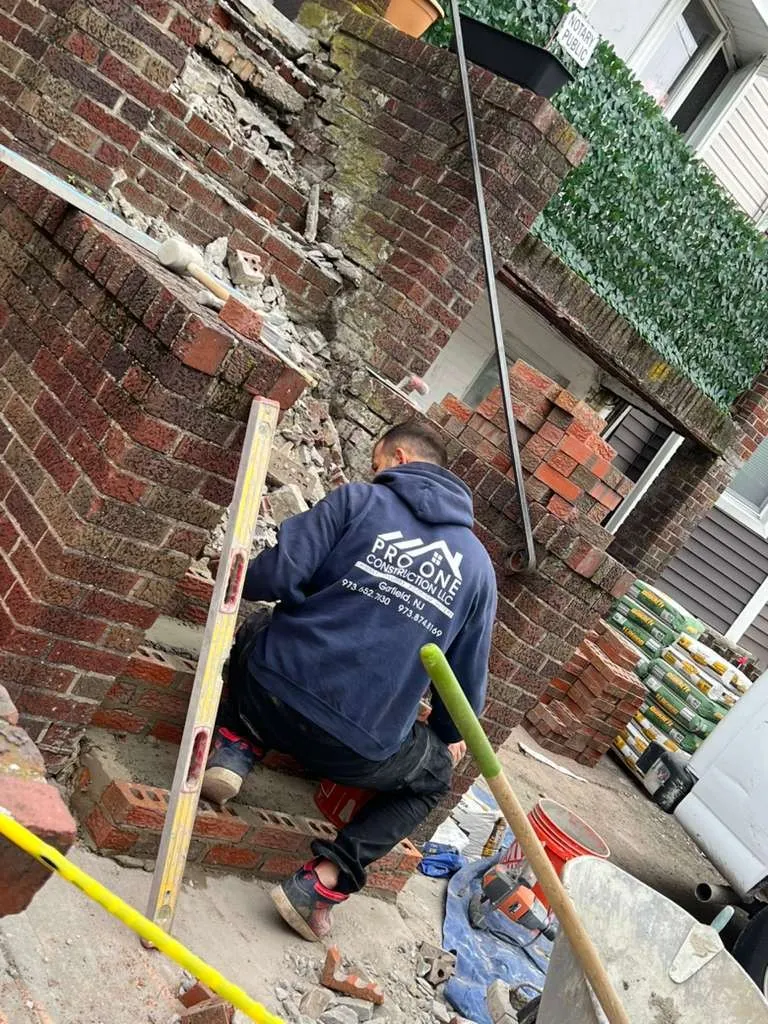
When the top of the chimney has loose, spalled or shifting brick, patching will not hold. We take the chimney down to solid masonry, usually somewhere above or near the roofline, and rebuild it with matching brick and new mortar, then finish with a new crown. On older homes we take care to match the original brick and mortar, as described in our historic masonry restoration service.
Flashing repairs
Flashing is the metal that seals the joint between chimney and roof. When it is missing, rusted or simply covered in caulk, water runs straight into the attic and walls. We install step and counter flashing that is let into the mortar joints, coordinating with roof work where needed through our roofing, siding and gutters team.
Fireplace masonry, indoors and out
Masonry fireplaces are about more than looks. We build and repair:
- Fireplace surrounds and hearths in brick or stone
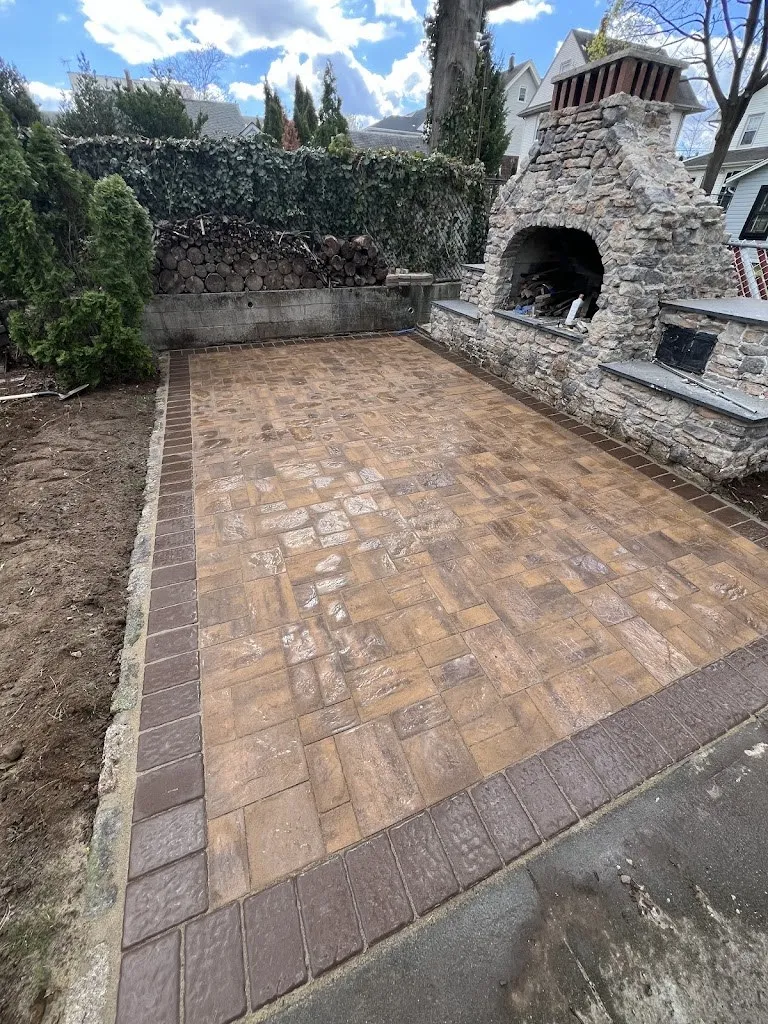
- Outdoor stone fireplaces that anchor a patio or backyard living area
- Firebox repairs, where loose or cracked firebrick and refractory mortar need replacing
Outdoor fireplaces need a solid footing, a properly sized firebox and a chimney that draws well. Rules for outdoor fire features and setbacks vary by town, so we check local requirements before we design one.
Our chimney repair process
- Inspection. We look at the crown, stack, mortar, flashing and any visible signs of water entry inside the house.
- Clear recommendation. You get a written scope that separates urgent repairs from things that can wait.
- Safe access. We set up ladders, roof protection or staging appropriate to the height and pitch of your roof.
- Masonry work. Repointing, rebuilding, crown work and flashing, completed in an order that keeps water out at every stage.
- Cleanup. Debris is removed from the roof, gutters and yard before we leave.
What affects the cost of chimney work
The biggest factors are roof height and pitch, how far down the chimney needs to be rebuilt, the number of flues, the brick to be matched, and whether flashing or roof repairs are part of the job. A chimney that is caught early usually needs a crown and some repointing. One that has been leaking for years is more likely to need a partial rebuild.
Choosing a chimney mason
Look for a contractor who explains where the water is getting in and fixes that source, rather than covering the chimney in sealant. Ask how they will build the crown and whether the flashing is being replaced or just caulked. We are a family-owned masonry contractor based in Garfield with 25+ years of experience and a New Jersey Home Improvement Contractor registration.
Request a free estimate and we will inspect your chimney and give you a clear plan.