Stone masonry and brickwork change how a building looks from the street more than almost any other exterior upgrade. A stone veneer porch, a brick column at the driveway or a stacked stone wall at the entry gives a home a solid, finished look that lasts for decades. On commercial buildings, a stone or brick facade signals quality the moment someone pulls up.
We install natural stone, stone veneer and brick on New Jersey homes and businesses, inside and out.
Stone masonry and brickwork projects we build
- Stone veneer facades on full fronts, gables, garage walls and additions
- Foundation and wainscot veneer covering plain block or concrete along the base of a home
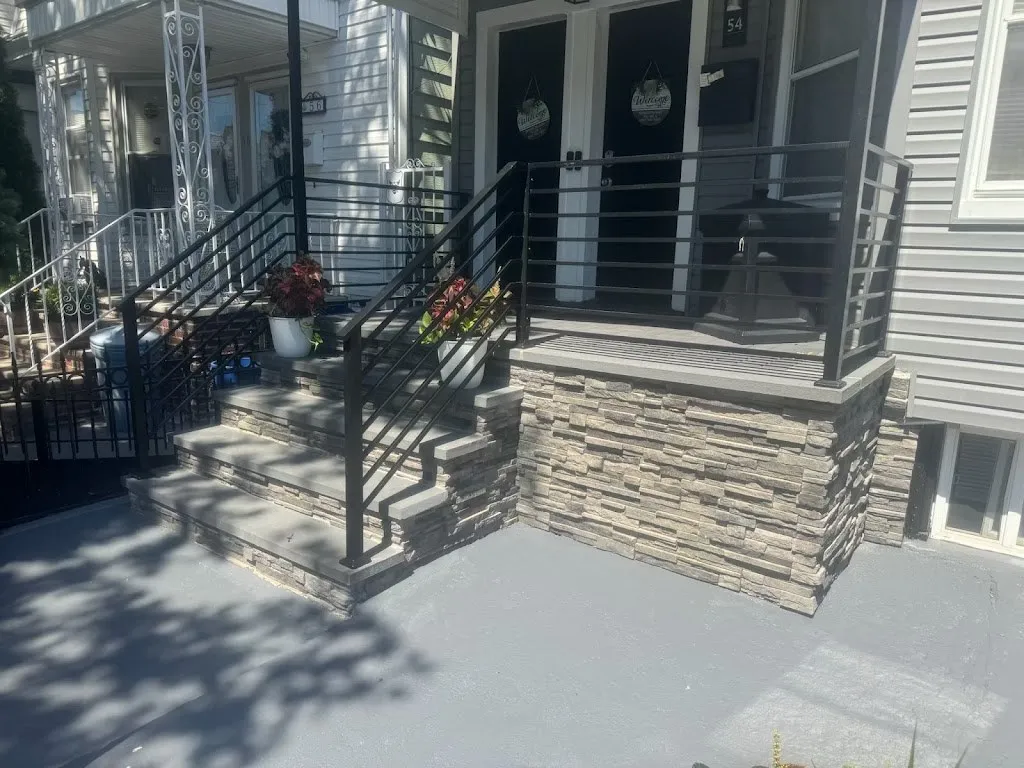
- Front porches and stoops faced in stone or brick, often with bluestone treads
- Columns and pillars at porches, gates and driveways
- Accent walls and fireplace surrounds indoors
- Freestanding stone and brick walls in front yards and gardens
- Commercial facades and storefront upgrades
For steps and stoops where the structure itself needs to be built or rebuilt, see our masonry construction and repair page.
Choosing stone or brick
Full natural stone
Full-thickness stone is laid like brick and carries its own weight on a footing or ledge. It is the most substantial option and is common on freestanding walls and some older homes.
Thin natural stone veneer
Real stone sawn thin, so it can be adhered to a prepared wall without a footing. You get the color and texture of natural stone with much less weight.
Manufactured stone veneer
A cast product that mimics natural stone in many profiles and colors. It is light, consistent and often the most economical stone look. Quality varies between products, so we help you choose one that holds up outdoors in our climate.
Brick
Brick works for facades, columns, walls and accents, and pairs well with stone or bluestone trim. On homes that already have brick, we match size, color and texture as closely as possible so new work looks original. On older buildings, our historic masonry restoration approach applies.
Why installation matters more than the stone
Most problems with stone veneer have nothing to do with the stone. They come from what is behind it. Adhered veneer on a framed wall is part of a system designed to keep water out of the house and let any moisture that gets behind the stone drain away. When layers are skipped, water gets trapped against the sheathing and framing, and damage can go unnoticed for years.
On framed walls we install, as the system and manufacturer call for:
- A water-resistive barrier over the sheathing, lapped so water runs down and out.
- Metal lath, fastened into the framing.
- A scratch coat of mortar to bond the stone.
- Weep screed or a drainage edge at the bottom so water can exit.
- Flashing at windows, doors, roof lines and decks.
- Proper clearance between the bottom of the veneer and soil or paving.
On masonry walls like concrete block foundations, the wall is cleaned and prepared so the veneer bonds directly. Building and code requirements vary by town, and we check what applies before starting.
Our process
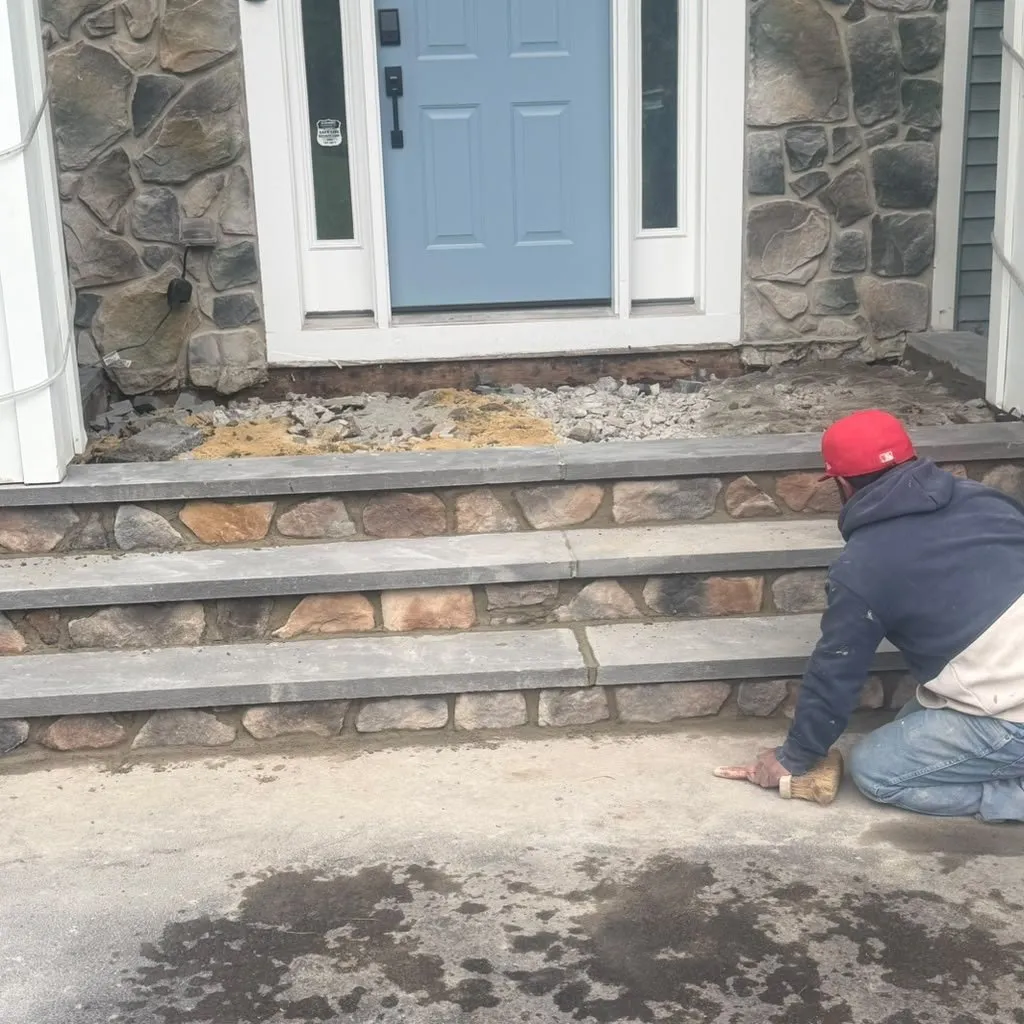
Design and samples. We look at the house, discuss where stone or brick will look best, and bring samples so you can see colors against your siding, roof and trim.
Preparation. We remove siding or trim where needed, repair anything behind it, and install the barrier, lath and flashing.
Layout and setting. Corners go on first, then the field stone, with attention to color mix, joint lines and avoiding repeated patterns.
Joints and finish. Joints are grouted and tooled to the look you choose, or kept tight for a dry-stack appearance. Caps and sills are set to shed water.
Cleanup. We clean the stone, haul away debris and leave the site clean.
What affects the cost of stone and brick work
The main factors are the square footage, the type of stone or brick, how many corners, windows and openings must be worked around, the height of the wall and any staging, whether siding must be removed, and the condition of the wall behind it. Natural stone usually costs more than manufactured veneer, and intricate patterns take more labor than simple ones. Your estimate spells out each item.
Choosing a mason for veneer and brick
Ask the contractor what goes behind the stone, how water will drain out, and how they flash windows and doors. A good mason will have clear answers and photos of similar work. We are a family-owned masonry contractor based in Garfield with 25+ years of experience. You can see examples of our finished work on our project gallery.
Request your free estimate and we will help you pick the stone or brick that suits your property.