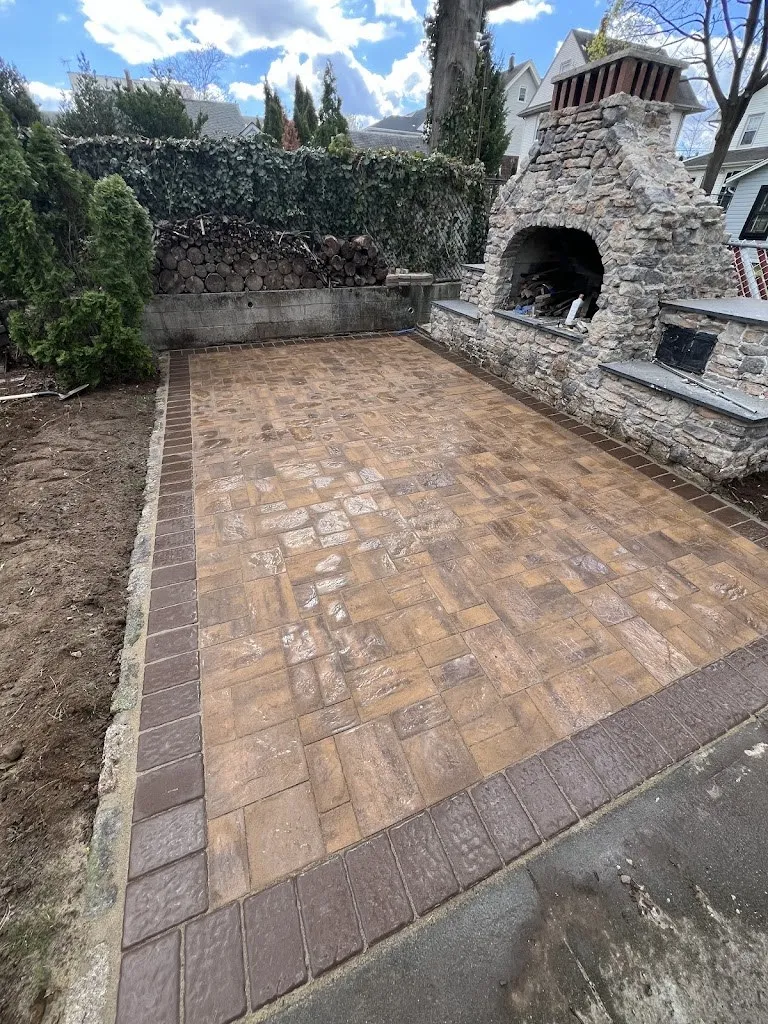
Nothing gets people outside on a cool evening like a real fire. A built-in fire pit or outdoor fireplace turns a patio into a gathering place and stretches your outdoor season from early spring well into fall. Fire pits and outdoor fireplaces in New Jersey are among the most requested additions to the hardscape projects we build, and they are a great way to finish a new or existing patio.
We design and build custom fire features in stone, block and brick for homeowners and commercial properties across North and Central New Jersey.
Fire pits vs. outdoor fireplaces
Both create a focal point, but they suit different spaces and budgets.
Built-in fire pits
- Round or square, usually at a comfortable height for sitting around or resting your feet near
- Allows a group to sit in a circle around the fire
- Works well in the middle of a patio or as its own small seating area
- Often paired with a curved seating wall in matching block
Outdoor fireplaces
- Taller structure with a firebox, hearth and chimney
- Draws smoke upward and away from the seating area
- Acts as a backdrop and a privacy screen on one side of the patio
- Can be faced in natural stone or stone veneer to match your home
A fireplace is a bigger masonry project and costs more than a fire pit, but it creates a more dramatic outdoor room. During the estimate we talk through how you entertain and which feature fits best.
Wood-burning or gas
Wood-burning fire features give you crackle, smell and real flames. They need a firebox lined with fire brick or a steel insert, space for ash, and a little more cleanup.
Gas features light with a switch or key, produce little smoke and no ash, and can run on natural gas or propane. The gas line and burner connection must be installed by a licensed plumber, and we build the masonry to accommodate the burner and allow proper ventilation.
Safety and placement
Where you put a fire feature matters as much as how it looks. When we plan placement, we look at:
- Clearance from the house, decks, fences, overhanging roofs and tree branches
- Wind direction, so smoke does not drift straight into the seating area or open windows
- Surrounding surface, using pavers or stone around the fire rather than wood decking or mulch
- Local rules, since towns and fire officials set their own requirements on open burning, setbacks and enclosed units
Requirements vary across New Jersey municipalities, so we check what applies to your property before we build. We also recommend confirming burn rules with your local fire official.
How we build fire features that last
Fire and freeze-thaw cycles are both hard on masonry, so the construction details matter.
- Foundation. Fire pits sit on a compacted aggregate base. Outdoor fireplaces, which are much heavier, are built on a proper footing sized for the structure.
- Firebox or liner. Fire-rated brick set in refractory mortar, or a steel ring insert, protects the outer walls from direct heat.
- Structure and veneer. The outer walls are built in segmental block, brick or block faced with stone veneer to match your patio and home.
- Caps and hearth. Natural stone or block caps finish the top, and a hearth gives a non-combustible landing in front of a fireplace.
- Drainage. Wood-burning pits are built so rainwater does not collect inside and sit in the firebox.
For homes that also need indoor chimney or fireplace work, our chimney and fireplace masonry team handles that side of the house.
Pairing a fire feature with your patio
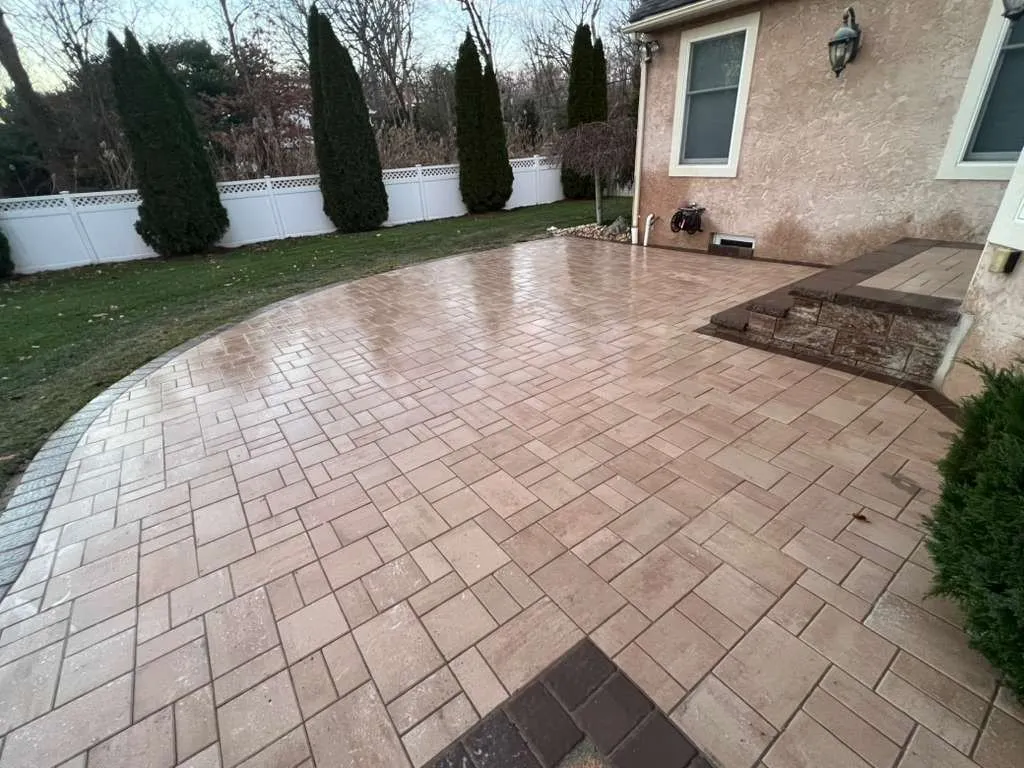
A fire feature works best as part of a well-planned space. We typically build them along with a new patio or as part of a full hardscaping design that includes seating walls, lighting and paths. Matching the cap stone and block to your patio border makes the whole space look intentional.
Cost factors and care
Cost depends on the type and size of the feature, wood or gas, the materials used for the exterior and caps, foundation requirements, and whether it is built with a new patio or added to an existing one. Outdoor fireplaces involve considerably more masonry than fire pits.
Care is easy. Clear ash from wood-burning pits regularly, keep a cover on the pit when not in use if you like, and inspect the fire brick and caps each spring. A well-built masonry fire feature can be enjoyed for many years.
Picturing evenings around the fire? Request a free estimate and we will help you choose and place the right fire feature for your yard.