Almost every piece of concrete cracks at some point. Concrete shrinks as it cures, moves with the seasons, and responds to whatever the soil under it is doing. The question is not whether you have cracks, but what kind they are and whether they are getting worse. Our crack repair service in New Jersey covers cracks in foundation walls, basement floors, garage slabs, walkways, patios and steps, and starts with understanding why the crack is there.
Reading the crack: what it tells you
The shape, width and direction of a crack say a lot about its cause. Here is a general guide:
- Hairline cracks with no displacement. Usually shrinkage during curing. Cosmetic in most cases.
- Cracks along control joints. Exactly what the joints are designed for. Normal.
- Vertical cracks in a poured foundation wall. Common and often from shrinkage, but they can leak and should be sealed.
- Diagonal cracks from window or wall corners. Often a sign of some settlement. Worth monitoring.
- Stair-step cracks in block walls. Movement following the mortar joints, from settling or soil pressure.
- Horizontal cracks or a bowing wall. Pressure from soil and water outside the wall. This is the most serious pattern and needs prompt attention.
- Slab cracks where one side is higher. The base underneath has settled or heaved.
If a crack is wider at one end, keeps growing, or lets water in, do not wait. A simple way to monitor a crack is to mark its ends with a pencil and date, then check it again after a few weeks.
Foundation and wall crack repair
Foundation cracks are the ones that worry homeowners most, and for good reason: they can let water into the basement and, in some cases, signal structural movement.
Poured concrete walls
For most non-structural cracks in poured walls, injection is the standard repair. Ports are set along the crack and a flexible polyurethane or rigid epoxy is pumped in under low pressure until it fills the crack through the wall. Polyurethane is typically chosen to stop leaks because it stays flexible. Epoxy bonds the concrete back together and is used where restoring strength matters.
Block foundation walls
Concrete block walls are hollow, so injection does not work the same way. Cracked mortar joints and broken blocks are repointed or replaced, and a wall with active leaking may need exterior waterproofing or an interior drainage system. Bowing or shifted block walls need structural repair.
When cracks are tied to settlement, failing footings or persistent water, the fix goes beyond crack sealing. Our new foundations and repair service handles structural work, and basement waterproofing deals with water pressure at the source.
Slab and flatwork crack repair
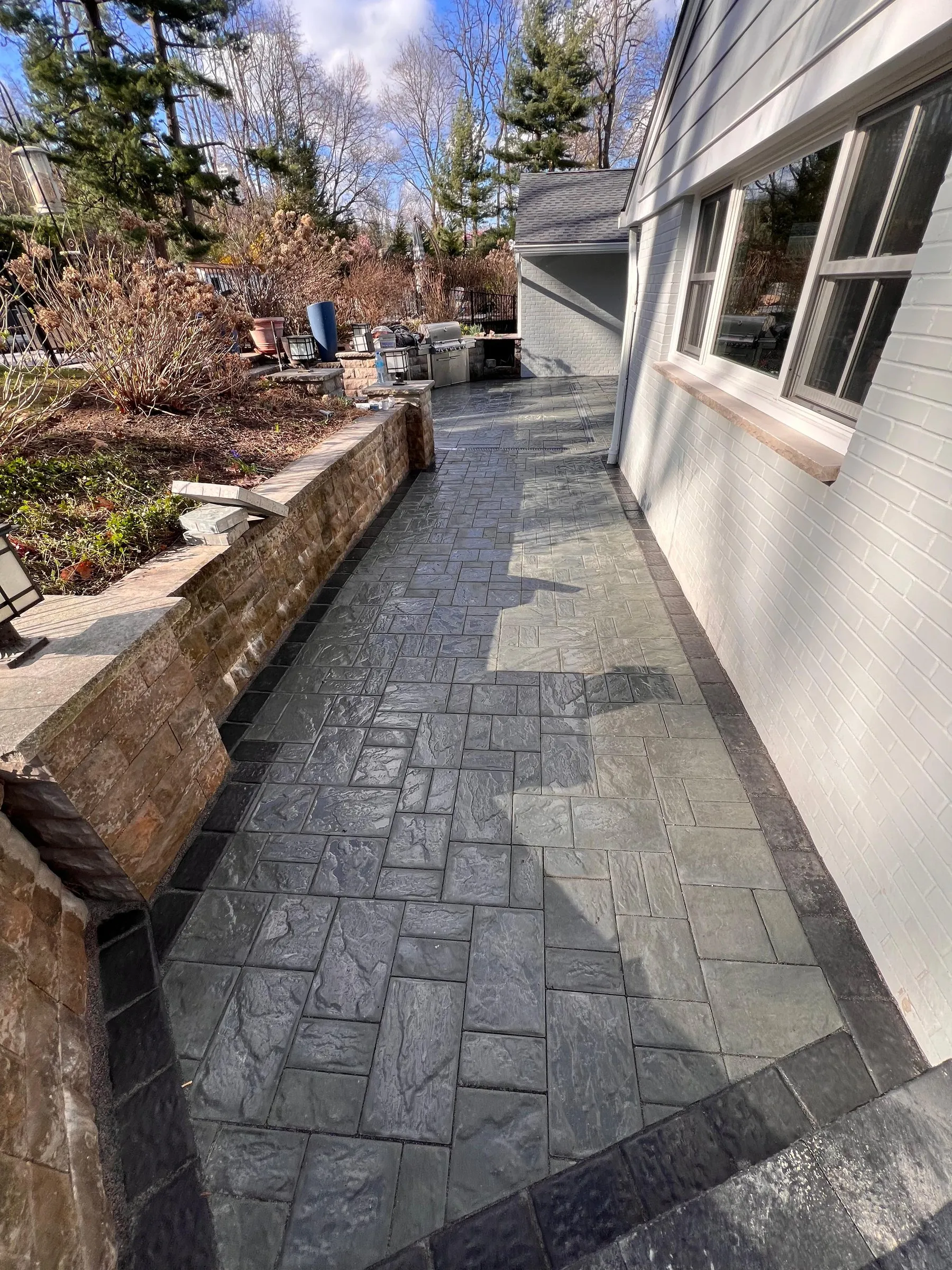
Cracks in driveways, walkways, patios, garage floors and basement slabs are repaired differently than wall cracks. We clean out loose material, widen the crack slightly with a grinder where needed so the filler can bond, and fill it with a flexible sealant or a cement-based repair product depending on the width and location. Flexible sealants work best for cracks that open and close with temperature changes.
If the slab has shifted so one side sits higher, filling the crack will not remove the trip hazard. In that case the affected section usually needs to be cut out and replaced as part of our concrete repair and resurfacing work.
What causes concrete to crack in New Jersey
Our region adds a few local factors to the usual shrinkage:
- Freeze-thaw cycles. Water in a crack freezes, expands and pushes it wider every winter.
- Clay and fill soils. Some soils swell when wet and shrink when dry, or settle over time if they were not compacted.
- Poor drainage. Downspouts that empty against the foundation and yards that slope toward the house load the soil with water.
- Tree roots. Roots lift slabs, especially sidewalks and driveways near street trees.
- Missing joints or reinforcement. Slabs poured without control joints crack randomly.
Our crack repair process
- Inspection. We measure and document the cracks and look for patterns, moisture and signs of movement.
- Cause. We check grading, gutters, downspouts and the soil around the area.
- Recommendation. You get a clear explanation of whether the crack needs sealing, injection, section replacement or structural work.
- Repair. The work is done with materials matched to the crack and the conditions.
- Prevention. We point out drainage fixes that will help keep new cracks from forming.
Cost depends mainly on the number and length of cracks, wall or slab type, access, and whether the underlying cause needs correction. You can see the rest of what we do on the concrete services page.
Concerned about a crack? Book a free estimate and we will come take a look.