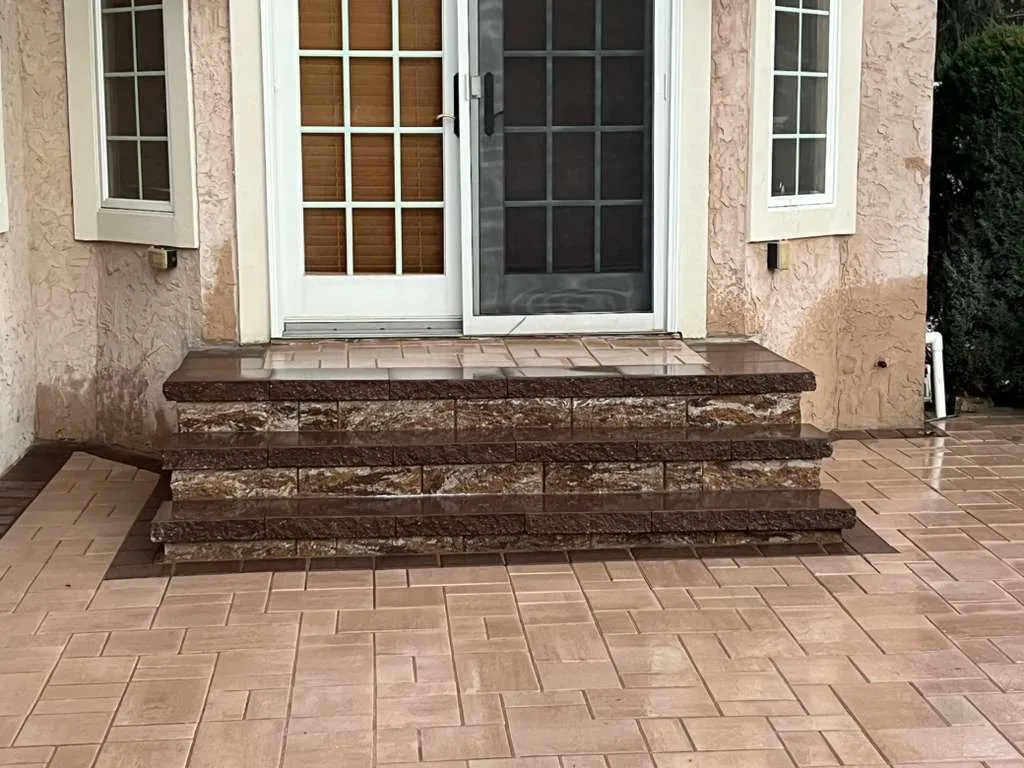
Stucco has been used on New Jersey homes for generations, on everything from Tudors and colonials to modern additions and commercial storefronts. When it is installed with the right layers behind it, a stucco wall can last for decades. Our stucco services in New Jersey cover new installations, repairs and refinishing, and we pay as much attention to what goes behind the finish as to the finish itself.
Why stucco gets a bad reputation
Most stucco problems you hear about are not caused by the stucco. They are caused by water getting behind it with no way out. Stucco is a porous cement-based finish that absorbs a little water during rain and then dries. That is normal. The trouble starts when:
- Windows and doors are not flashed, so water runs into the wall at every opening.
- Kick-out flashing is missing where a roof edge meets a wall, sending roof water straight into the stucco.
- The weather barrier is missing or installed backwards, so water is directed toward the sheathing instead of away from it.
- There is no weep screed, or the stucco runs right into the soil or a patio, trapping water at the base of the wall.
- Sealant joints have failed around windows, vents and light fixtures.
From the outside, a wall with hidden moisture damage may look perfectly fine. Signs to watch for include staining below windows, soft or crumbling areas near the bottom of the wall, bulges, cracks that keep reopening, and musty smells or damp spots inside.
New stucco installation
On framed walls, a durable stucco job is built in layers:
- Weather-resistant barrier. Usually two layers of building paper or a housewrap rated for stucco, lapped so water always runs outward and down.
- Flashing. Windows, doors, roof-to-wall joints and penetrations are flashed and integrated with the barrier.
- Weep screed and trim. A weep screed at the base, plus casing beads and control joints where needed.
- Metal lath. Galvanized lath fastened to the framing gives the stucco something to grip.
- Scratch coat. The first coat is pressed into the lath and scored so the next layer bonds.
- Brown coat. The second coat builds thickness and creates a flat, even surface.
- Finish coat. The final coat sets the color and texture.
This is the traditional three-coat system. Some projects use one-coat systems or synthetic finishes such as EIFS, which have different details and requirements. We will explain the differences if they apply to your project.
On masonry walls such as block foundations, garden walls and chimneys, stucco or parging can be applied directly to the clean, prepared surface without lath.
Stucco repair
Good stucco repair starts with finding out why the damage happened. Patching a crack without fixing the flashing above it just means the crack comes back.
- Cracks. Hairline cracks may only need a finish coat or an elastomeric coating. Larger cracks are opened up, filled and refinished.
- Impact damage and holes. Damaged stucco is cut back to sound material, the lath and barrier are repaired, and new coats are built up to match.
- Moisture damage. When the wall behind is wet or rotted, the stucco has to come off in that area so the sheathing and framing can be repaired. Then we rebuild the wall with proper barrier, flashing and drainage.
Matching an existing texture takes practice. We test the finish on a small area and adjust before doing the full patch, so the repair blends as closely as possible.
Refinishing and finish options
If your stucco is sound but stained, faded or covered in old patches, a new finish coat can make the whole wall look new. Finish options include:
- Smooth for a clean, modern look.
- Sand or float finish, a fine, even texture that hides minor flaws.
- Dash and lace textures for a more rustic or traditional appearance.
Stucco also pairs well with stone. Many homeowners combine a stucco wall with a stone veneer base or accent, which our masons install through our stone masonry and brickwork service.
Stucco and the rest of the exterior
Because water at roof edges and gutters causes so many stucco failures, it often makes sense to check the roof flashing and gutters at the same time. Our roofing, siding and gutters crew can handle kick-out flashing and gutter fixes as part of the same project. On older brick and block buildings, stucco work may also go hand in hand with general masonry services.
What affects the cost of stucco work
The size of the wall area, whether it is new work or repair, the condition of what is behind the existing stucco, the finish you choose, and access such as scaffolding for upper floors all play a role. Requirements for permits vary by town, and we check them before starting.
Seeing cracks, stains or soft spots in your stucco? Request a free estimate and we will take a close look.