A lot of masonry construction and repair work in New Jersey starts with the same story. A set of front steps has started to tip, a garden wall has a crack that keeps getting wider, or a stoop has settled away from the door. The masonry itself is often fine. What failed was the base underneath, the drainage around it, or the water getting in from above.
We build new brick and block structures the right way from the ground up, and we repair existing ones by finding and fixing the real cause.
Masonry construction and repair work we handle
Our masonry construction and repair work covers most of the brick and block you see around a home or small commercial building:
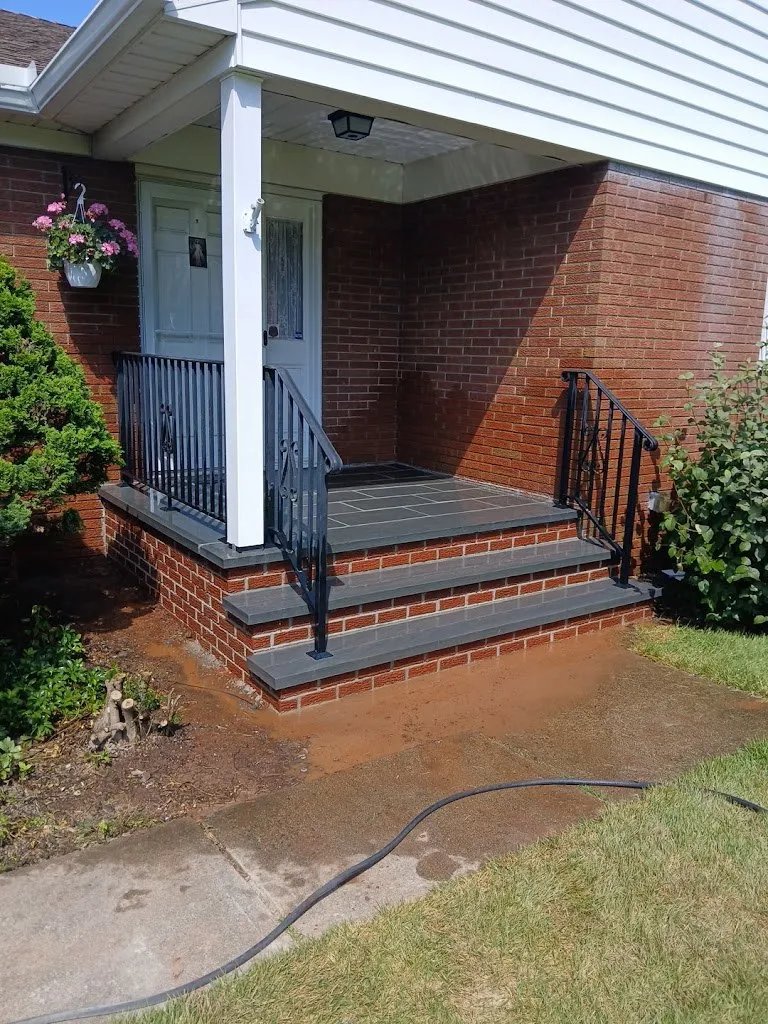
- Front steps and stoops, including landings, risers, side walls and treads
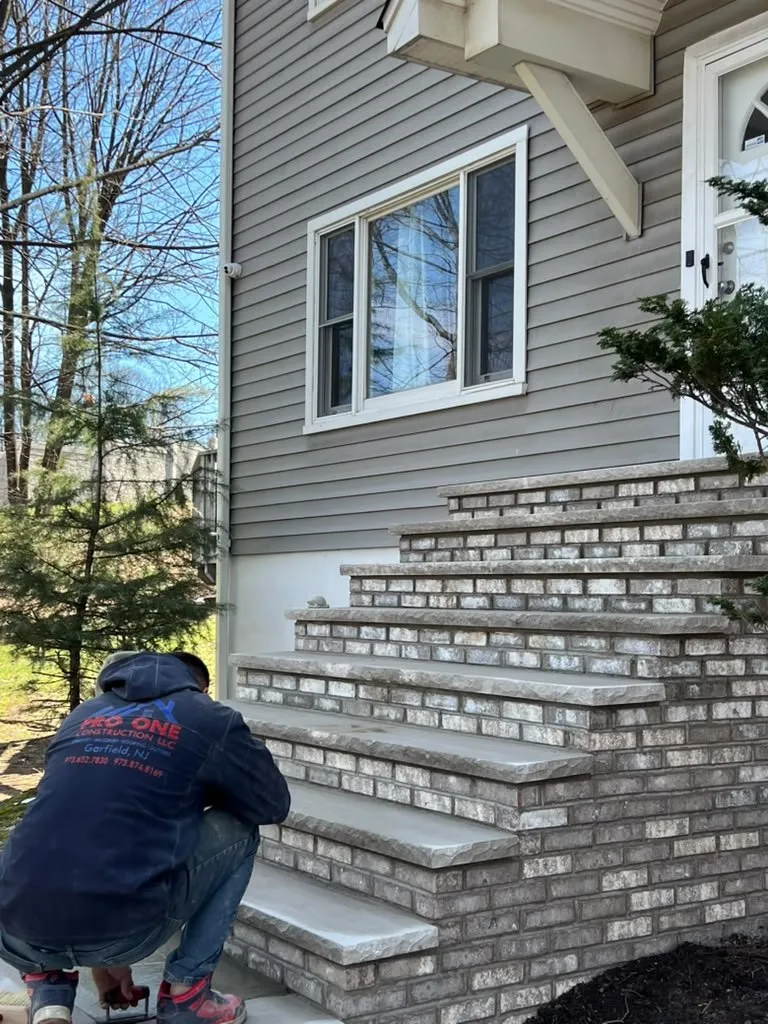
- Rear steps and porches with block cores and brick or stone facing
- Garden walls, seat walls and piers in brick, block or stone
- Foundation walls and block repairs on homes, garages and additions
- Masonry columns and pillars for entries, gates and porches
- Commercial brick and block such as storefront walls, sidewalk steps and small building repairs
For outdoor walls that hold back soil, our retaining wall team handles the engineering side, including drainage and reinforcement.
Signs your masonry needs repair
Not every crack is an emergency, but some problems get much more expensive the longer they wait. Call a mason when you notice:
- Steps or stoops that rock, tilt or separate from the house foundation.
- Wide or growing cracks, especially ones that run diagonally across several courses of brick.
- Bulging, leaning or bowing in a wall.
- Loose or missing bricks, caps or treads.
- Spalling, where the face of the brick pops off and exposes the softer interior.
- Water at the base of a wall or under a stoop after rain.
If the mortar is soft but the bricks are still tight and sound, repointing may be all you need. Our tuckpointing and repointing page explains that repair in detail.
Repair or rebuild?
This is the most important question on most masonry jobs, and it deserves a straight answer.
Targeted repair makes sense when the base is stable and the damage is limited: a few spalled bricks, a loose cap, cracked mortar or a damaged tread. We cut out the damaged units, replace them with matching brick or stone, and repoint the area.
Rebuilding makes sense when the foundation has moved, the core is hollow or full of loose fill, or the damage is spread throughout. Patching a structure that is still moving only buys a season or two. In those cases we take the masonry down to a solid base, pour a proper footing if needed, and rebuild.
We show you what we find before recommending either option, and if partial demolition reveals more damage than expected, we stop and talk to you before going further.
How we build new masonry
Footings and base
Steps, walls and piers need a footing that reaches below the frost line set by your town. Frost depths and permit rules vary across New Jersey, so we confirm local requirements before we dig. Footings are poured on undisturbed soil or compacted base, never on loose fill.
Core and structure
Most steps and walls are built with a concrete block core. Cores are filled or reinforced where the design calls for it, and step cores are built so water cannot pool inside.
Facing and finish
The core is faced with brick, natural stone or stone veneer to match your home. Treads and caps are usually bluestone or concrete and are set with a slight pitch so water runs off instead of soaking into the joints. We tool every joint and clean the masonry before we leave.
Railings and final details
Where railings are required or wanted, we coordinate them with the masonry so posts are set cleanly and do not crack the treads.
What drives the cost of masonry repair
The price of a repair depends on what is hidden as much as what is visible. Main factors include the size of the area, how much demolition is needed, whether new footings are required, the facing material, access for equipment, and how closely new brick must match old brick. Your estimate lists the scope in writing so there are no surprises.
Work with a mason who explains the job
Choose a contractor who looks at the base and the drainage, not only the surface, and who can explain why the masonry failed. We are a family-owned contractor based in Garfield with 25+ years of experience, registered as a New Jersey Home Improvement Contractor. For brick or stone facing beyond structural work, see our stone masonry and brickwork service.
Book a free on-site estimate and we will tell you what your masonry really needs.