Pavers, Concrete, Asphalt or Stamped Concrete: The Best Driveway for New Jersey
Pavers, poured concrete, asphalt or stamped concrete? Compare how each NJ driveway handles freeze-thaw, plows, salt, repairs and upkeep before you replace yours.
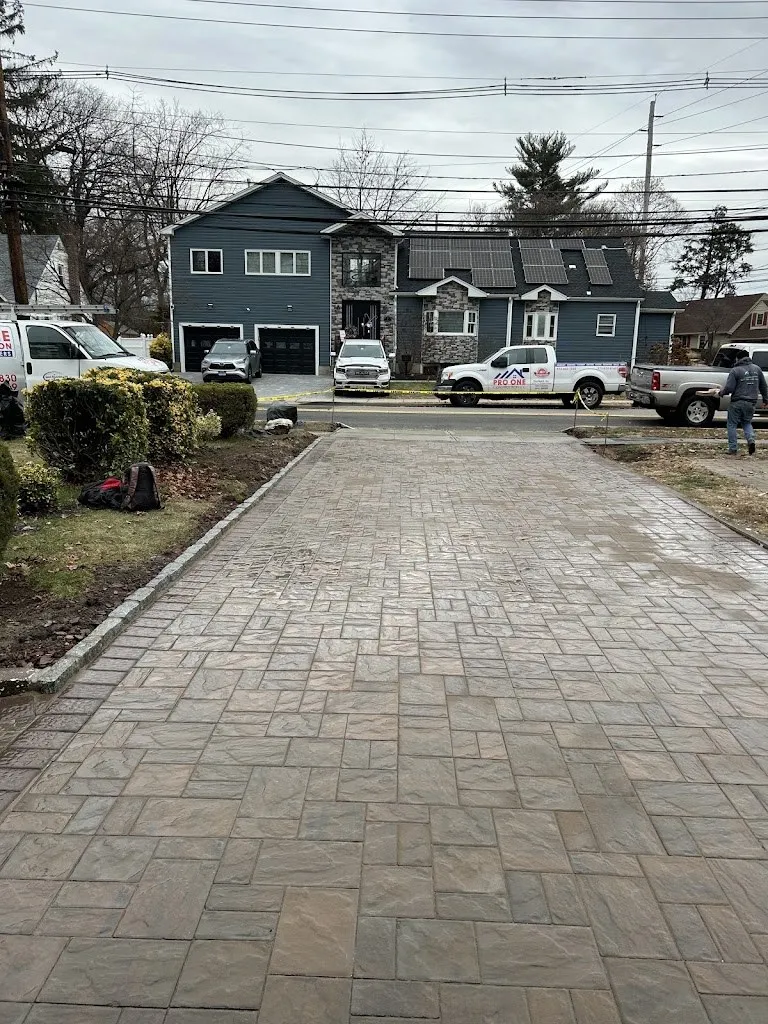
A driveway works harder than any other surface on your property. It carries the weight of your cars every day, gets scraped by plows and shovels, sits under snow piles for weeks, and takes the salt your tires drag in from the street. The material you choose decides how it holds up to all of that, how it gets fixed, and how much attention it asks of you over the years.
Here is how the four most common options compare for a New Jersey driveway.
What a New Jersey Driveway Has to Survive
Freeze-thaw cycles
Our winters swing above and below freezing again and again. Water that gets into cracks, joints or the surface itself freezes, expands and slowly breaks things apart. Rigid slabs crack. Flexible surfaces shift. Every option handles this differently.
Plows, shovels and snow blowers
If you hire a plow service, the blade will scrape your driveway after every storm. Sharp steel edges can gouge soft surfaces, chip slab edges and catch on anything that sits higher than its neighbor.
Salt from the road
Even if you never salt your own driveway, salty slush drips off your car every time you pull in. Over a winter, that adds up, especially near the garage door where cars sit.
Weight and turning tires
Cars, delivery trucks and the occasional oil truck all put heavy, concentrated loads on a driveway. Turning the steering wheel while parked twists the surface underneath the tire.
Poured Concrete Driveways
A broom-finished concrete driveway is a single reinforced slab with control joints cut in to guide cracking.
- Durability: Typically outlasts asphalt when built on a good base with air-entrained concrete.
- Winter: Handles plows well, but de-icing salt can cause surface scaling, especially in the first winters.
- Repairs: Cracks can be sealed and damaged sections replaced, but new concrete rarely matches the old color.
- Upkeep: Low. A penetrating sealer every few years helps it resist water and salt.
- Look: Clean and bright. Shows oil drips and tire marks more than darker surfaces.
Asphalt Driveways
Asphalt is a flexible blacktop surface rolled over a compacted stone base.
- Durability: Generally has a shorter service life than concrete or pavers, though regular care extends it.
- Winter: Unaffected by rock salt, and its dark color helps snow melt off in the sun. Flexes slightly with frost.
- Repairs: The easiest of the four to patch and resurface.
- Upkeep: The most routine work. It needs sealcoating every few years and cracks filled before water gets in.
- Summer: Softens in heat, so kickstands, trailer jacks and turning tires can leave marks, particularly when it is new.
Paver Driveways
Paver driveways are built from individual interlocking units over a deep, compacted aggregate base, held by a rigid edge restraint.
- Durability: A properly built paver driveway often outlasts poured surfaces, because the joints absorb ground movement instead of cracking.
- Winter: Freeze-thaw movement is spread across many joints. Pavers handle salt better than poured concrete, though salt can leave a white haze. Plows should use a rubber edge or ride slightly high.
- Repairs: The big advantage. A settled spot or a utility repair means lifting the pavers, fixing the base and resetting the same units with no patch mark.
- Upkeep: Occasional sweeping, joint sand top-ups and an optional sealer.
- Look: The most design choice, from classic red brick tones to large modern gray units, with borders and patterns.
Our paver construction page explains how vehicle-rated paver driveways are built.
Stamped Concrete Driveways
Stamped concrete is a poured slab with color and a pressed pattern that imitates stone, slate or brick.
- Durability: The slab itself behaves like plain concrete. The decorative surface is what needs protecting.
- Winter: The sealer takes the brunt of salt, plows and tires. Once it wears, the colored surface is exposed to scaling. A glossy sealer can also be slippery on a sloped driveway when wet or icy.
- Repairs: The hardest to blend. Matching both color and pattern on a patch is very difficult.
- Upkeep: Regular cleaning and resealing, more often in high-traffic areas where tires turn.
- Look: A decorative, seamless finish. Many homeowners use it as a border or apron with plain concrete for the main field.
Side-by-Side: Driveway-Specific Trade-Offs
- Best for easy, invisible repairs: pavers.
- Least bothered by road salt: asphalt, followed by pavers.
- Lowest routine upkeep: poured concrete.
- Most frequent maintenance: asphalt (sealcoating) and stamped concrete (resealing).
- Steep driveways: textured surfaces such as broom-finished concrete or pavers give better grip than glossy sealed finishes.
- Most design flexibility: pavers, then stamped concrete.
Cost Factors to Think About
We price every driveway after seeing it, but these are the things that move the number:
- Size and shape. Long, curved or wide driveways and turnarounds use more material and labor.
- Removal. Breaking out and hauling away an old driveway is part of most jobs.
- Base work. Soft or wet soil has to be dug out and replaced with compacted stone.
- Material. As a general rule, asphalt costs the least up front, poured concrete sits in the middle, and pavers and stamped concrete cost more.
- Street work. Aprons, curbs and sidewalk crossings often have town rules attached.
- Long-term upkeep. A lower installation cost can be offset by more frequent sealcoating, resealing or patching over the years.
Questions to Ask Before You Choose
- How many cars park here, and do heavy trucks ever use it?
- Do you use a plow service, a snow blower or a shovel?
- Is the driveway steep, and does water drain toward the garage?
- Are there utilities under the driveway that may need work someday?
- How much maintenance are you realistically willing to do?
- Does your town have rules for widening, aprons or curb cuts? Requirements vary by town, and we check them before designing the job.
Frequently Asked Questions
Which driveway material lasts the longest in New Jersey?
Pavers and well-built concrete typically outlast asphalt. With any material, the base, drainage and installation quality matter more than the surface you see.
Can I put pavers over my old driveway?
We usually recommend removing the old surface first. Building on top can trap water and hide base problems that show up later.
Is stamped concrete a good choice for a whole driveway?
It can be, but it needs more regular resealing than plain concrete, and tire wear shows in turning areas. Many homeowners prefer stamped borders with a broom-finished center.
Which driveway is easiest to keep clear of snow?
All four can be shoveled, blown or plowed. Asphalt sheds snow a little faster on sunny days because of its dark color. With pavers and stamped concrete, ask your plow service to use a rubber-edged blade so the surface is not scratched or chipped.
Compare options on our concrete and asphalt driveways page or browse finished driveways on view our work. When you are ready, request a free estimate and we will walk your driveway with you.