How to Protect Your Concrete from Salt Damage This Winter
De-icing salt and freeze-thaw cycles cause scaling and spalling on NJ steps, walks and driveways. Learn how to seal, shovel and de-ice smarter, and fix damage.
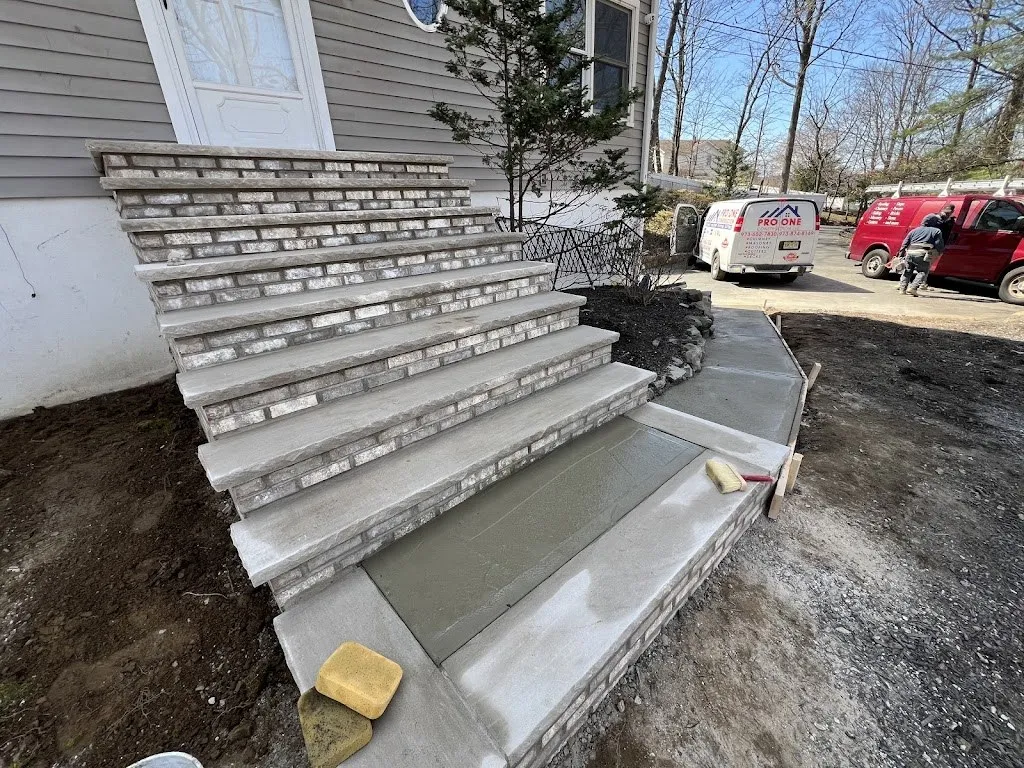
Every spring, homeowners across New Jersey notice the same thing: the surface of the front walk, the steps or the driveway apron has started to flake and pit. Most of the time, winter de-icing salt played a big part. The good news is that a few habits in the fall and through the winter can slow that damage dramatically.
How Salt and Freeze-Thaw Damage Concrete
Concrete looks solid, but it is full of tiny pores and channels that soak up water. When that water freezes, it expands and pushes against the concrete from the inside.
Salt makes this worse in a few ways:
- More wet time. Salt melts ice into salty water that soaks into the surface and stays there.
- More freeze cycles. Melted water refreezes when temperatures drop at night, so the top layer goes through many more freeze-thaw cycles than it would on its own.
- Pressure near the surface. Salty water in the top layer behaves differently from the concrete below, which puts extra stress on that thin surface layer.
- Rusting steel. Over time, salt can reach reinforcing steel. Rusting steel expands and breaks the concrete above it.
Some de-icing chemicals are also known to attack concrete directly. Products containing ammonium nitrate or ammonium sulfate are the main ones to avoid.
Scaling vs. Spalling: Know the Difference
Scaling
Scaling is the loss of a thin top layer. The surface peels away in small flakes, exposing the rougher sand and stone underneath. It often starts where salt and water collect, such as the bottom step, the edges of the walk, or where cars park and drip.
Spalling
Spalling goes deeper. Larger chips or chunks break out, sometimes along edges and corners, sometimes over rusting steel. Spalling is more of a structural concern and more likely to create a trip hazard.
Why some concrete scales and some does not
Concrete placed for exterior use in our climate should contain entrained air, which creates tiny bubbles that give freezing water room to expand. Concrete that was mixed without it, finished while there was water on the surface, or cured poorly tends to scale much faster. New concrete is especially vulnerable during its first winter.
Seal Before the First Freeze
A good penetrating sealer is one of the simplest ways to protect exterior concrete. It soaks into the surface and reduces how much water and salt can get in, while still letting the concrete breathe.
Tips for sealing:
- Timing: Seal in the fall, on a dry day when temperatures are comfortably above freezing, so the sealer can cure before winter.
- Clean first: Remove dirt, leaves and stains so the sealer can penetrate.
- Let new concrete cure: Fresh concrete needs time before sealing. Follow the product’s directions or ask your installer.
- Check if it is time: Sprinkle some water on the surface. If it soaks in and darkens quickly instead of beading, it may be time to reseal.
- Penetrating vs. film-forming: Penetrating sealers are usually the better choice for plain broom-finished walks and driveways. Decorative and stamped concrete often uses a film-forming sealer, which needs periodic renewal.
Safer Ways to De-Ice
There is no de-icer that is completely harmless to concrete, but you can reduce damage a lot by choosing and using products carefully.
- Shovel first, de-ice second. The less snow you leave, the less de-icer you need.
- Use less. A light, even scatter works better than piles. More product does not mean faster melting.
- Read the label. Avoid anything containing ammonium nitrate or ammonium sulfate. Products labeled as safer for concrete are generally gentler, though they still need to be used sparingly.
- Use sand or grit for traction. It does not melt ice, but it gives your feet grip without chemicals.
- Skip de-icers on new concrete. For concrete poured within the last year, try to avoid de-icers entirely during its first winter and use sand instead.
- Watch what your car brings in. Salty slush dripping off vehicles damages garage aprons and driveways. Rinse or sweep those areas on milder days.
- Clean up afterward. Sweep up leftover de-icer once the ice is gone so it does not keep soaking in.
Shoveling Habits That Protect Your Surfaces
- Shovel early and often. Snow packed down by feet and tires turns into ice that needs more de-icer.
- Use a plastic blade or a rubber edge to avoid scratching sealer and chipping edges.
- Tell your plow service to use a rubber-edged blade or keep it slightly raised on walks and driveways.
- Do not chip ice with metal tools. Ice choppers and shovels can gouge the surface and break off edges.
- Keep snow piles off the concrete when you can. Melting piles keep the surface wet for days and feed freeze-thaw damage.
- Keep downspouts clear. Downspouts that drain across a walk create a sheet of ice every night.
What to Do About Damage You Already Have
Once scaling or spalling starts, it usually gets worse each winter as more water finds its way into the rough surface. The right fix depends on how deep the damage goes and whether the slab is still solid.
Resurfacing makes sense when
- The slab is level, stable and not badly cracked.
- The damage is limited to the surface, such as scaling, light pitting or worn texture.
- Water drains away instead of pooling on the surface.
A bonded overlay, applied over properly prepared concrete, can give steps, walks and driveways a fresh, uniform surface. Our concrete repair and resurfacing service covers patching, overlays and section replacement.
Replacement makes sense when
- Spalling is deep or has exposed reinforcing steel.
- The slab has sunk, heaved or broken into pieces.
- Damage covers most of the surface, or earlier patches have already failed.
For steps that are badly deteriorated, rebuilding with new concrete steps is often the more lasting answer. Our post on the signs your front steps need repair can help you judge where yours stand.
Frequently Asked Questions
Is rock salt bad for concrete?
Rock salt does not usually attack concrete chemically, but it increases the number of freeze-thaw cycles in the surface and keeps it wet longer, which leads to scaling. Using it sparingly and on sealed, well-made concrete limits the damage.
How often should I seal my concrete?
It depends on the product, the exposure and how much traffic and salt the surface sees. A simple water test each fall tells you when the sealer has worn off.
Can scaled concrete be repaired in winter?
Most repair products and overlays need warmer temperatures to cure properly, so repairs are usually scheduled for spring through fall. In the meantime, shovel carefully and keep de-icer use to a minimum.
Does sealing make concrete slippery?
Penetrating sealers generally do not change the surface texture much. Glossy film-forming sealers can be slick when wet, and a slip-resistant additive helps on steps and slopes.
Worried about winter damage on your steps, walks or driveway? Request a free estimate and we will check the concrete and recommend a repair, resurfacing or replacement plan.