6 Signs Your Brick or Concrete Front Steps Need Repair
Loose bricks, crumbling mortar, widening cracks and wobbly railings are more than cosmetic. Learn the warning signs, NJ causes and when to repair or rebuild.
Your front steps take a beating from foot traffic, de-icing salt and winter freeze-thaw cycles. They are also the first thing guests see and the place where a small defect can turn into a fall. Catching problems early usually means a repair instead of a full rebuild.
The 6 Warning Signs
1. Loose or shifting bricks and treads
If a brick, cap or bluestone tread rocks when you step on it, the mortar bed underneath has failed. That is a trip hazard, and the open gap lets water straight into the core of the steps.
2. Crumbling or missing mortar joints
Sandy, recessed or missing mortar lets water penetrate. Caught early, tuckpointing and repointing restores the joints before bricks start to loosen.
3. Cracks that are getting wider
Hairline cracks in concrete are common and often harmless. Cracks that widen from one season to the next, run diagonally, or offset (one side higher than the other) usually point to base or settlement problems.
4. Steps pulling away from the house
A gap between the stoop and your foundation means the steps are settling or tipping. Water gets into that gap, freezes, and pushes it wider every winter. It can also direct water toward your foundation wall.
5. Spalling and flaking surfaces
When the face of brick or concrete flakes off, water is getting in and freezing. Salt speeds it up. Spalled surfaces only get worse, and on treads they create an uneven walking surface.
6. Wobbly railings
Railings anchored into failing masonry loosen over time. A solid railing is a safety must, especially for kids and older family members, and a loose post often means the masonry around it is breaking down too.
Why Front Steps Fail in New Jersey
Most step problems in our area come down to water and the ground underneath. The main culprits:
- Freeze-thaw cycles. Water soaks into mortar joints, porous brick and small cracks, then freezes and expands. Repeated many times each winter, this loosens units and opens joints.
- De-icing salt. Salt lowers the freezing point and keeps the surface wet longer, which means more freeze-thaw cycles inside the masonry. It also attacks concrete surfaces and mortar directly.
- Clay soils. Many North and Central NJ properties sit on clay that swells when wet and shrinks when dry. Steps built on poorly prepared ground can settle or tip as the soil moves.
- Shallow or missing footings. Older stoops were sometimes built without footings that extend below the frost line, so the whole structure moves with frost.
- Tree roots and downspouts. Roots can lift one side of the steps. A downspout or gutter that dumps water next to the stoop keeps the base saturated.
How to Inspect Your Steps Yourself
You can do a useful check in about fifteen minutes. Pick a dry day and bring a key or small screwdriver, a level if you have one, and your phone for photos.
- Step on every tread and cap. Note anything that rocks, clicks or sounds hollow.
- Scratch a few mortar joints. If the mortar crumbles to sand, it has lost its strength.
- Look along the house. Check for a gap between the top landing and the foundation, and see whether it is wider at the top or bottom.
- Check the treads for slope. Treads should shed water slightly forward. Treads that tip back toward the house, or hold puddles, will cause problems.
- Grab the railing. Push and pull at the top of each post. Any movement deserves attention.
- Photograph cracks. Put a pencil mark at each end of a crack and take a dated photo. If the crack grows past the marks, it is active.
Seasonal Maintenance Tips
Spring
- Rinse winter salt residue off the steps and the masonry below.
- Repeat your inspection and compare against last season’s photos.
Summer
- Fix small mortar defects while the weather is warm and dry.
- Make sure downspouts discharge well away from the stoop.
Fall
- Clear leaves and debris from treads and the base of the steps.
- Consider a breathable masonry sealer on concrete steps. Ask before sealing older brick, since the wrong product can trap moisture.
Winter
- Shovel early so snow does not get packed into ice.
- Use de-icers sparingly and sweep up leftover salt once the ice is gone. Sand or a de-icer labeled as safer for concrete is gentler on masonry.
Repair or Rebuild?
This is the question most homeowners ask, and the honest answer depends on what is happening underneath.
A repair usually makes sense when:
- The base is sound and the steps have not settled or tipped.
- Problems are limited to joints, a few loose units or isolated cracks.
- The railing posts can be re-anchored in solid material.
In those cases we can often reset treads, repoint joints, replace damaged brick or stone, and patch concrete with our concrete repair and resurfacing methods.
A rebuild is usually the better value when:
- The steps are pulling away from the house or have settled unevenly.
- The core is deteriorated or was never built on a proper footing.
- Damage is spread across most of the treads and risers.
- The rise and run of the steps feels uneven or unsafe.
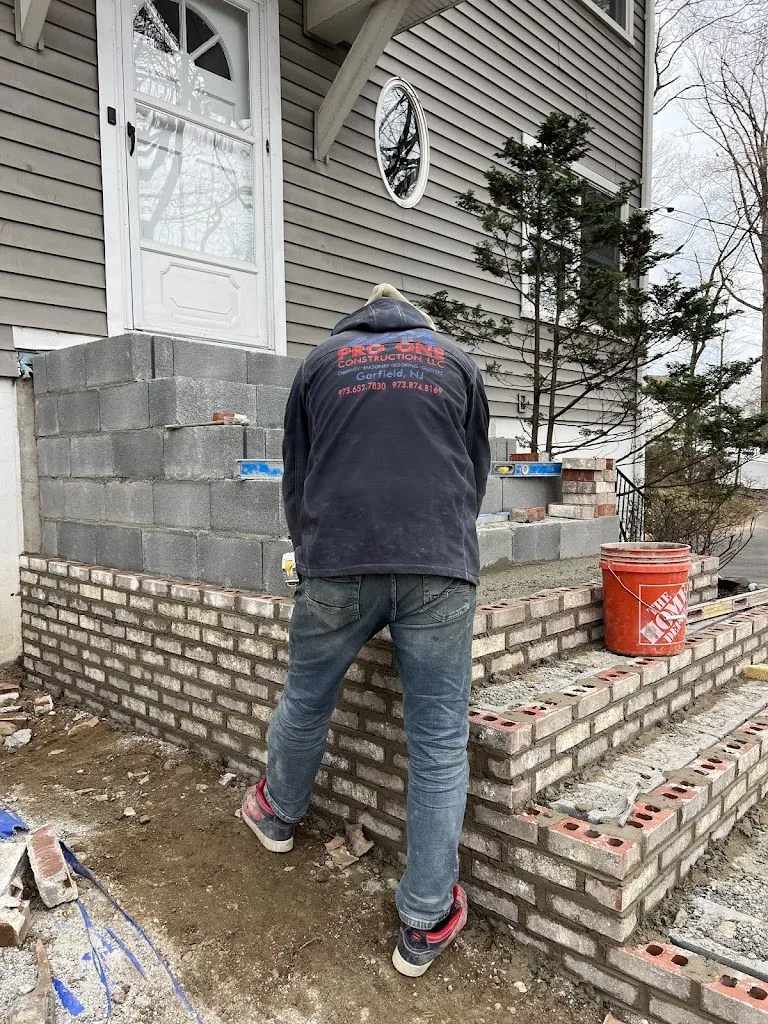
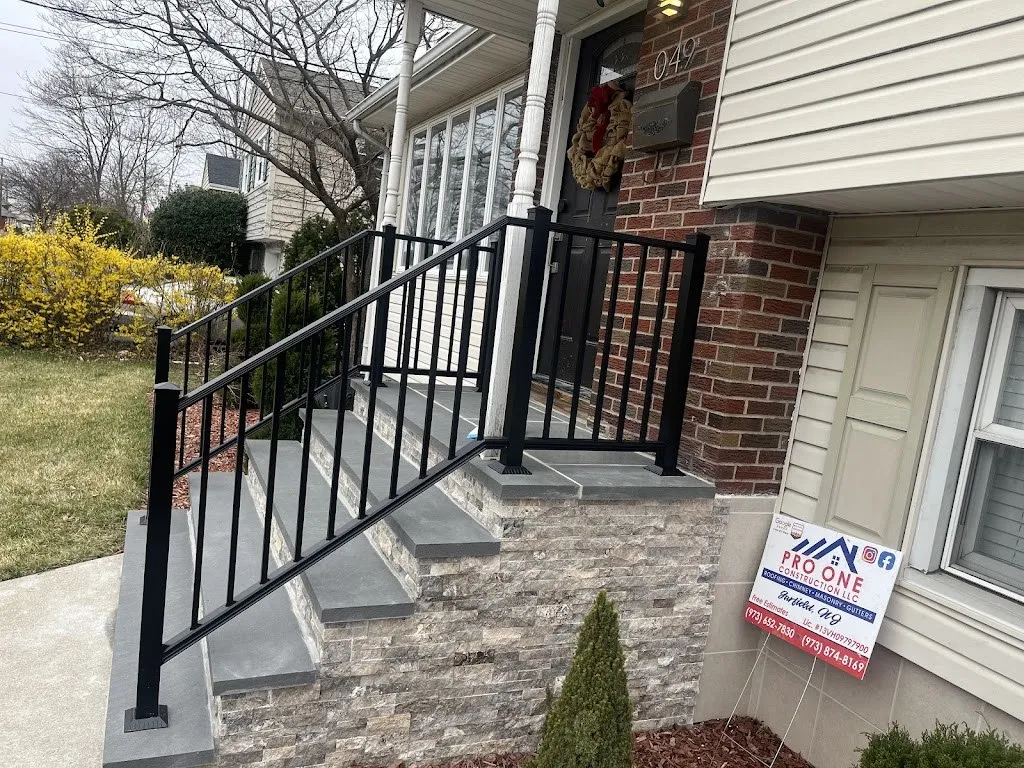
A rebuilt stoop can be brick, stone veneer over a block core with bluestone treads, or poured concrete steps. It is also a chance to fix uncomfortable step heights and add solid railings.
Cost Factors
We do not price steps without seeing them, but these are the things that drive the scope:
- Whether the job is a repair or a full rebuild.
- The number of steps and the size of the landing.
- Materials, such as brick, stone veneer, bluestone or concrete.
- Demolition and removal of the old steps.
- Railings, lighting and any waterproofing at the house connection.
- Local permit requirements, which vary by town.
DIY vs. Hiring a Pro
Some tasks are fine for a handy homeowner: cleaning, sealing concrete, sealing a small hairline crack, or tightening railing hardware that is anchored in solid material.
Hire a mason when a tread or cap is loose, when mortar joints need to be cut out and repointed, when steps are pulling away from the house, or when railings are anchored in crumbling masonry. These are structural and safety issues, and a surface patch will only hide them for a season.
Questions to Ask a Masonry Contractor
- Is this a repair or a rebuild, and why?
- What is causing the damage, and how will your work address it?
- How will the new steps be supported? Will there be a footing?
- How will you match the existing brick, stone or mortar?
- Will the steps meet my town’s requirements for riser height and railings?
- Can I see photos of steps you have rebuilt?
Frequently Asked Questions
Are hairline cracks in concrete steps a problem?
Not always. Hairline cracks are common as concrete cures and ages. Watch them over a few seasons. If they widen, offset or start to let water in, have them looked at.
Can loose bricks on my stoop be reset?
Often, yes. If the steps below are still solid, loose bricks and caps can be removed, cleaned and reset in fresh mortar.
Why do my steps get worse every winter?
Water gets into joints and cracks, freezes and expands. Salt keeps the surface wetter for longer. Each winter opens the damage a little further, which is why early repairs cost less.
Do I need a permit to rebuild front steps?
It depends on your town and the scope of the work. Many towns require a permit for a rebuild. Your contractor or local building department can confirm.
Want a professional opinion? We work on steps throughout the areas we serve in North and Central New Jersey. Book a free estimate and we will inspect your steps and give you honest options.