Tuckpointing vs. Repointing: What NJ Homeowners Should Know
Tuckpointing and repointing both renew mortar joints, but they are not the same. Learn the difference, how to check your brick and when to call a mason in NJ.
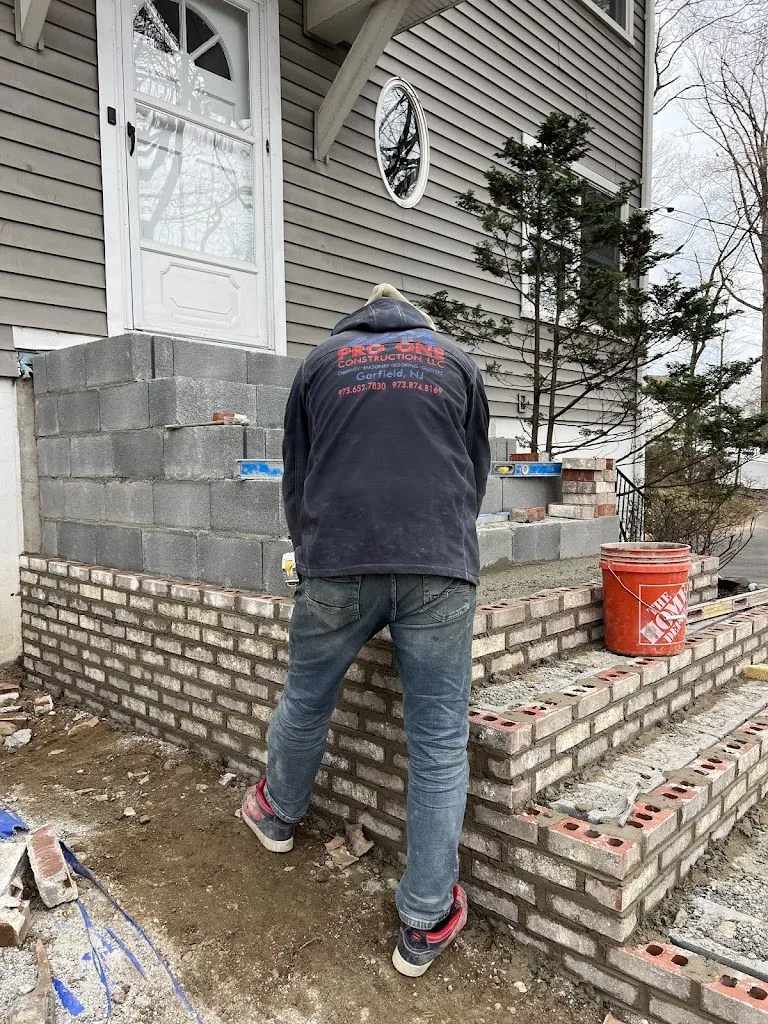
Mortar is designed to be the sacrificial part of a brick wall: it wears out before the brick does. Renewing it at the right time protects your chimney, foundation walls, steps and facade. Waiting too long turns a joint repair into a brick repair.
What Is Repointing?
Repointing means removing deteriorated mortar from the joints to a consistent depth and packing in fresh mortar. It restores the wall’s weather resistance and helps hold the bricks firmly in place.
A good repointing job has a few key parts:
- Proper removal. Old mortar is raked or carefully ground out deep enough for the new mortar to lock in. Smearing new mortar over old joints does not count.
- A compatible mix. The new mortar should suit the brick it sits beside.
- Careful packing. Deep joints are filled in stages rather than all at once.
- Tooling. Joints are shaped to shed water and to match the look of the rest of the wall.
What Is Tuckpointing?
Tuckpointing starts the same way, but finishes differently. The new mortar is colored to blend with the brick, then a thin, contrasting line (the “tuck”) is applied along the center of each joint. The result is crisp, uniform lines, even if the original joints or bricks were irregular.
It is mainly an appearance upgrade on top of the repair. In everyday conversation, many people say “tuckpointing” when they really mean repointing, so ask any contractor which finish they are proposing.
Side-by-Side: Key Differences
- Purpose. Repointing is a repair. Tuckpointing is a repair plus a decorative finish.
- Look. Repointing matches the existing joints. Tuckpointing creates fine, sharp lines that change the look of the wall.
- Where it is used. Repointing suits almost any wall, chimney or step. Tuckpointing is usually chosen for front facades and older brick homes where appearance matters most.
Why Mortar Fails in New Jersey
Freeze-thaw cycles
Our winters swing above and below freezing again and again. Water soaks into porous mortar, freezes, expands and breaks it apart a little at a time. Joints that face the weather, such as the top of a chimney or the treads of a stoop, go first.
De-icing salt
Salt spread on steps and walkways splashes onto nearby brick and mortar. As salty water dries, salt crystals form inside the masonry and break down mortar from within. You often see this as white staining near the ground.
Leaks from above
A cracked chimney crown, missing flashing, or a gutter that overflows will soak the same area of masonry every time it rains. Repointing that area without fixing the water source will not last.
Ground movement
Clay soils, settling footings and tree roots can shift a wall or a stoop. Stair-step cracks running through the mortar joints can point to movement, not just weathering. That needs to be diagnosed before any joints are repaired.
How to Inspect Your Brickwork Yourself
You can learn a lot from a slow walk around the house:
- Scratch test. Drag a key or small screwdriver along a few joints. Sound mortar resists. Failing mortar turns to sand.
- Look for recessed joints. Mortar that has worn back noticeably behind the brick face leaves ledges where water collects.
- Check the high-exposure spots. Chimney tops, parapets, garden wall caps, steps and the bottom few courses near the ground.
- Look for loose units. Bricks or caps that move when pressed need attention soon.
- Check inside. Damp patches, peeling paint or white salt deposits (efflorescence) on basement or interior walls can mean water is getting through.
- Watch the brick faces. Bricks that are cracking or flaking around their edges may be a sign that previous repairs used mortar that was too hard.
Binoculars help for chimneys. Do not climb onto a roof to inspect one.
Why the Right Mortar Mix Matters
Mortar should be weaker and more breathable than the brick around it. That way, if something has to give during freeze-thaw or movement, it is the mortar, which is easy to replace, rather than the brick.
The trouble starts when a hard, cement-rich mortar is used on older, softer brick. Moisture that would normally pass out through the joints gets trapped in the brick instead, and the brick faces crack and spall. Many older New Jersey homes were built with lime-rich mortar, and they usually need a softer, more compatible mix when repointed. On older and historic masonry, we match strength and color to the original.
Seasonal Maintenance Tips
Spring
- Inspect after the last hard freeze, when winter damage is easiest to spot.
- Rinse salt residue from steps and low walls with plain water.
Summer and early fall
- This is the best window for repointing in New Jersey. Mortar needs time to cure without freezing.
- Clean gutters and confirm downspouts send water away from walls.
Late fall
- Have chimney crowns and caps checked before heating season.
- Trim plants and vines that hold moisture against the brick.
Winter
- Keep de-icing salt off brick and stone where you can, and sweep up leftovers.
- Note any new damp spots indoors so they can be checked in spring.
DIY vs. Hiring a Mason
A homeowner can reasonably fill a few small, shallow gaps on a low garden wall, using a mortar suited to the brick. Even then, color and strength matching is harder than it looks.
Hire a mason for anything larger: whole walls, chimneys, steps, anything off a ladder, or any older brick home. Cutting out mortar with a grinder can easily damage brick edges, and the wrong mix can harm the brick over time. Please do not use caulk or construction adhesive in mortar joints. It traps water and makes proper repointing harder later.
Cost Factors
We do not price repointing without seeing the wall, but these factors shape the scope:
- How much of the wall needs work, and how deep the damage goes.
- Height and access, including whether scaffolding or lifts are needed.
- Repointing only, or tuckpointing with the decorative finish.
- Mortar matching on older or historic brick.
- Related repairs, such as replacing damaged brick or a chimney crown.
Repointing on time is almost always less involved than rebuilding later. When the brick itself is failing, our masonry construction and repair team can replace damaged units or rebuild a section.
Questions to Ask a Contractor
- Are you proposing repointing or tuckpointing, and why?
- How will you remove the old mortar without damaging the brick?
- What mortar will you use, and how will you match color and strength?
- What is causing the mortar to fail, and does anything else need fixing first?
- Can I see finished work, including older brick homes? (You can browse ours on view our work.)
Frequently Asked Questions
How long does repointing last?
Properly done repointing with a compatible mortar can last for decades. Exposure, water management and how well the original cause was addressed all affect how long it holds up.
Can I repoint only part of a wall?
Yes. Partial repointing is common on chimney tops, steps and the sides of a house that take the most weather. The key is matching the new mortar to the existing joints.
Is tuckpointing worth it?
If you only need to stop water, repointing is enough. If the front of the house has uneven or worn joints and you want a sharp, uniform look, tuckpointing can be worth the extra step.
Does my chimney need repointing?
If the mortar at the top of the stack is sandy, recessed or missing, or bricks are loose, it likely does. Chimneys often need repointing along with crown work, which falls under chimney and fireplace masonry.
Questions about your brickwork? Get a free estimate and we will take a look and explain your options.