Stucco Cracks and Damage: Which Signs Matter and What to Do
Not every stucco crack is a problem. Learn to tell hairline cracks from serious ones, spot hidden moisture and choose between repair, remediation and re-stucco.
Stucco is a tough, attractive finish, and plenty of New Jersey homes wear it well for decades. It also has a reputation for hiding trouble. The tricky part for homeowners is telling normal wear from the signs that water has found its way behind the wall. This guide helps you read what you are seeing and decide what to do next.
How a Stucco Wall Handles Water
Stucco is a cement-based finish, and it is not waterproof. It absorbs some moisture when it rains and releases it as it dries. A well-built wall plans for that. Behind the stucco there should be a water-resistant barrier, flashing at every opening and roof edge, and a way for water to drain out at the bottom of the wall.
When those layers are missing, damaged or installed out of order, water that gets in has nowhere to go. It sits against the sheathing and framing, often for years, while the outside of the wall looks fine. That is why the details you cannot see matter as much as the finish you can.
Hairline Cracks vs. Structural Cracks
Hairline cracks
Fine, shallow cracks, often in a random spiderweb or map pattern, are common. They usually come from shrinkage as the stucco cures and from normal temperature changes. On their own, they are mostly cosmetic. Keep an eye on them and seal them when the wall is refinished or repaired.
Cracks that deserve a closer look
- Wider cracks you can fit a fingernail or a coin edge into.
- Diagonal cracks at window and door corners, which can point to movement or stress around the opening.
- Long horizontal cracks, especially along the line of a floor or the base of the wall.
- Cracks with one side sticking out further than the other.
- Cracks that come back after being patched.
- Cracks with staining around them, which suggests water is moving through.
Mark the ends of any crack you are unsure about with a pencil, add the date, and photograph it. If it grows over a season, it is active.
Signs of Moisture Behind the Stucco
The cracks are often less important than the clues that water is trapped inside the wall.
Staining under windows
Dark streaks or blotches running down from the bottom corners of windows are one of the most common warning signs. They often mean water is getting in at the window and draining through or behind the stucco.
Bulging or bowed areas
A section that sticks out, looks puffy or no longer lines up with the rest of the wall can mean the stucco has lost its bond or that the material behind it is swelling or deteriorating.
Soft or crumbling spots
Press gently near the bottom of the wall and below windows. Stucco should feel hard. If it feels soft, flexes, crumbles or sounds hollow when tapped, moisture may be at work underneath.
Problems at the base of the wall
Stucco that runs down into the soil, mulch or a patio surface can wick water up and trap it at the bottom of the wall. Look for darker, damp-looking stucco along the base and any crumbling at the bottom edge.
Signs inside the house
Damp spots, stains or peeling paint on interior walls, swollen window trim, or musty smells in rooms with stucco exterior walls can all point to water in the wall. If you see growth inside, have it assessed.
Why Flashing and Drainage Matter So Much
Most serious stucco damage starts at a transition: where a window meets the wall, where a roof edge runs into a wall, or where the wall meets the ground. Those are the spots where water collects and where the layers behind the stucco have to be lapped correctly to send water outward.
A few details worth knowing:
- Window and door flashing directs water out at every opening rather than into the wall.
- Kick-out flashing at the end of a roof edge turns roof water into the gutter instead of down the face of the wall.
- A drainage path at the base lets water that gets behind the stucco escape.
- Gutters and downspouts keep large volumes of roof water off the wall in the first place.
If a roof edge or gutter is part of the problem, our roofing, siding and gutters team can correct it as part of the same project.
Repair vs. Remediation vs. Re-Stucco
These three words get used loosely. Here is how they generally differ.
Repair
Repair fixes a limited area where the stucco itself is damaged but the wall behind it is sound. Think of a few cracks, a spot of impact damage or a small section that has come loose. The area is cut back, rebuilt and finished to blend with the rest of the wall.
Remediation
Remediation is for walls where water has gotten behind the stucco and damaged what is underneath. The stucco is removed in the affected areas so the sheathing and framing can be inspected and repaired. The missing or failed layers (barrier, flashing, drainage) are then corrected before new stucco goes back on. The goal is to fix the cause, not just the surface.
Re-stucco
Re-stucco means applying a new finish over a larger area or the whole house. If the existing stucco is sound and well bonded, a new finish coat can refresh it. If the stucco is failing widely, it may make more sense to remove it and rebuild the wall system from the barrier out.
The right answer depends on what is behind the wall, which is why testing and opening up suspect areas is part of a good assessment. Learn more about how we handle new work, repairs and refinishing on our stucco services page.
What You Can Do Now
- Walk around the house once a season and photograph cracks, stains and any bulges.
- Keep gutters clean and make sure downspouts carry water away from the walls.
- Pull mulch and soil back so they do not bury the bottom of the stucco.
- Keep sprinklers from spraying the walls.
- Avoid power washing stucco at high pressure, which can force water into cracks.
- Do not seal over stains or cracks with caulk or paint until you know why they are there.
Frequently Asked Questions
Should I worry about hairline cracks in my stucco?
Usually not on their own. Watch them, and pay closer attention if they widen, show staining or appear near windows and corners.
Can I just paint over stucco cracks?
Paint can hide cracks for a while, but it does not address water behind the wall. Some paints also trap moisture. Find out the cause first.
Does stucco damage only happen on older homes?
No. Newer homes can have problems too, especially if flashing or drainage details were missed during construction. Age matters less than how the wall was built.
Can stucco be combined with stone?
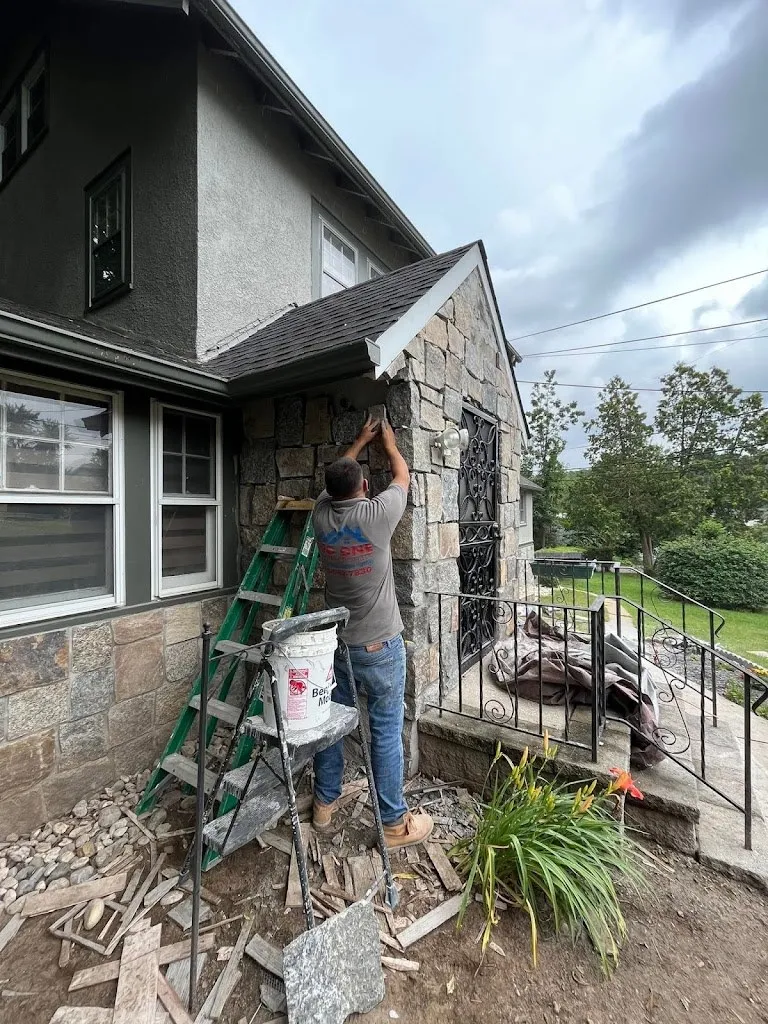
Yes. Many homes mix stucco walls with a stone veneer base or accent. Our stone masonry and brickwork crew installs the stone, and you can see examples on our view our work page.
Seeing stains, soft spots or cracks you are unsure about? Request a free estimate and we will take a close look at your stucco.