Pavers vs. Stamped Concrete: Which Is Better for a New Jersey Patio?
Pavers or stamped concrete for your NJ patio? Compare freeze-thaw durability, repairs, de-icing salt, maintenance, cost factors and looks before you build.
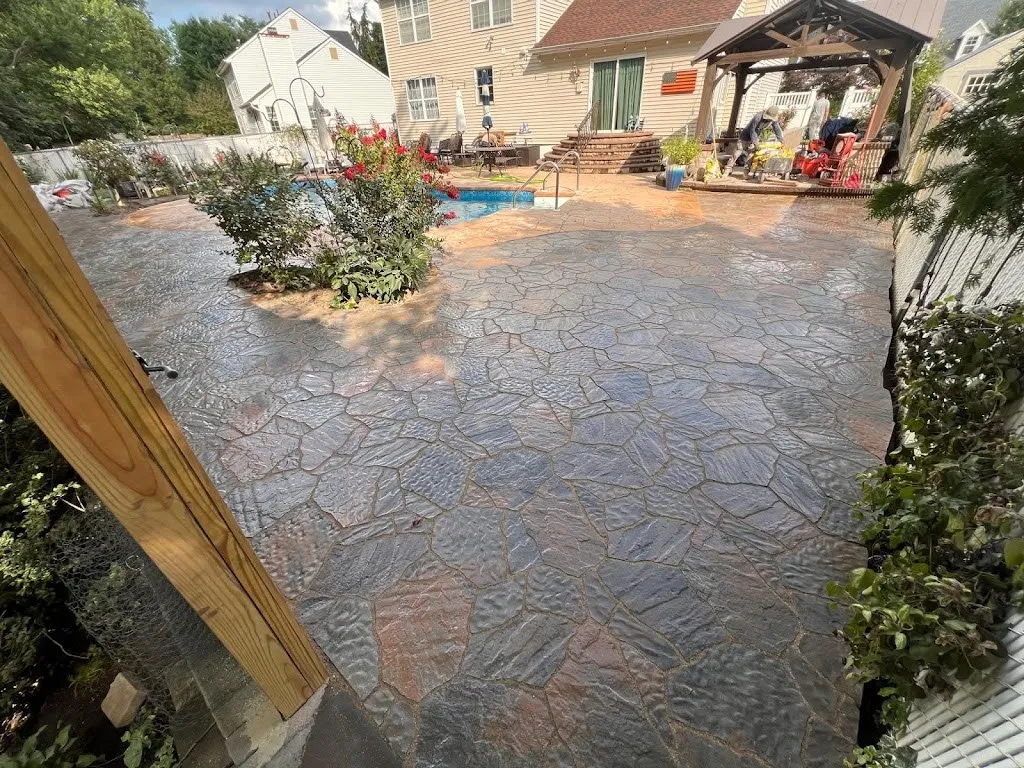
Pavers and stamped concrete can both give you a beautiful patio. They are built in completely different ways, though, and that difference decides how each one handles New Jersey winters, how it gets repaired, and how much attention it needs over the years.
How Pavers and Stamped Concrete Are Built
Pavers are individual units of concrete, clay brick or natural stone. They are laid over a compacted gravel base and a thin bedding layer, held in place by an edge restraint along the borders, and locked together with sand (usually polymeric sand) swept into the joints. Because every unit can move a tiny amount, the patio flexes with the ground instead of cracking.
Stamped concrete is a single poured slab. While the concrete is still workable, the crew adds color and presses texture mats into the surface so it looks like flagstone, slate, brick or wood plank. Control joints are cut or tooled into the slab, and a sealer is applied once it has cured.
Either way, neither surface can make up for poor ground preparation.
What New Jersey Weather and Soil Do to a Patio
Freeze-thaw cycles
North and Central New Jersey see many winter days that freeze at night and thaw in the afternoon. Water that soaks into the ground or into the surface expands when it freezes. A paver patio absorbs that movement through its joints. A concrete slab cannot flex, so it relies on control joints to decide where it cracks. Even a well-built stamped slab will usually develop some hairline cracks over time, and that is normal.
De-icing salt
Salt is hard on any outdoor surface. On stamped concrete, repeated salting can wear down the sealer and lead to surface scaling, where thin flakes pop off the top. Pavers handle salt somewhat better, but salt residue can still dull the color and cause white haze on the surface.
Clay soils and drainage
Many New Jersey yards have clay-heavy soil that holds water and swells when wet. Clay that stays soggy under a patio is the main cause of settling and heaving. That is why the gravel base depth, compaction and the slope of the finished patio (away from the house) matter more than the surface material.
Tree roots
Roots from nearby trees can lift both pavers and concrete. With pavers, a lifted section can be taken up, the root issue addressed, and the same units reset. With concrete, a root that heaves a slab usually means cutting out and replacing that section.
Repairs: The Biggest Difference
This is where the two options differ the most.
- Pavers: lift the affected units, fix the base, and reset the same pavers. Done properly, the repair is nearly invisible. It is also the easy answer when you need to run a gas line or drainage pipe under the patio later.
- Stamped concrete: cracks can be routed and filled, and the surface can be cleaned and resealed. Matching the exact color and pattern on a patch is difficult, so repairs often show.
If you expect future changes to the yard (an outdoor kitchen, a new drain, a fence post), pavers give you more flexibility.
Looks, Layout and Feel Underfoot
Both materials offer plenty of design options, but in different ways.
Pavers come in many shapes, sizes, colors and textures. You can mix in contrasting borders, circles, inlays and steps that match. Our paver construction work includes patios, driveways and pool decks built from the same product lines, so everything ties together.
Stamped concrete gives you a seamless surface with no joints for weeds to find. It works well around pools and for large open areas. Keep in mind that a glossy sealer can be slippery when wet, so ask about a slip-resistant additive for pool decks and steps.
If you want to see both side by side, browse finished patios on our view our work page.
Seasonal Maintenance Tips
Spring
- Rinse off winter salt and grit with a garden hose.
- Walk the patio and look for low spots, rocking pavers or new cracks.
- For pavers, top up joint sand where it has washed out.
Summer
- Sweep regularly and clean up grease, oil or leaf stains quickly.
- Keep sprinklers and downspouts from soaking the same spot every day.
Fall
- Clear leaves before they sit wet on the surface and stain it.
- Reseal stamped concrete when water stops beading on the surface. Pavers can be sealed too, though it is optional.
Winter
- Shovel with a plastic blade or a rubber edge to avoid scratching sealer.
- Use de-icers sparingly. Avoid products containing ammonium nitrate or ammonium sulfate, which are known to damage concrete.
- Skip de-icers entirely on concrete in its first winter if you can, and use sand for traction instead.
Cost Factors to Consider
We never quote prices without seeing the site, but these are the things that move the cost of either option:
- Size and shape. Curves, multiple levels and steps add labor.
- Site access. Tight side yards and steep lots take more time and equipment.
- Excavation and base work. Removing an old patio, poor soil or drainage corrections all add to the job.
- Material choice. Premium pavers, natural stone and multi-color stamping patterns cost more than standard options.
- Extras. Borders, seat walls, lighting and fire features.
Over the long run, also think about upkeep. Stamped concrete needs periodic resealing. Pavers need occasional joint sand and resetting of the odd unit. Many homeowners find the lower repair cost of pavers balances out the upfront difference.
DIY or Hire a Pro?
Small paver projects, like a garden path or a landing pad for a grill, are within reach for a handy homeowner who is willing to rent a plate compactor and take the base seriously.
Full patios are a different story. Stamped concrete in particular is not a DIY job: the crew has a short window to place, color, stamp and finish the concrete before it sets, and mistakes are permanent. For a full patio in either material, hiring an experienced crew is usually the better investment.
Questions to Ask a Patio Contractor
- How deep will the gravel base be, and how will it be compacted?
- How will water drain off the patio and away from the house?
- For pavers: what edge restraint and joint sand will you use?
- For stamped concrete: how will you lay out the control joints, and is reinforcement included?
- Does my town require a permit for this project? (Requirements vary by town.)
- Can I see finished patios you have built nearby?
Which Should You Choose?
Choose pavers if you want the easiest long-term repairs, the most design flexibility, and room to change the yard later.
Choose stamped concrete if you prefer a seamless look, a large open surface, or a classic pool deck finish, and you are comfortable resealing every few years.
Either one lasts when the base and drainage are done right.
Frequently Asked Questions
Do pavers or stamped concrete last longer in New Jersey?
Both can last a long time when built on a proper base with good drainage. Pavers are generally more forgiving of freeze-thaw movement because each unit can shift slightly, and damaged sections can be reset rather than replaced.
Will weeds grow between pavers?
Some can, especially in shady, damp spots. Polymeric joint sand, regular sweeping and topping up the joints each spring keep weeds to a minimum.
Can stamped concrete be repaired if it cracks?
Yes. Cracks can be filled and the surface cleaned and resealed. The repair will usually be visible to some degree because matching color and texture exactly is difficult.
Is stamped concrete slippery around a pool?
A sealed surface can be slick when wet. A slip-resistant additive in the sealer helps a lot, and the texture of the stamp pattern also matters. Ask your contractor which options they recommend for pool decks.
Not sure which surface fits your yard? We install both, along with complete patios and walkways. Request a free estimate and we will walk your yard with you and recommend what fits your space and budget.