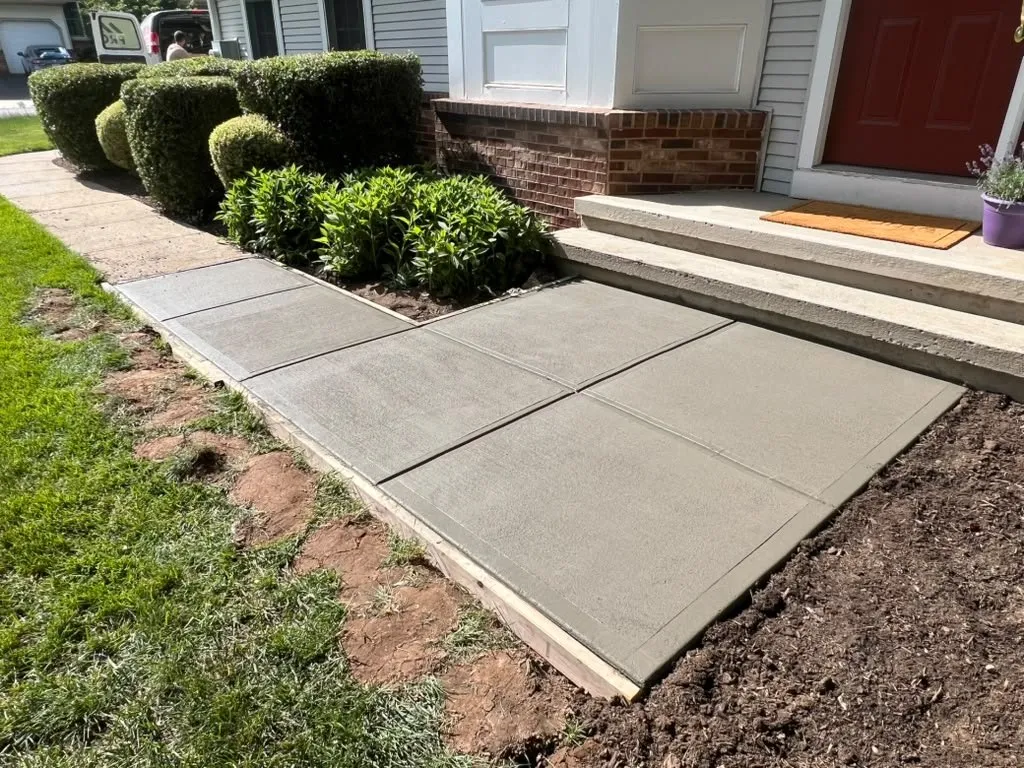
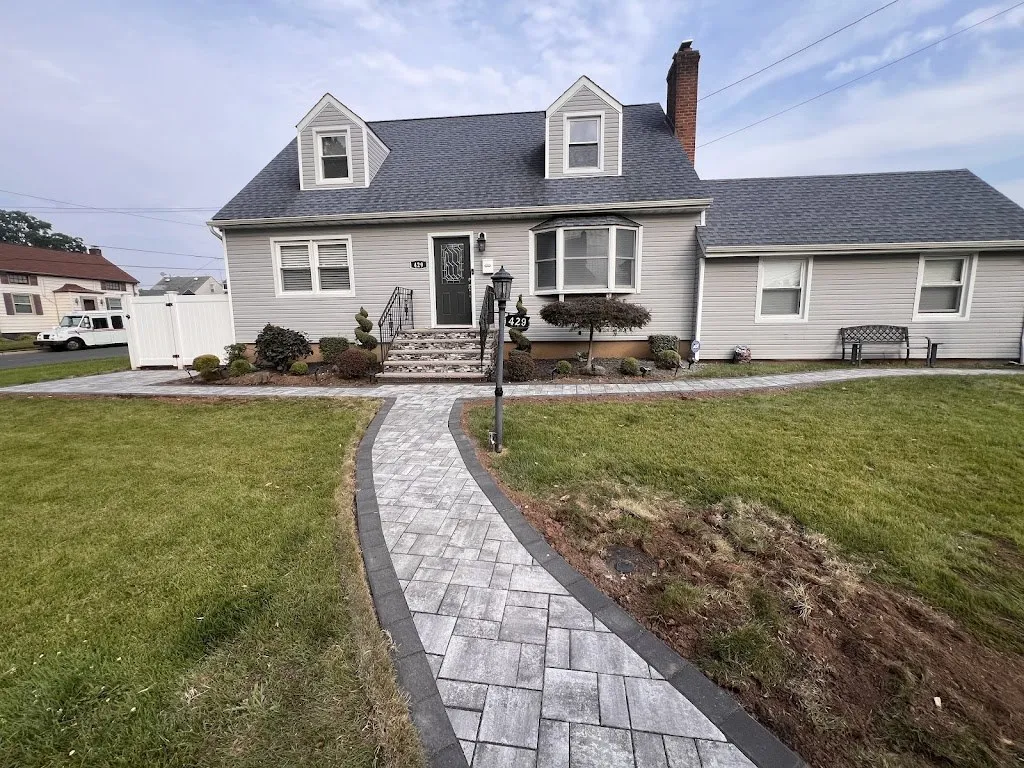
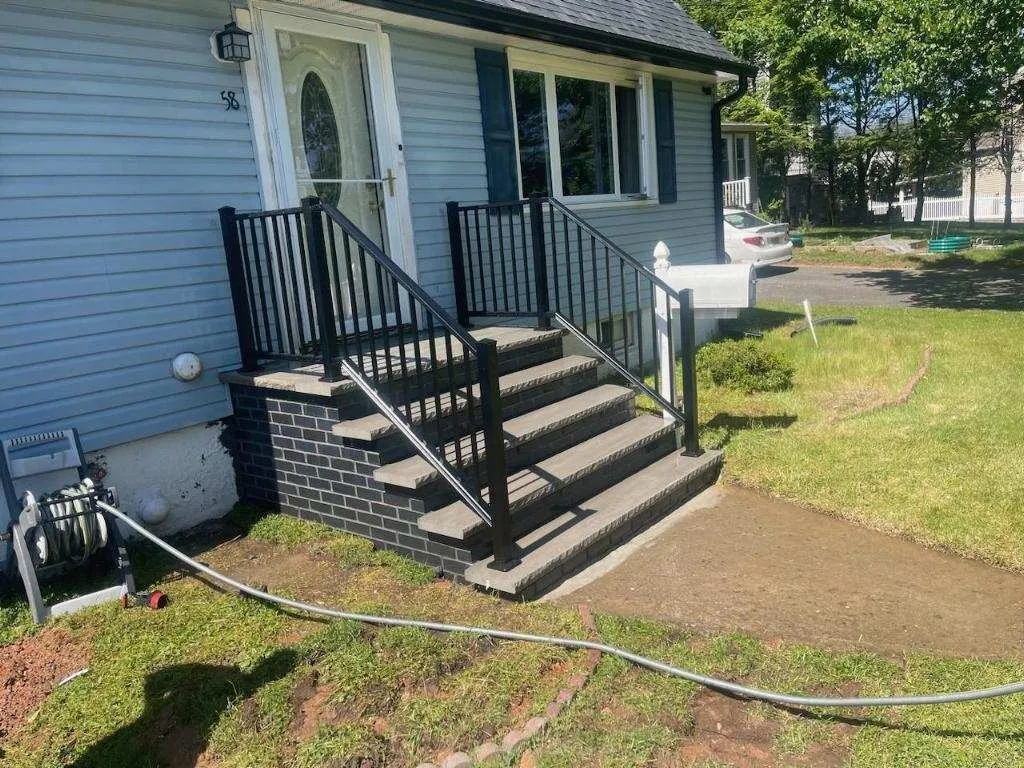
Little Falls takes its name from the falls on the Passaic River, which runs along the edge of the township. The river is a big part of the town’s character, and it also means many homes deal with high groundwater, saturated soil after storms and, in some low areas, a history of flooding. Housing is a mix of older homes near the river and the center of town, plus capes, colonials and split-levels on the residential streets beyond.
Keeping basements dry
Damp walls, efflorescence and puddles after heavy rain are common complaints in a river town. The fix depends on where the water is coming from. We start outside with gutters, downspouts and grading, since many wet basements are caused by roof water dumped next to the foundation. Inside, we look at the walls, the floor joint and any cracks. When the conditions call for it, basement waterproofing can include interior drainage, a sump system and sealed walls.
We are honest about limits. No basement system can stop a river that has left its banks, but a well-designed system handles everyday groundwater and storm runoff.
Foundation and crack repair
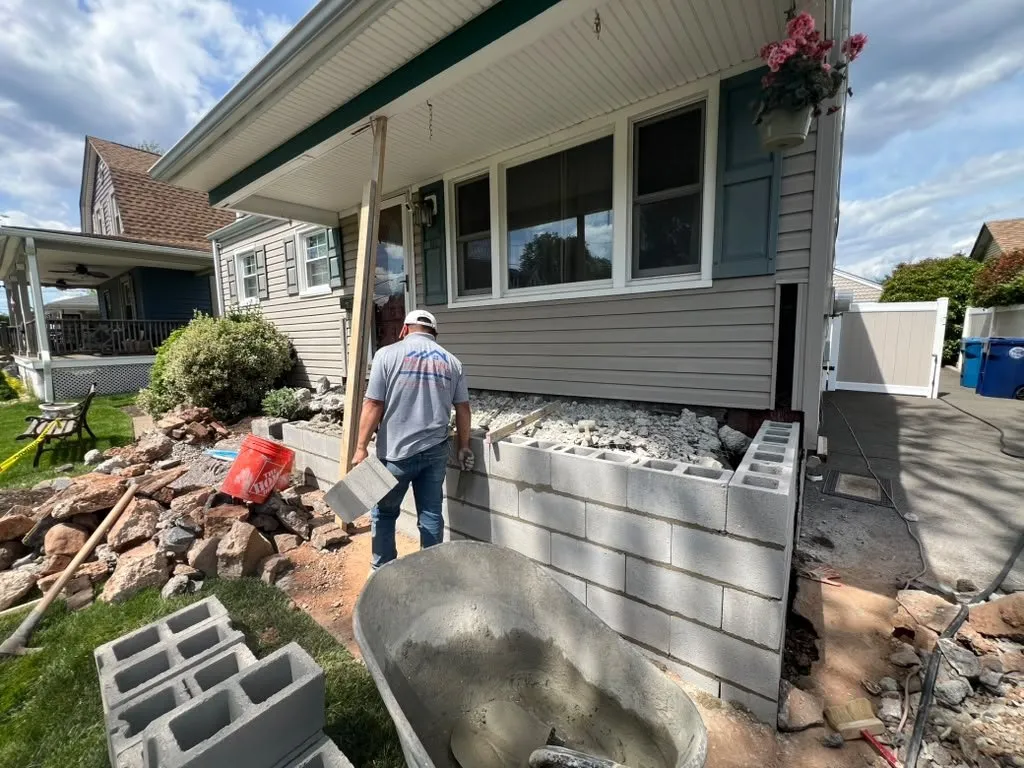
Constant moisture and freeze-thaw put stress on foundations. Hairline cracks may only need sealing, while wider or stepped cracks deserve a closer look. Our foundation repair work covers crack injection, rebuilding damaged block, new footings and parging, so the wall is sound before anything is finished over it.
Steps, walkways and patios
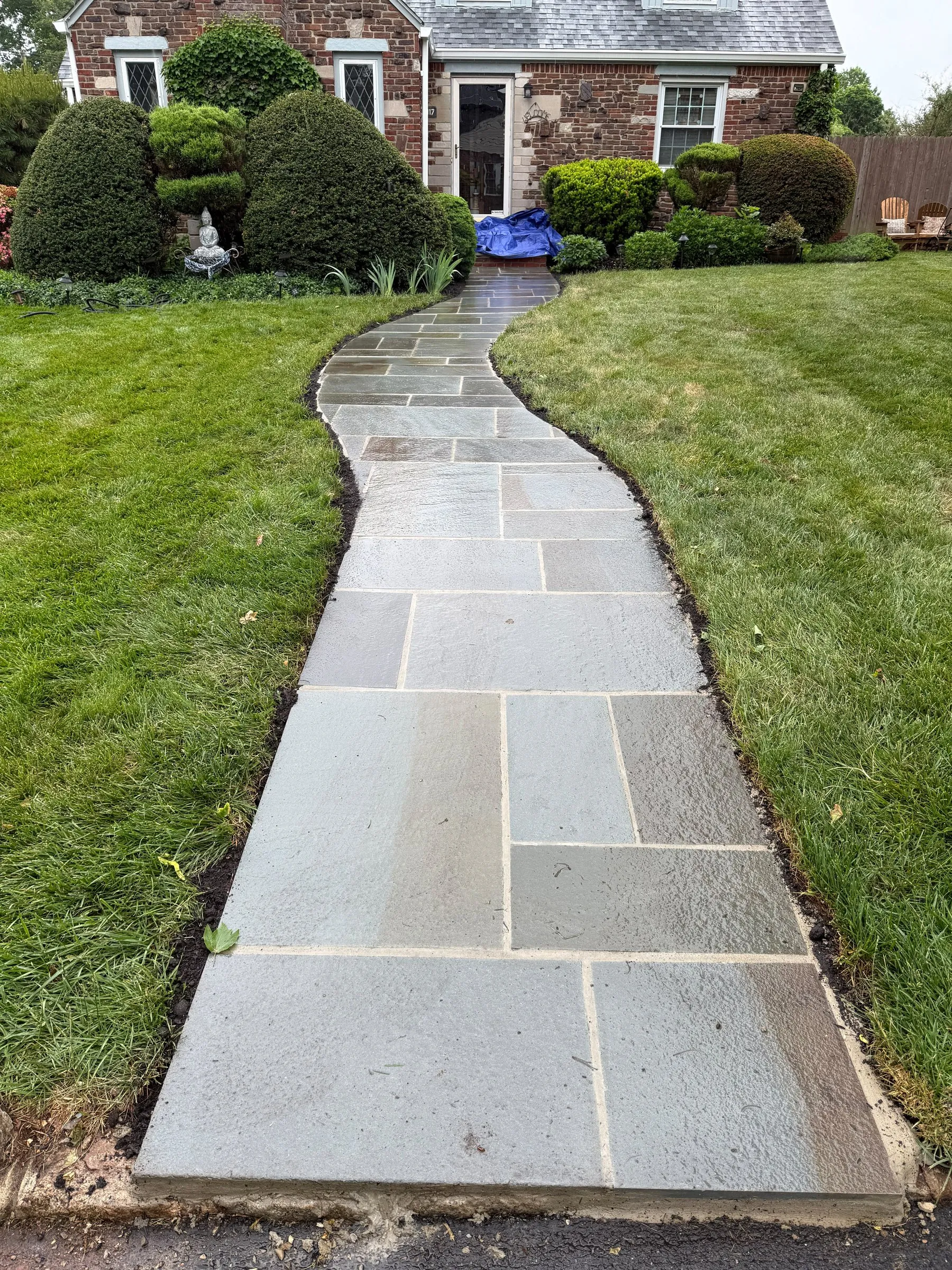
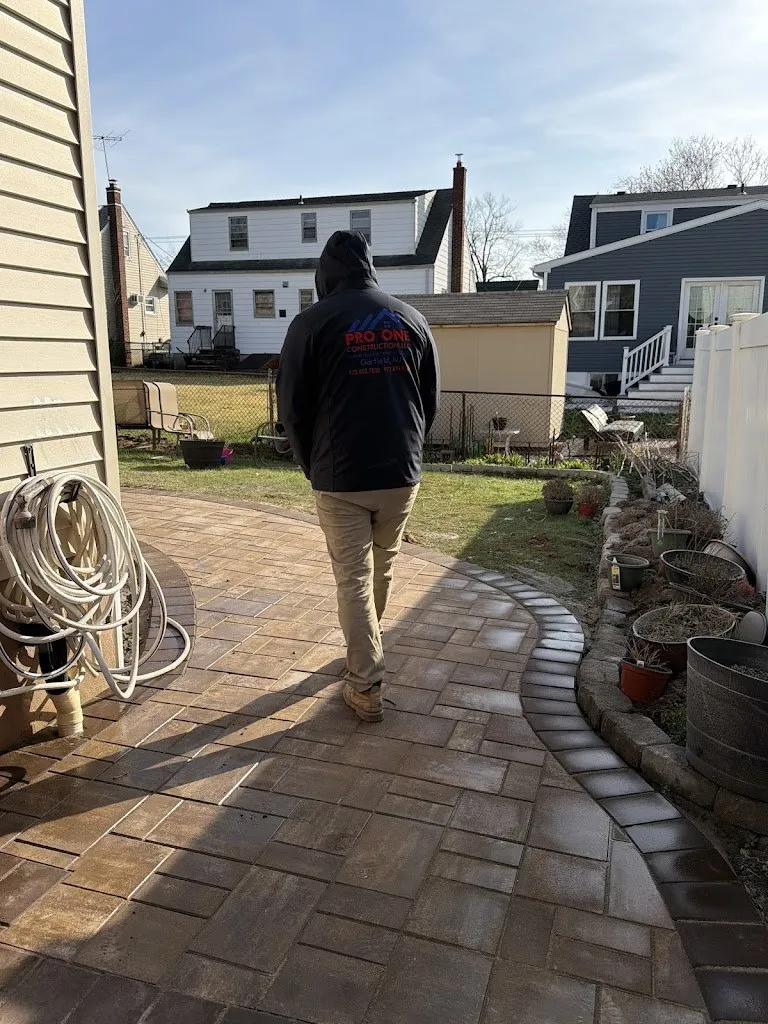
Above ground, we handle the usual masonry around the house: front steps rebuilt on solid footings, walkways that carry water away from the foundation, and patios in pavers or bluestone. On a lot that stays wet, base depth and pitch matter even more. We build every surface to shed water away from the home, which protects both the patio and the basement below.
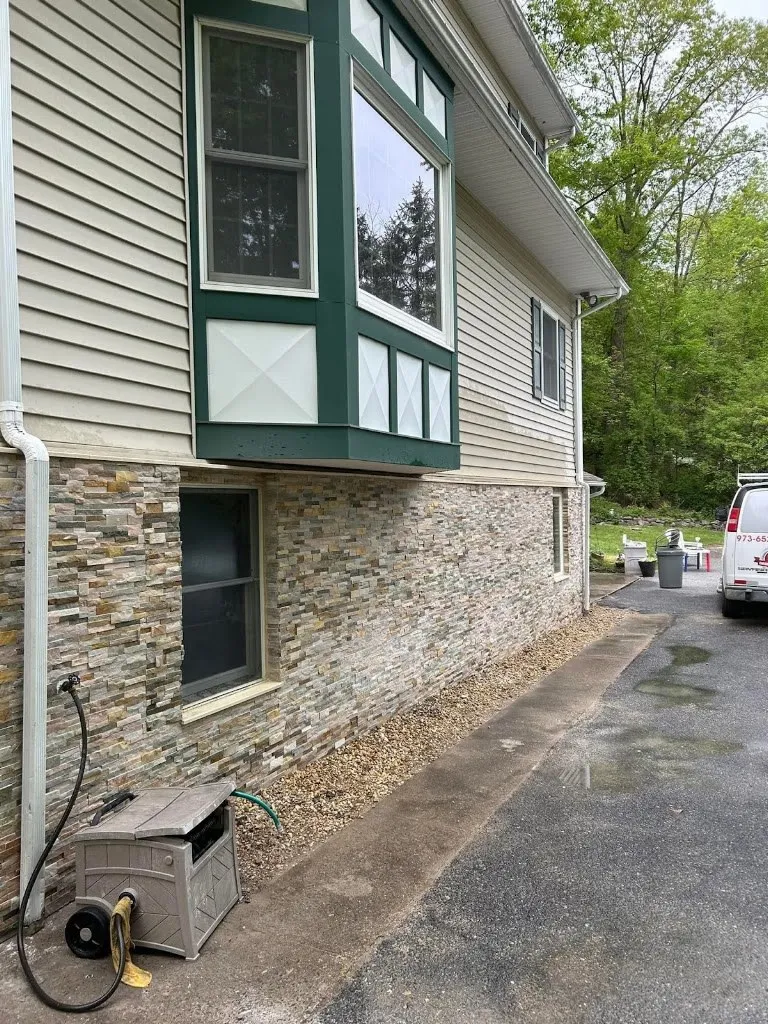
Walkways along the side of the house are a good example. A narrow strip of soil between the foundation and the property line often holds water against the wall. Replacing it with a pitched paver or concrete walk, with a downspout carried past its edge, can make a noticeable difference inside.
Before you call
- Take photos after a storm. Pictures of where water appears inside help us find the source faster.
- Note your flood history. If your home has flooded from the river before, tell us so we can plan realistic protection.
- Check the sump. If you already have a sump pump, note how often it runs. That tells us a lot about the groundwater under the house.
- Township rules. Structural work and some outdoor projects need approval. We check what applies.
Little Falls is one of the Passaic County towns we serve, together with neighboring Totowa, Wayne and Clifton. Request a free estimate and we will come inspect the problem in person.