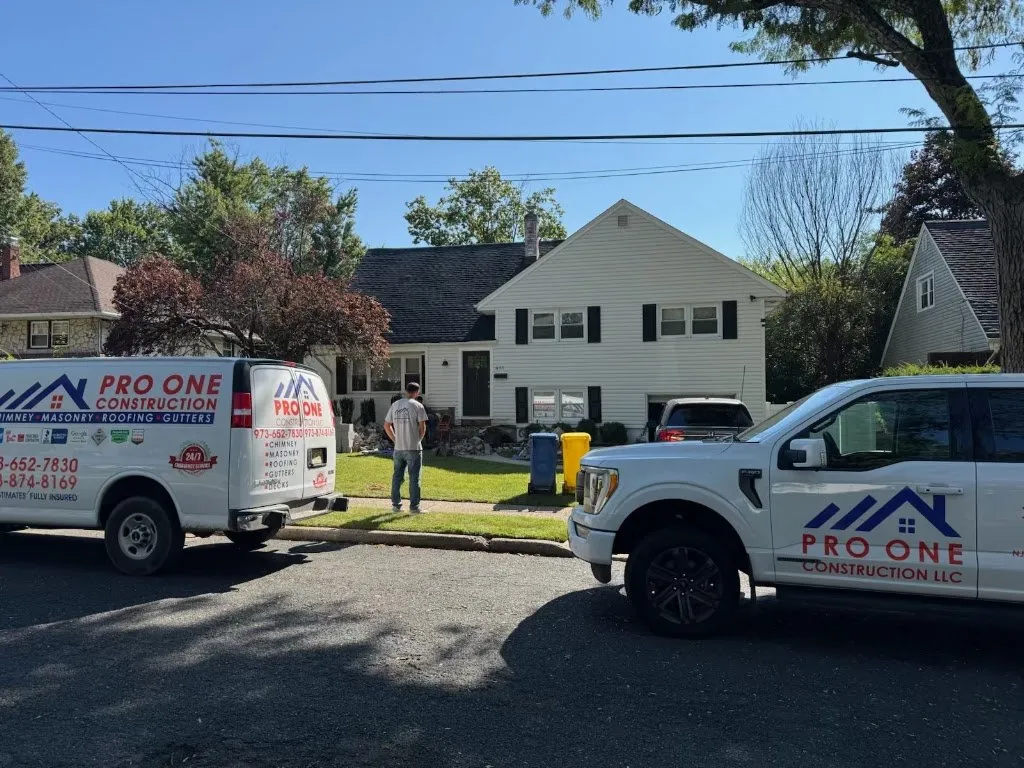
Phillipsburg sits on the Delaware River across from Easton, and much of the town grew up in the railroad and industrial era. The result is a lot of brick: rowhouses, twins and detached homes set close together on streets that climb steeply up from the river. Masonry of that age has a long life if it is maintained the right way, and a short one if it is patched with the wrong materials.
Repointing brick the right way
Most of the brick work we do in Phillipsburg starts with mortar. Joints erode over decades, and water that gets into them freezes, pushes and loosens the brick. Tuckpointing and repointing cuts out the failing mortar to a consistent depth and refills it in layers. The important part is the mix. Older brick is usually softer than modern brick, and a hard cement mortar will outlast it, which is exactly the problem. We use a mortar matched in strength and color to what is already there. We also check whether the brick has been painted or coated, since trapped moisture behind paint is a common cause of damage on older facades.
Where earlier repairs have done damage, our historic masonry restoration work replaces spalled units with salvaged or closely matched brick and resets loose sections of parapets, cornices and chimneys.
Stoops and front steps close to the sidewalk
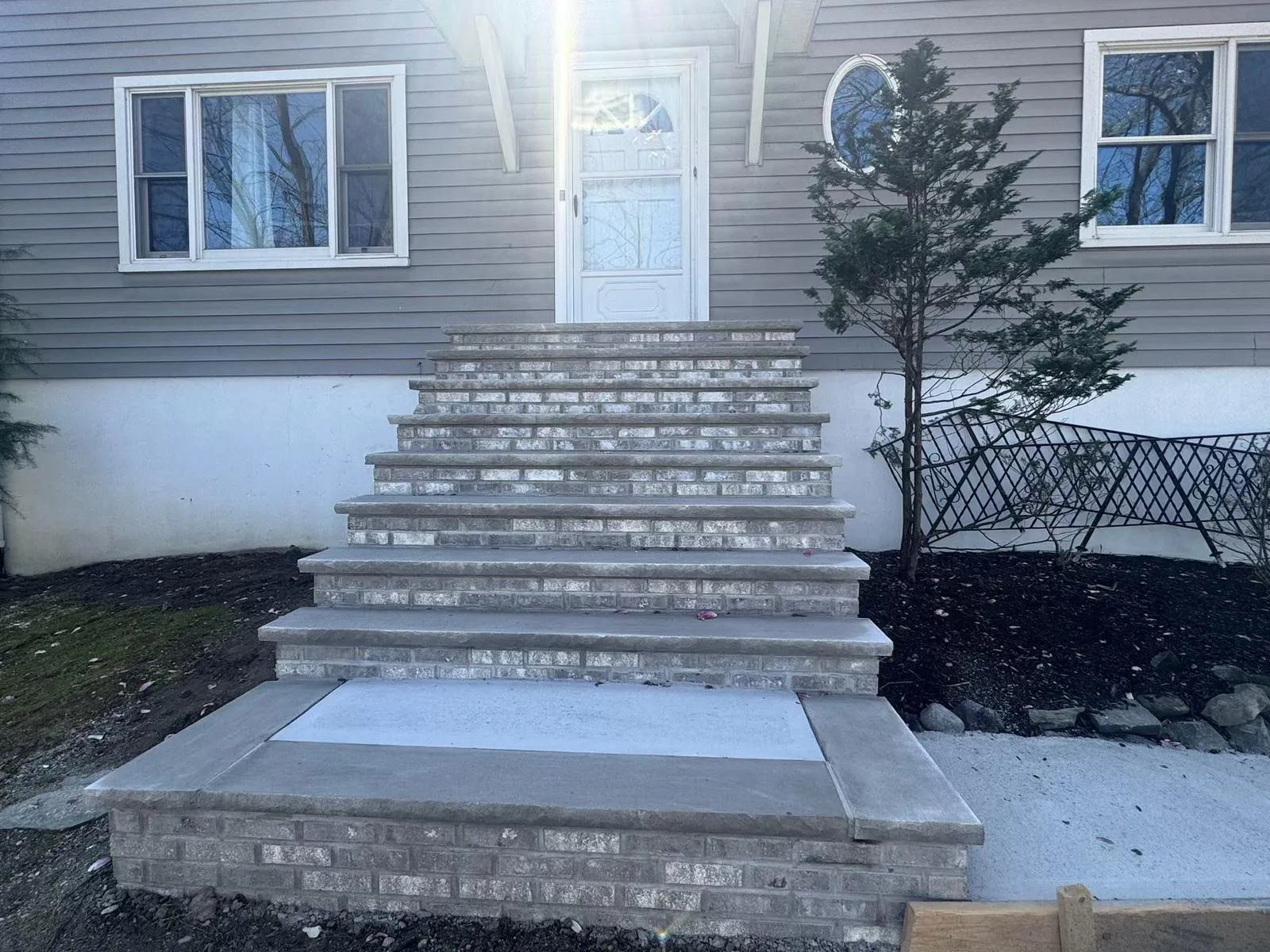
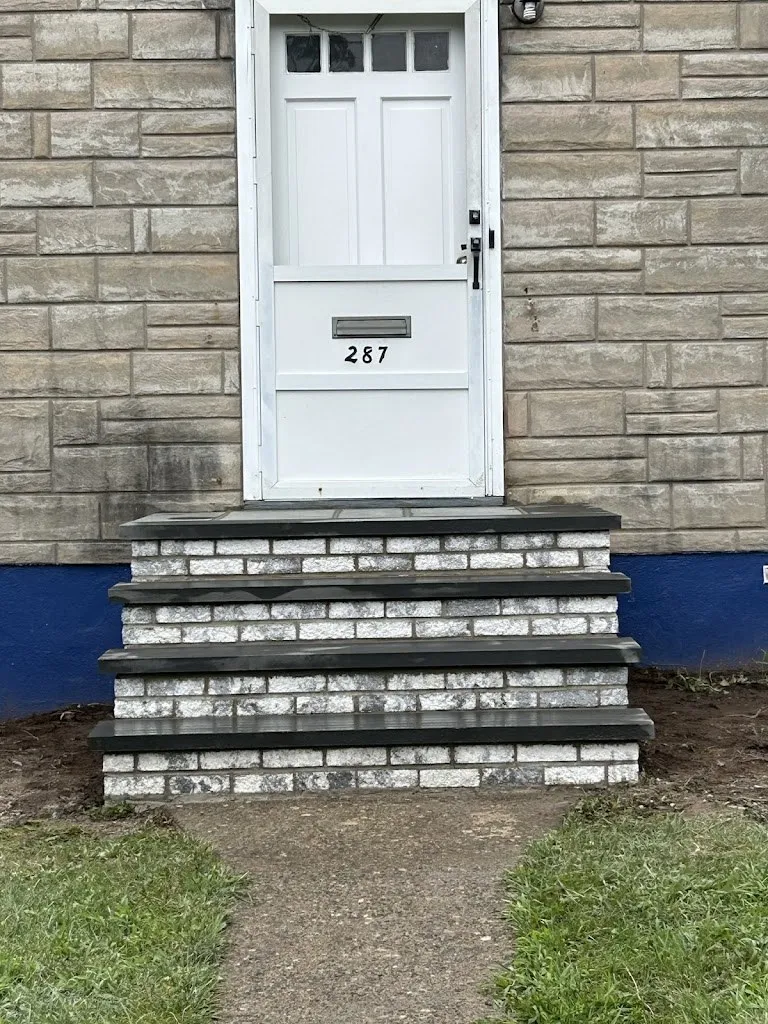
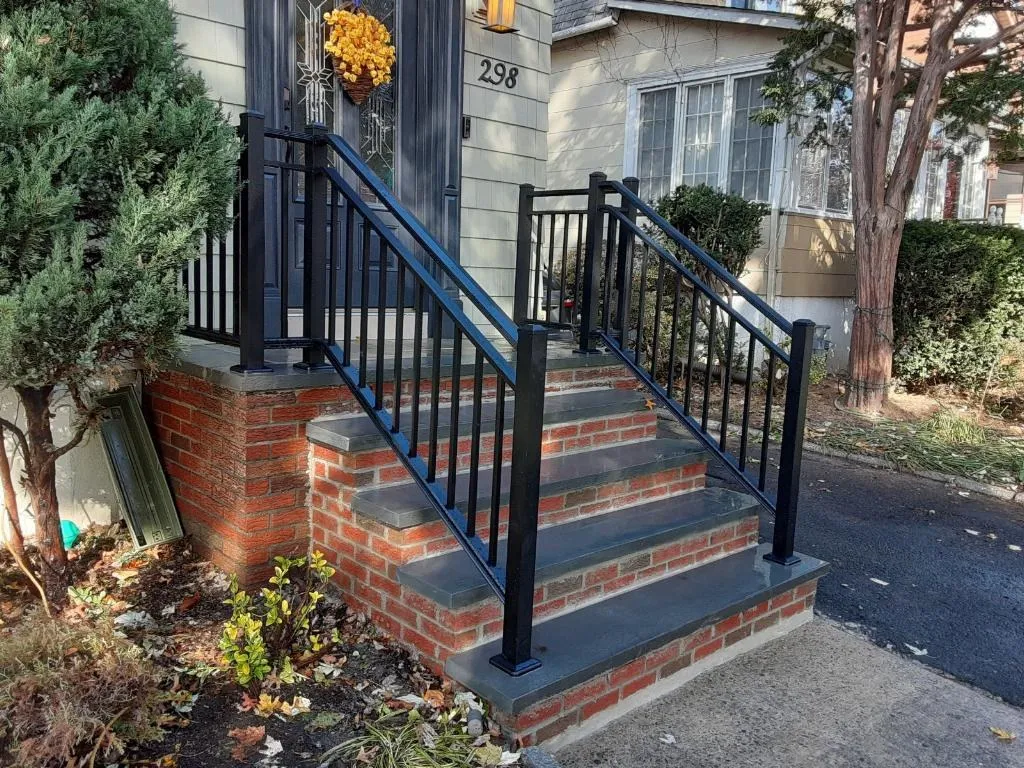
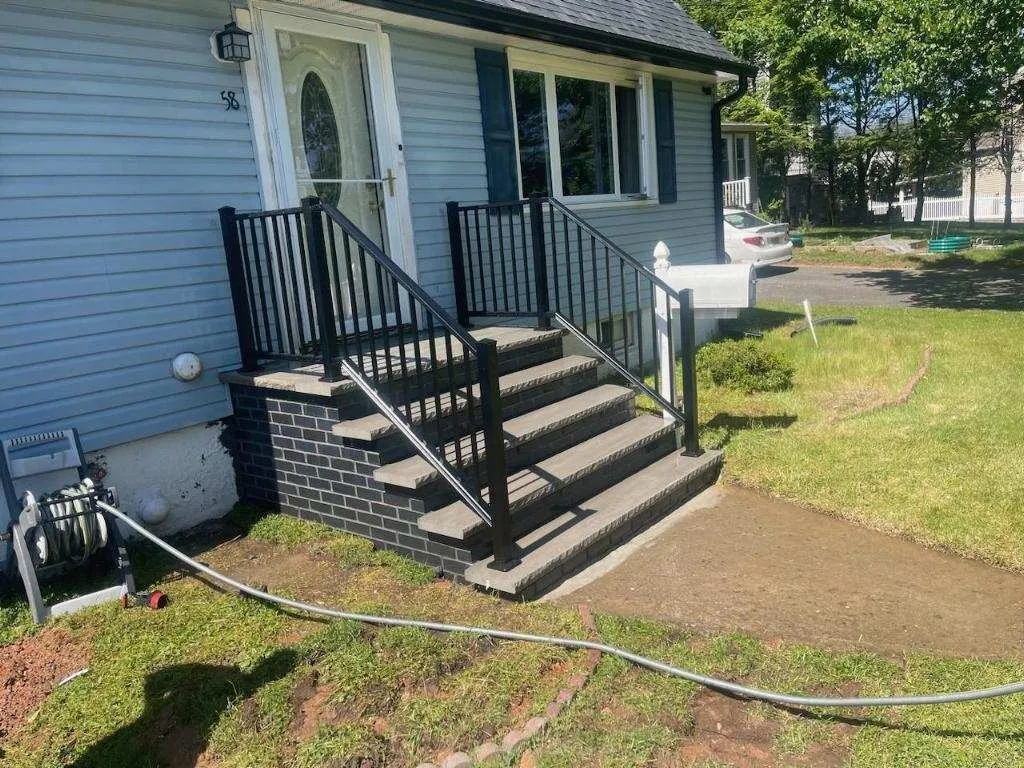
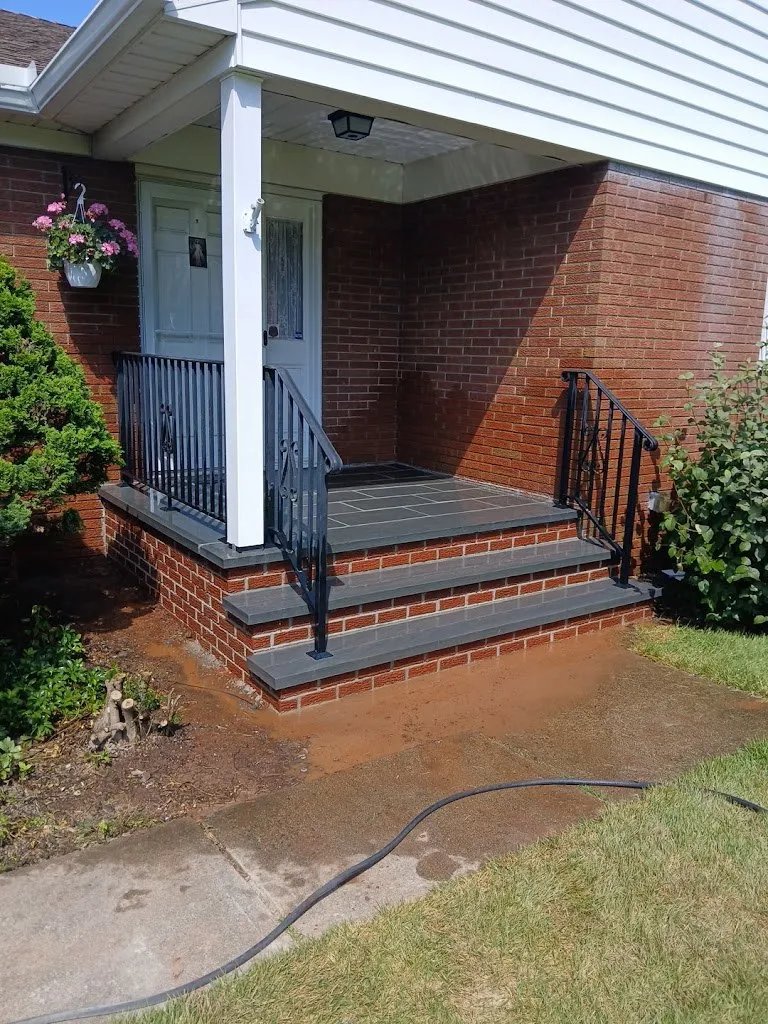
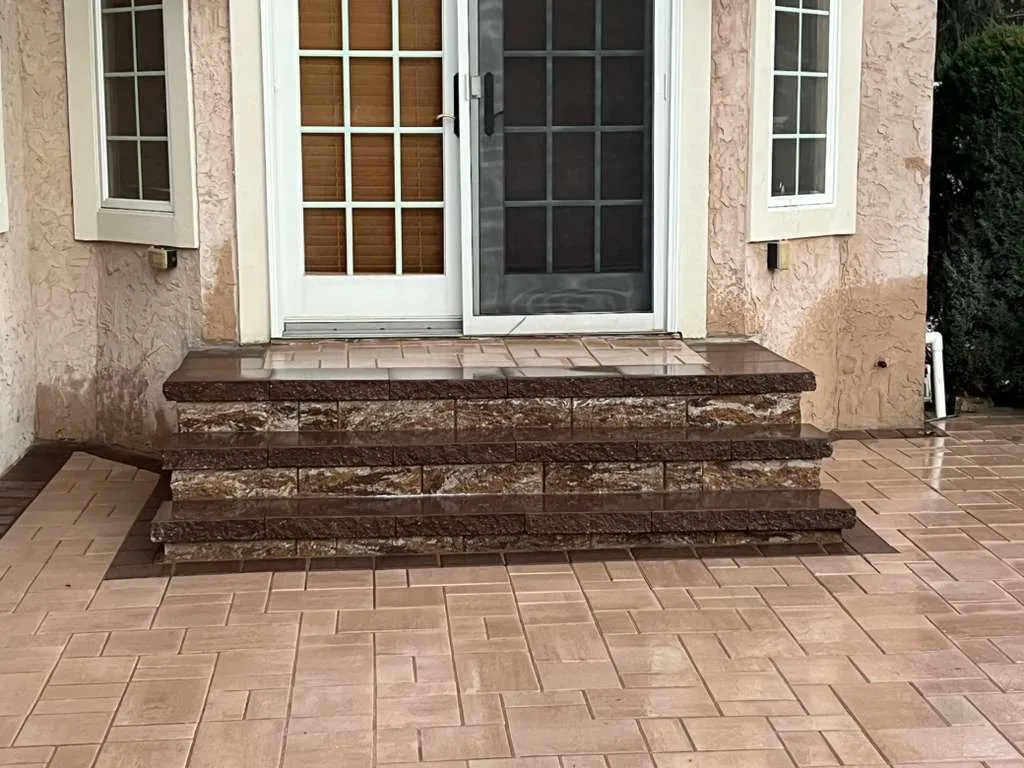
On a rowhouse block the stoop is the front yard. Concrete and brick stoops in town often have cracked landings, loose railings and treads that have sunk or tilted toward the street. We rebuild them on a solid base, face them in brick or stone to suit the house, and set new railings into sound masonry. When the sidewalk in front is part of the job, we pour new concrete steps and walk sections together so everything meets cleanly.
Basements, foundations and old walls
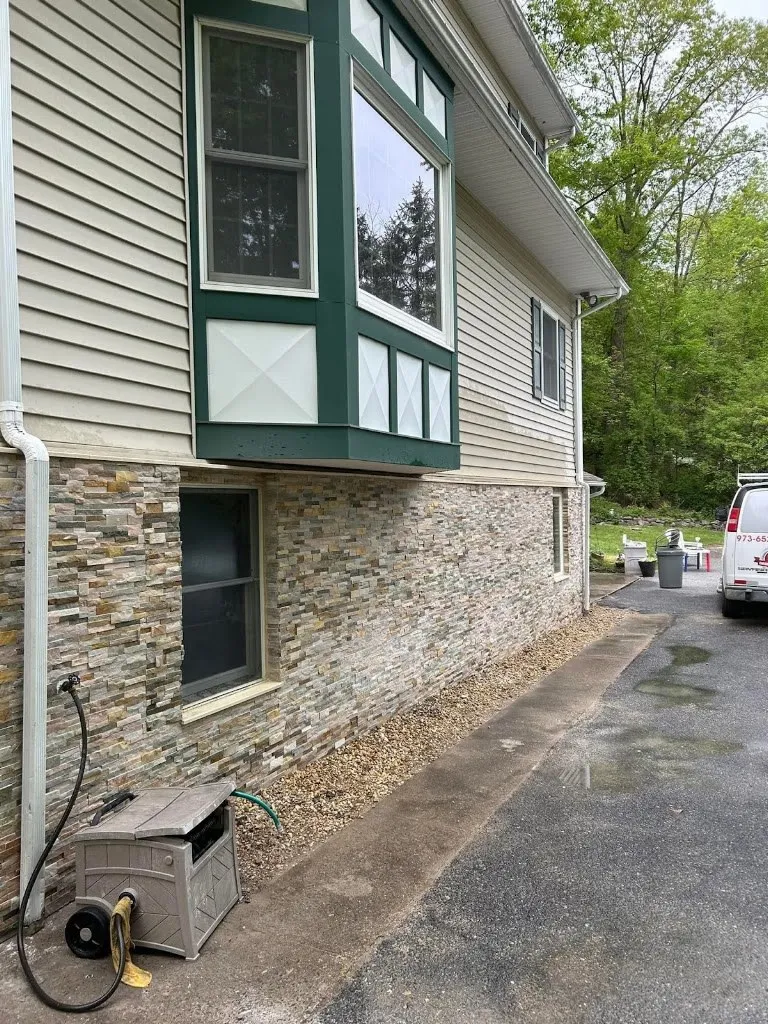
Stone and brick foundations under older homes tend to let in water where joints have washed out or grading slopes toward the house. On hillside streets, runoff from uphill properties makes it worse. We repoint and patch foundation walls, rebuild failed sections, and address waterproofing and drainage so the basement stays drier.
Worth knowing first
- Shared walls. On attached homes, work near the party wall should be discussed with your neighbor before it starts.
- Street parking. We plan deliveries and staging for blocks without driveways.
- Hidden damage. Older stoops sometimes hide earlier steps or rotted framing. We tell you what we find before moving ahead.
- Permits. The town may require approval for steps and sidewalk work.
Phillipsburg is one of the towns we cover across Warren County, along with places like Belvidere farther up the river. If your brick or stoop needs work, ask for a free estimate and we will set up a visit.