Atlantic Highlands is a bayshore borough that rises from the waterfront and harbor into some of the steepest residential streets in Monmouth County. Homes on the hill often sit well above or below the road, with sloped front yards, long flights of steps and backyards that drop away. The older houses here, many from the early twentieth century, often still rely on aging walls and stairs that were built quickly decades ago.
Holding the hill in place
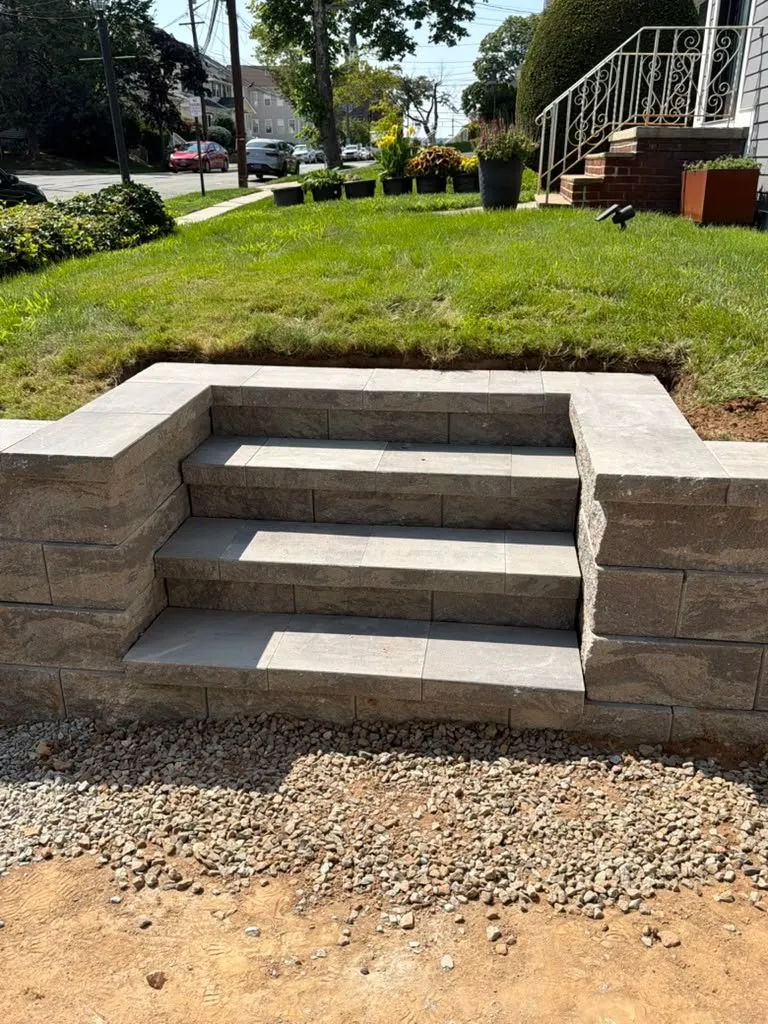
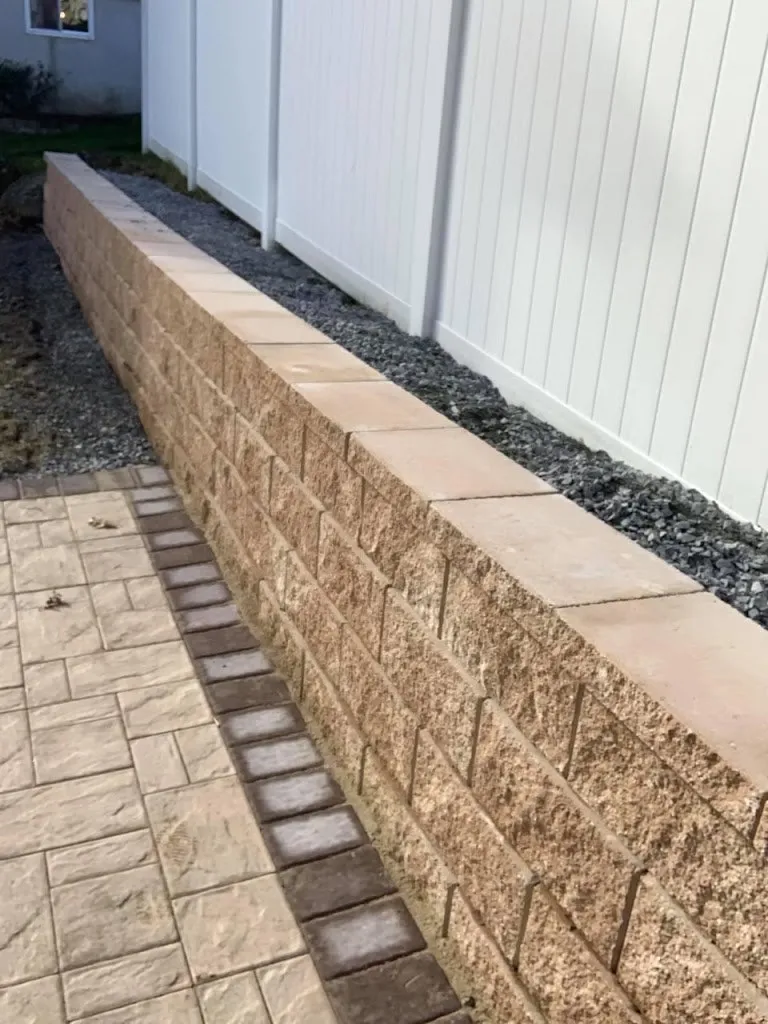
A retaining wall on a steep lot carries a lot of soil, and water behind it adds more pressure. Leaning timber walls, bulging block and stone walls with open joints are common sights. We build retaining walls in segmental block or natural stone on a compacted base, with drainage stone and a pipe behind the wall so water has a way out. Steps can be built right into the wall to connect two levels.
Steps from the street
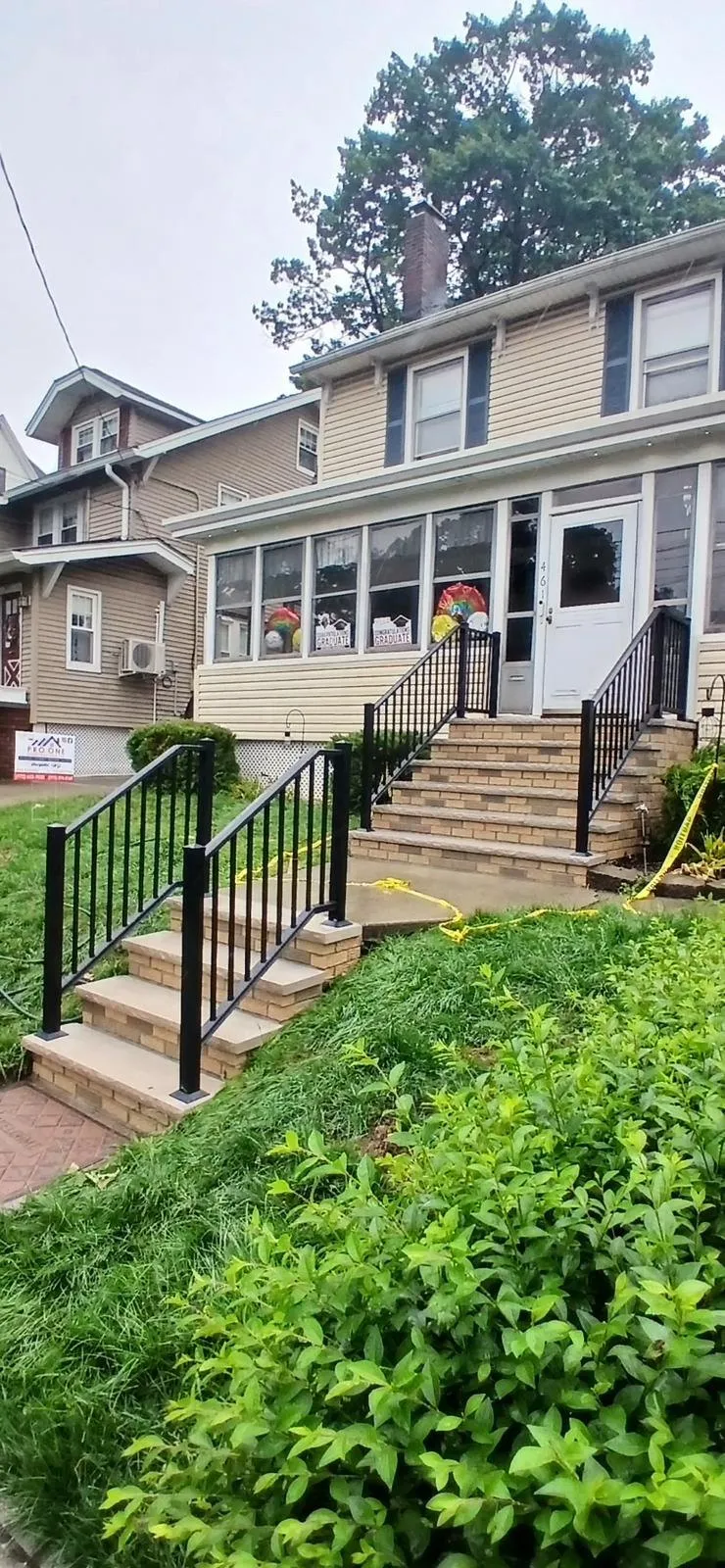
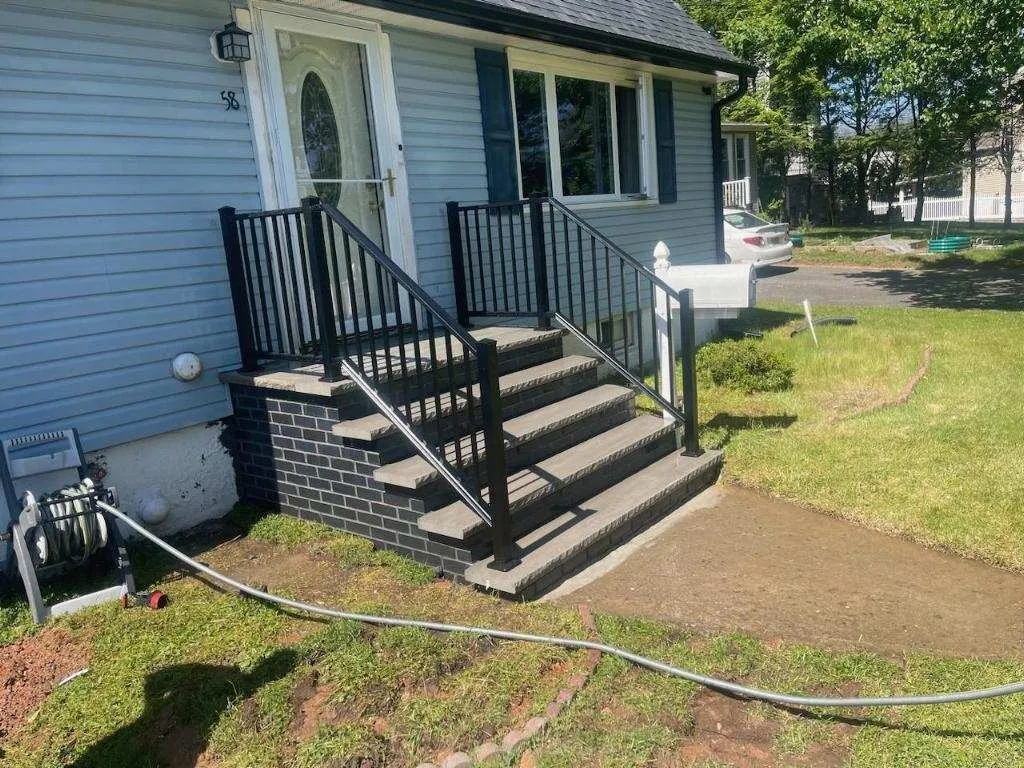
Long front stairs on a slope need solid footings at each landing and consistent riser heights so they feel safe in the dark or in the rain. We rebuild concrete steps and stone steps with railings anchored into sound material, and we break long runs with landings where the layout allows.
Turning a slope into usable space
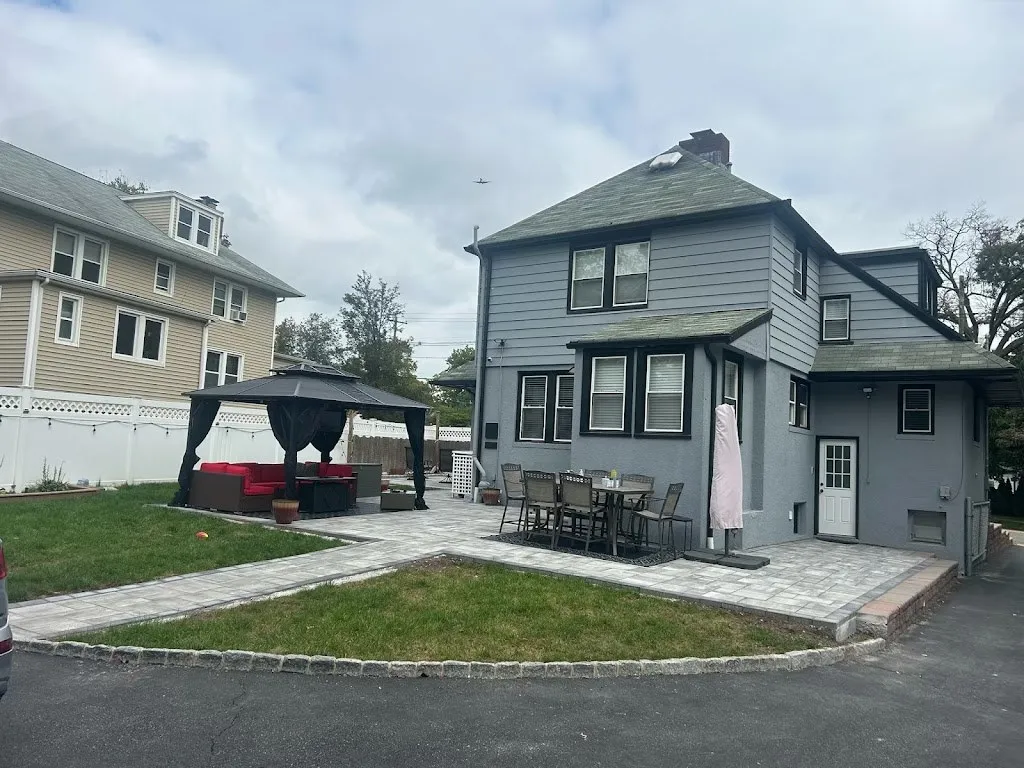
Terracing can turn a backyard that was too steep to use into two or three level areas. A patio on the lower terrace, a lawn above and stairs between them is a common plan. Our hardscaping work lays out the levels so each one drains properly.
On a sloped lot, watch for
- Leaning walls or cracked caps, which signal pressure or a failing base.
- Soil washing onto walks or driveways after storms.
- Wet basements on the uphill side of the house, which point to a drainage problem.
- Uneven step heights, a common cause of trips.
Atlantic Highlands borders Highlands and Middletown, and we cover the whole of Monmouth County.
Is your hillside wall leaning or your front stairs uneven? Book a free estimate and we will look at the slope with you.